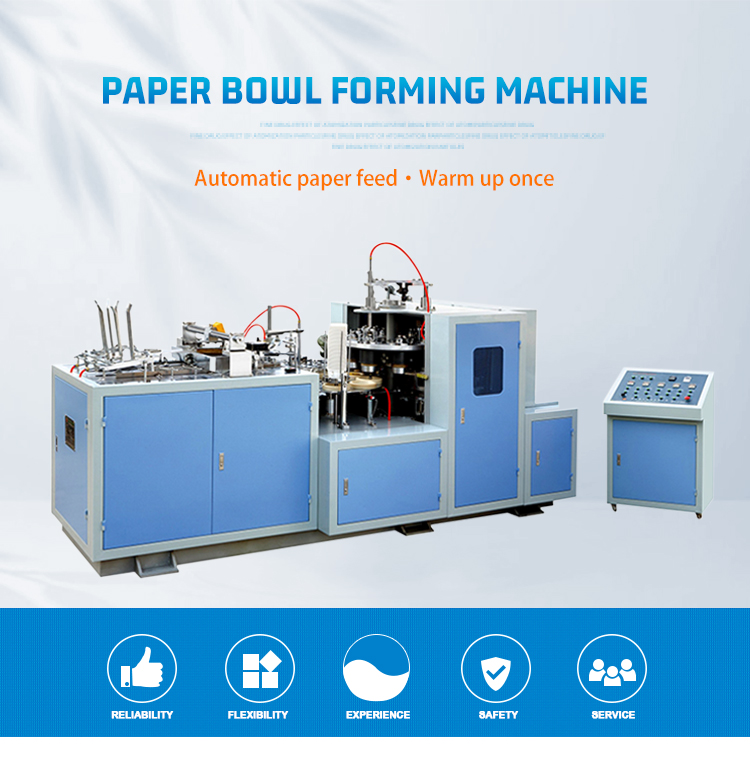
A paper bowl machine should be selected from the finished container dimensions, material, rim and bottom structure, mould plan, food application and required production workflow.
Begin with the finished paper bowl
Terms such as soup bowl, salad bowl or takeaway container describe an application but not the full forming requirement. Prepare a finished sample or drawing showing top diameter, bottom diameter, height, taper, rim, bottom structure and any lid-fit requirement.
Also identify the food application, serving condition, paper material, coating, printed design, target quantity and packing method. This helps the supplier discuss the forming route from a real product instead of selecting a machine from a capacity label alone.
Buyers can review the HANNAI paper bowl machine page before sending samples and project details.
Prepare one paper bowl project sheet
| Project item | What to provide | What it helps confirm |
|---|---|---|
| Bowl geometry | Top diameter, bottom diameter, height, taper and sample | Machine range, mould and finished shape |
| Material | Paper GSM, coating, blank and bottom-paper details | Feeding, sealing and forming discussion |
| Rim and lid | Rim profile, lid sample and fit requirement | How the finished bowl will close and be used |
| Application | Food type, serving condition and customer quality standard | Inspection and sample-testing priorities |
| Output | Daily demand, shift hours and order quantity per size | Required production capacity and changeover plan |
| Workflow | Printing, cutting, forming, inspection and packing scope | Which equipment and suppliers must work together |
Do not select from ounce capacity alone
Two bowls sold under the same volume description can have different diameters, heights and tapers. Those differences affect the sidewall blank, bottom piece, rim and mould. Use dimensions and a physical sample whenever possible.
If several bowl sizes are planned, list them in priority order. Identify the first commercial size, typical order quantity and expected change frequency. A clear priority helps the supplier recommend an initial mould plan instead of treating every possible size as equally urgent.
Confirm paper, coating and blank preparation
Discuss paper GSM, coating type, surface condition, sidewall blank dimensions and bottom-paper supply. The machine recommendation and sealing discussion should be based on the actual material planned for production.
Decide whether printed and die-cut bowl blanks will be purchased or produced in the factory. Internal blank preparation adds printing, die cutting, quality control, material storage and operator requirements. The paper material checklist provides useful preparation questions that also apply to many paper food-container projects.
Check the rim, bottom and lid as one system
A finished bowl should be evaluated for rim shape, bottom security, side seam, wall condition and stability. When a lid is required, test the intended lid on the formed bowl instead of approving the bowl and lid separately.
Define how lid fit will be checked, including secure engagement, alignment and handling. If bowls will contain hot, cold, liquid or oily foods, the buyer should provide the intended application and define relevant material and leak-testing requirements with qualified suppliers.
Compare paper cup and paper bowl equipment carefully
Paper cups and paper bowls can share forming concepts, but the finished dimensions, wall geometry, bottom structure, mould and handling requirements may differ. Do not assume that a paper cup machine automatically covers a bowl project.
Use the paper cup machine vs paper bowl machine guide to identify the product information that should be confirmed before selecting an equipment category.
Plan moulds and changeovers
Each priority bowl should be defined by a complete drawing or approved sample. Ask what tooling is included, how new sizes are confirmed, which components change and how first-piece approval is performed after setup.
Frequent changes between small orders can reduce weekly output. Record changeover time, cleaning, material replacement and sample inspection when estimating capacity. Store tooling with clear identification to prevent mixing components between sizes.
Connect forming to inspection and packing
Finished bowls may require collection, counting, sleeve or bag packing, carton loading and storage. Larger containers can consume packing space quickly, so calculate the downstream workload and carton plan before finalizing the forming target.
Review the paper cup packing options guide for general questions about manual and automated handling, then adapt the plan to the bowl dimensions and customer packing specification.
Define the sample and acceptance test
Agree on the bowl, material, mould, running condition and inspection method before the machine test. Check feeding, side seam, bottom, rim, shape, surface condition, lid fit where applicable and consistency across an agreed sample quantity.
Record the machine identity, material batch, setup and open actions. A relevant bowl sample provides better evidence than a demonstration using an unrelated container or unknown material.
Frequently asked questions
What should I send to a paper bowl machine supplier?
Send a finished bowl or drawing, material details, top and bottom diameters, height, rim and lid requirements, target output, voltage and destination country.
Can one mould make several bowl sizes?
Do not assume so. Tooling depends on the finished dimensions and structure. Confirm every planned size separately with the machine supplier.
Is a lid sample necessary?
Yes when lid fit is part of the finished product. Test the intended lid with the formed bowl and define the acceptable fit.
Should a new factory make blanks in-house?
Compare order volume, design variety, local blank supply, printing and cutting investment, staffing and working capital before adding upstream processes.
Send your bowl sample or drawing, paper material, lid requirement, output target, voltage and packing plan through our inquiry page. HANNAI can discuss the forming machine and supporting workflow around the finished container.