The sleeve forming mandrel establishes the wrapped sleeve’s diameter, taper and seam relationship before assembly with the inner cup. A wrong or worn mandrel can create loose fit, excessive insertion force, seam opening, print scuffing or inconsistent height even when the blank is correct.
Mandrel geometry must come from the controlled cup and sleeve drawings plus trial evidence. This guide does not derive dimensions from nominal cup ounces or rim diameter. Isolate the machine and protect finished surfaces during inspection.
Decision matrix
| Control item | Evidence | Acceptance |
|---|---|---|
| Identity | Part number, drawing revision and intended cup/sleeve | Correct change part for the format |
| Geometry | Defined diameters, taper, length and datums | Matches controlled tooling drawing |
| Condition | Scratches, buildup, dents, wear and release surface | Sleeve forms without damage |
| Alignment | Mounting, runout, blank datum and seam tool relationship | Wrap remains concentric and repeatable |
| Trial | Overlap, diameter, inner-cup fit, marks and denesting | Approves the complete assembly |
Match tooling to controlled drawings
Verify inner cup, sleeve blank, mandrel and related change-part numbers. Record drawing revision, blank feed direction, seam position and intended finished sample. Similar cup sizes may use different taper, insulation gap or sleeve height.
Do not select a mandrel from a nominal capacity label alone. If the sleeve or cup drawing is unavailable, treat measurements as investigation evidence, not production design authority.
Inspect surface and clean condition
Remove the mandrel under the approved tooling procedure when needed. Inspect for adhesive, paper coating, scratches, dents, corrosion and polished wear bands. Use non-damaging cleaning materials specified for the surface.
A small raised deposit can scuff print or change local diameter. Do not sand, polish or plate the tool informally; these actions change geometry and release behavior. Record the defect location relative to the seam and blank entry.
Measure geometry and mounting
Use defined drawing datums and calibrated tools to measure only accessible approved features. Check taper and diameter at specified positions, then inspect mounting pilot, flange, key and fasteners. Hand measurements on a tapered surface require a documented method.
Check runout or concentricity at the machine only if the tooling procedure provides safe rotation and datums. A correct mandrel mounted off-center can create changing overlap and insertion force.
Coordinate blank wrap and seam formation
Observe blank presentation, vacuum or gripper release, wrapping rails and seam pressing at slow controlled motion. Mark the blank center and edges to see whether the mandrel receives it consistently. Do not adjust mandrel diameter to compensate for skewed feeding.
Inspect seam overlap around repeated sleeves before inner-cup insertion. The linked fit guide helps separate formed sleeve geometry, adhesive behavior and inner-cup dimensional variation.
Approve through assembled-cup trials
Measure sleeve height, seam, fit and orientation on labeled samples from startup and steady production. Check insertion force qualitatively only through the machine process, then inspect scuffing, gaps, deformation, stacking and denesting.
Record material lots, tooling IDs, measurements and accepted samples. Send HANNAI the cup/sleeve drawings and marked defects for a new-size tooling review. Final geometry must be proven by trial forming, not inferred from one dimension.
Related machine and guide
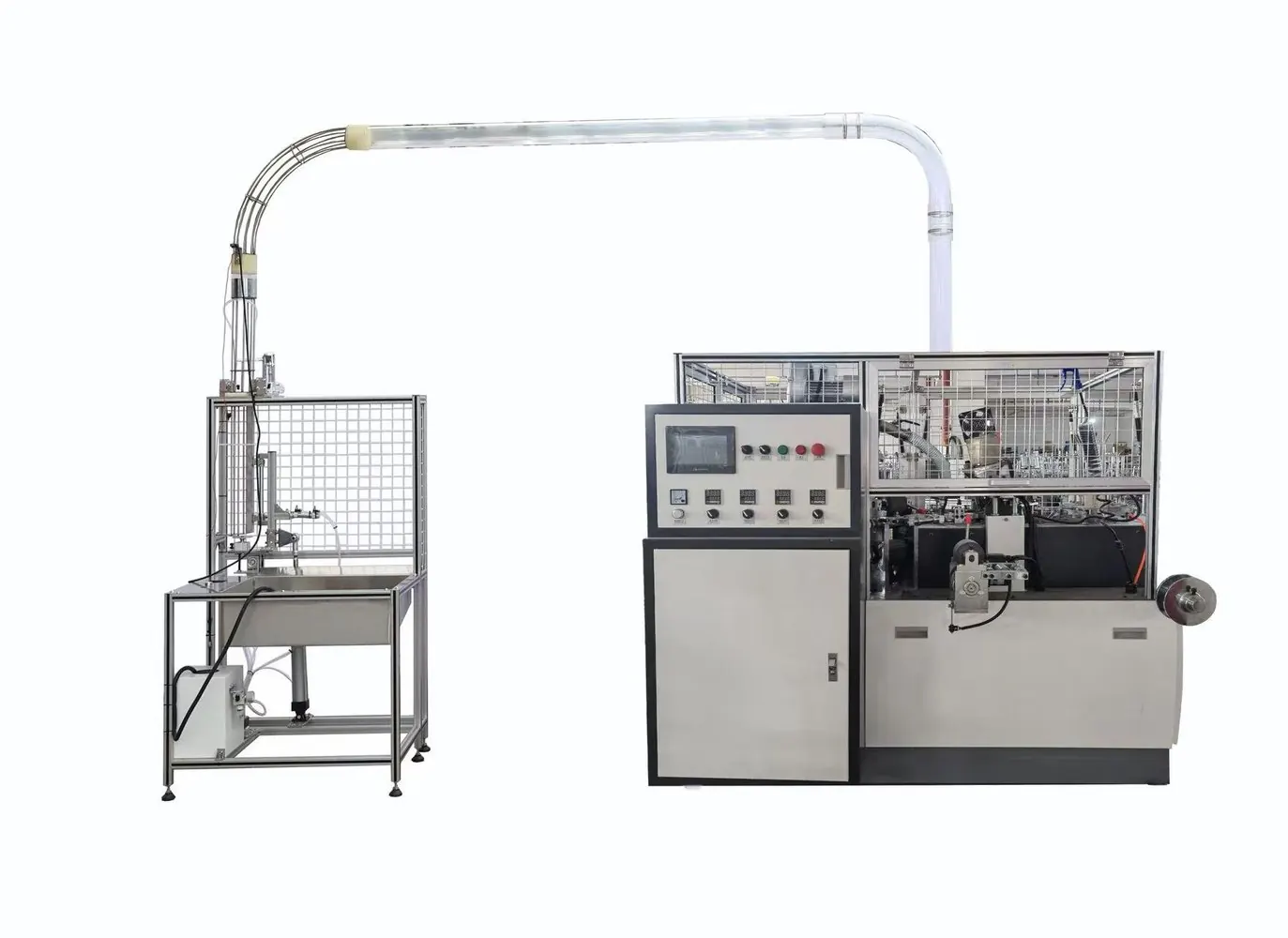
Review the double-wall paper cup machine for machine context, then use the double-wall sleeve fit trial guide for the adjacent check. Browse all Buyer Guides when building a wider project checklist.
Frequently asked questions
Can mandrel size be selected from cup ounce capacity?
No. Use controlled cup and sleeve geometry plus tooling drawings.
Can a scratched mandrel simply be sanded smooth?
Not without an approved repair specification because geometry and surface can change.
Why check mounting runout?
An accurate tool mounted off-center can create changing overlap and fit.
What approves a new mandrel?
Repeated formed sleeves and assembled cups meeting the controlled sample criteria.
Review your machine configuration with HANNAI
Send the machine model, project reference, component labels, drawings, photos and a description of the required result. We will clarify which details must be confirmed before a quotation or technical recommendation.