Hydraulic pressure is created by resistance to flow, so a low reading does not automatically prove the pump is worn. Low oil level, air ingress, clogged filtration, a relief path, valve leakage, wrong rotation or excessive mechanical load can all reduce forming force or slow platen motion.
Hydraulic systems store energy and can support heavy moving platens. Qualified personnel must isolate electrical and hydraulic sources, discharge accumulators and mechanically block movement before opening lines. Use the exact oil and pressure specification for the delivered machine.
Decision matrix
| Inspection area | Evidence | Diagnostic value |
|---|---|---|
| Oil | Specified grade, level, color, odor, foam and particles | Shows fluid and contamination condition |
| Pressure/flow | Test point, command state and trend through stroke | Separates supply from load response |
| Temperature | Ambient, warm-up and operating trend | Reveals cooling, leakage or viscosity effects |
| Components | Pump, filter, relief, valves, hoses and cylinders | Locates loss or restriction |
| Machine result | Platen speed, parallelism, hold and formed sample | Connects hydraulics to process quality |
Secure the machine and collect symptoms
Record whether the platen is slow, stops early, drifts, chatters or loses hold, and whether the symptom changes after warm-up. Note pump sound, alarms, oil temperature and the exact command state. Mechanically support the platen before entering the hazard area.
Do not loosen a fitting to see whether pressure exists. Residual and trapped pressure can inject fluid through skin. Use designed test points and rated instruments under the machine procedure.
Inspect oil condition without guessing
Verify oil grade from records and component documentation, then check level at the specified machine state. Observe color, odor, foam, water separation and visible particles in a controlled sample. Parker notes that contamination and fluid condition are central maintenance evidence.
Do not improve aged or contaminated oil by topping up with an unknown product. Mixing fluids can change seals, viscosity and additives. Laboratory analysis is needed when visual evidence cannot establish condition.
Measure pressure in sequence context
Connect a suitable calibrated gauge at the approved point and record pressure during approach, forming, hold and return. Also record command, valve state and temperature. A pump produces flow; pressure depends on the circuit resistance and relief/load condition.
If pressure is low, inspect oil level, pump priming/rotation, relief or unloading path, valve leakage and cylinder seals before adjusting the relief valve. Never increase pressure beyond the machine and tooling design.
Check filtration, leakage and heat
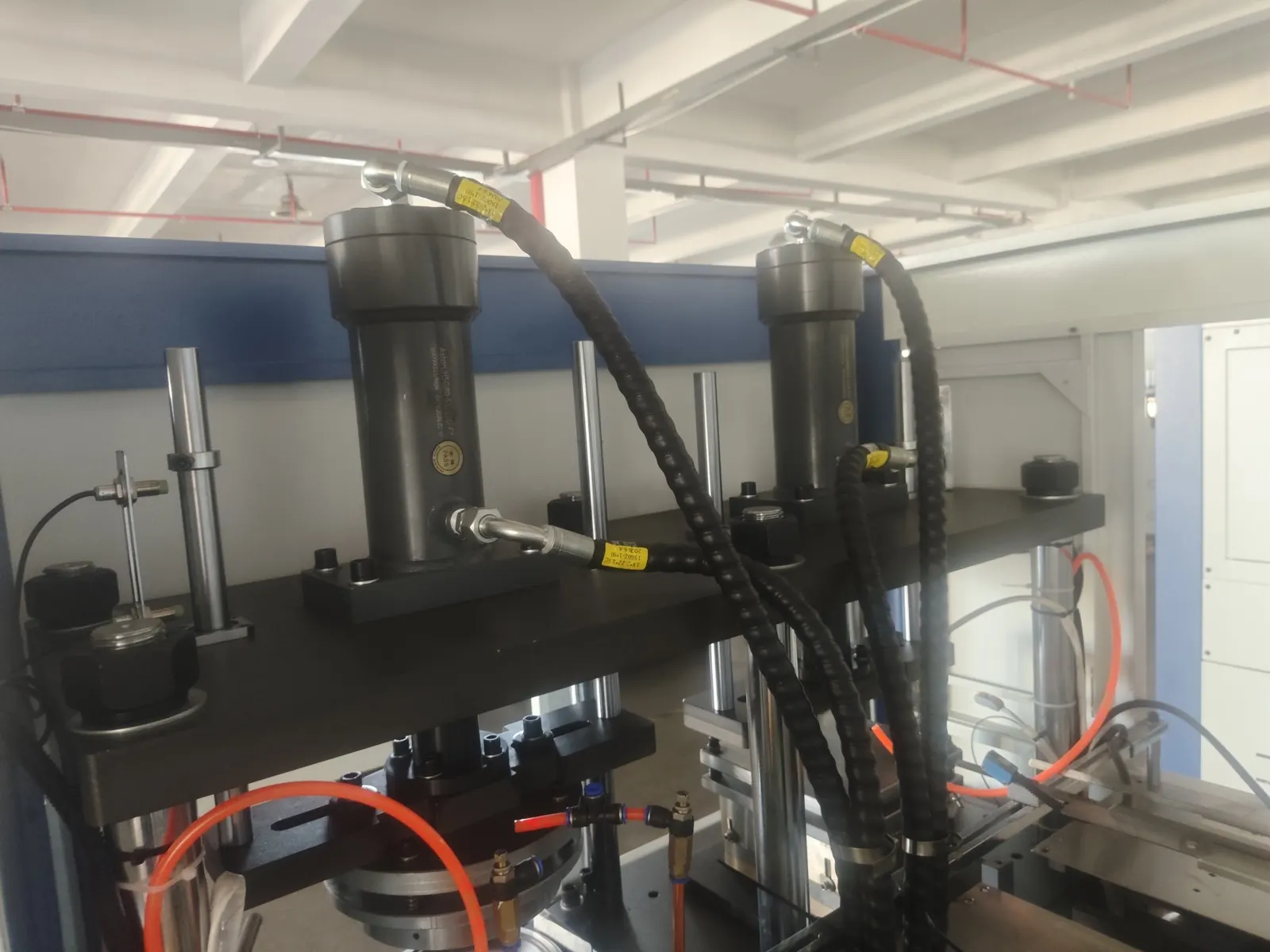
Inspect filter indicators/elements, suction line, hoses, fittings, cylinder rods, tank breather and cooler. Look for external leakage and safe evidence of internal bypass. Air bubbles or foam can indicate suction leakage or low level.
Track operating temperature rather than relying on touch. Excess heat may come from relief flow, internal leakage, wrong fluid, cooling restriction or continuous high load. Replace hoses by complete pressure, size, fitting and compatibility data.
Validate platen and formed product
After the verified correction, bleed air only through the manufacturer’s method, restore guards and run staged cycles. Measure approach/return consistency, hold behavior and any platen parallelism evidence. The linked guide helps distinguish hydraulic force from guide or die alignment.
Inspect formed samples by cavity and orientation. Record oil, filters, pressure/temperature trends, parts changed and leak checks. Send HANNAI the hydraulic diagram, component labels and symptom video before a pressure or pump change.
Technical references
- Parker hydraulic maintenance guidance — general component guidance; the installed machine documentation remains controlling.
Related machine and guide
Review the paper plate and box forming equipment for machine context, then use the platen parallelism and guide-post inspection guide for the adjacent check. Browse all Buyer Guides when building a wider project checklist.
Frequently asked questions
Does low pressure always mean a failed pump?
No. Level, air, relief path, valves, filters, load and measurement state must be checked.
Can hydraulic oil be topped up with a similar-looking product?
No. Verify exact fluid compatibility and investigate loss or contamination.
Why record pressure through each stroke phase?
Different valves and loads are active during approach, forming, hold and return.
What safety controls are essential?
Discharge stored pressure and mechanically support heavy moving components before service.
Review your machine configuration with HANNAI
Send the machine model, project reference, component labels, drawings, photos and a description of the required result. We will clarify which details must be confirmed before a quotation or technical recommendation.