Paper cup corrective action effectiveness is demonstrated when the targeted failure is reduced or removed under representative production and remains controlled. Completing a maintenance task or producing one good cup proves implementation, not effectiveness.
This guide supports verification planning. It does not prescribe a corrective action or guarantee recurrence prevention. Site quality, production and equipment specialists must approve actions and acceptance evidence. Verification evidence should come from production independent of the original repair team when practical, with deviations and unsuccessful checks retained in the record. Define who reviews the evidence, when the review occurs and which result requires reopening the investigation before closure.
Diagnostic decision table
| Verification question | Evidence | Weak conclusion |
|---|---|---|
| Was action implemented? | Work record and configuration | Implementation equals effectiveness |
| Did target response improve? | Unchanged valid test | One selected cup proves correction |
| Does result persist? | Independent runs and monitoring | Short trial covers future production |
| Were new risks created? | Related quality and safety checks | Only target defect matters |
Preserve the original problem definition
Record defect, severity, rate or measurement, affected scope and detection method. Keep photographs, samples and process identity. Separate containment, correction and root-cause action so each can be evaluated.
Define the expected mechanism before implementation. If an action has no stated link to the cause, its success cannot be interpreted well. Avoid rewriting the original problem after the result becomes known.
Confirm implementation against authorization
Verify component identity, setting, software, procedure, training or material change against the approved action. Record date, personnel and configuration. Confirm temporary containment remains until release criteria are met.
Do not assume a signed work order proves the physical condition. Inspect critical installation and run prescribed safety checks. If execution differs from the plan, assess and authorize the deviation before effectiveness testing.
Test the target with the same valid method
Use the original measurement or an approved improved method with documented comparability. Collect representative cups across forming positions, material and operating states. Include startup or restart if the complaint occurred there.
Predefine sample and acceptance evidence. Do not measure repeatedly until one favorable result appears. Preserve denominators, invalid tests and rejected samples. Compare against baseline and suitable controls rather than memory.
Check persistence and unintended effects
Monitor independent production over a justified period or number of events. Review recurrence in defect logs, inspection escapes and complaints. A correction that works only during a supervised short run may not be robust.
Check related functions such as seal integrity, dimensions, denesting, appearance and machine safety where the mechanism could affect them. Moving a setting to suppress one defect can create another. Use authorized ranges and supplier guidance.
Close only with reviewable evidence
Document implementation, target outcome, recurrence monitoring, related checks, residual risk and owner approval. If effectiveness is insufficient, reopen analysis rather than changing the success criterion.
Send HANNAI the before-and-after evidence, machine configuration and monitoring result when the action involves equipment. This enables a technical review without treating closure paperwork as proof of permanent prevention.
Related equipment and next checks
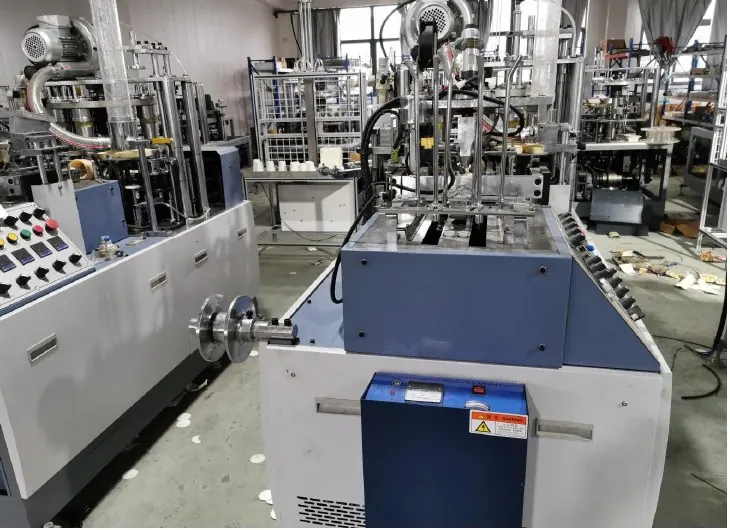
Review the paper cup production line and the related guide to defect classification and containment guide. The Engineering Notes archive connects these checks with wider machine planning.
Frequently asked questions
Does completing maintenance prove effectiveness?
No. Verify the targeted outcome under representative conditions.
Can one good cup close an action?
Use predefined representative evidence and recurrence monitoring.
Should related defects be checked?
Yes when the action can influence other product or safety characteristics.
What if the result is temporary?
Reopen the analysis and address the remaining mechanism.
Review the evidence with HANNAI
Send your machine model, component identification and the observations described in this guide. Include the drawing or material reference and any before-and-after measurements so the required next check can be identified.