A dull or damaged cutter can leave tails, tear film, pull a finished pack or create fragments. Blade replacement is also an alignment task: blade geometry, holder datum, anvil condition, clearance and cut timing must work together.
Cutter areas present sharp-edge, pinch and unexpected-motion hazards. Isolate electrical and pneumatic energy, restrain moving members and use cut-resistant handling appropriate to the site procedure. Never reach into a cutter to test an automatic cycle.
Decision matrix
| Control item | Evidence | Acceptance |
|---|---|---|
| Blade identity | Part number, dimensions, edge form, holes and material | Approved exact or reviewed equivalent |
| Holder condition | Datum, fasteners, clamps and seating surfaces | Blade seats flat and secure |
| Mating surface | Anvil or counter-knife wear, contamination and damage | No local high spot or groove |
| Alignment | Parallelism, overlap or clearance by approved method | Uniform cut without excessive contact |
| Pack trial | Film lot, speed, cut edge, debris and seal integrity | Stable release across controlled samples |
Confirm the blade is the actual cause
Collect cut samples and mark machine direction and cutter side. Inspect whether the defect is uncut film, stretched tails, intermittent tearing, cut-position error or seal contamination. Check film tension, static, registration and pack presentation before replacing the blade.
Inspect the blade edge only under safe isolated conditions. A nick that repeats at the same cross-web position supports a local edge issue. Random tearing may point to film handling or timing. Do not touch an edge to judge sharpness.
Match the replacement and holder interface
Use the machine spare-parts drawing and complete blade code. Match length, thickness, hole pattern, bevel orientation, serration or edge style and intended holder. Similar dimensions do not prove compatible metallurgy or cutting behavior.
Clean holder datums and inspect clamps, screws and locating features. Replace damaged fastening parts with approved items. Do not add washers, tape or hand-ground relief to force a blade to fit. Store and dispose of blades in protective containers.
Inspect and set the mating relationship
Examine the anvil, counter-knife or cutting strip for grooves, embedded film, adhesive and local damage. A new blade against a damaged mating surface may cut worse and wear quickly. Follow the machine method for rotation, replacement or setting of that surface.
Set blade position using the specified gauge or controlled contact method. Excess engagement can damage the blade, anvil and drive; insufficient engagement leaves tails. Adjust uniformly and keep hands outside the cutting path. Do not use powered jogging as a substitute for the approved setup method.
Validate the cut as part of the pack process
Restore guards and run at permitted setup speed. Inspect both film layers across the full width, cut position relative to the seal, pack release and any fragments. Confirm that the cutting action does not pull the cup stack or disturb seal cooling.
Increase speed in controlled stages and sample at defined intervals. Label the film supplier, grade, thickness and lot because a film change can alter cut behavior. Use the linked guide to verify seal and film performance together rather than approving a clean cut on a leaking pack.
Create a blade-life and defect record
Record blade ID, installation date, machine counter, defect pattern, holder/anvil work and trial results. Trends can distinguish ordinary wear from repeated damage at one location. Avoid promising a fixed service life without material and operating evidence.
Send HANNAI machine photos, cutter assembly labels, blade dimensions, film specification and marked defect samples for review. The result should be an approved spare and setup record, not a recurring emergency adjustment.
Related machine and guide
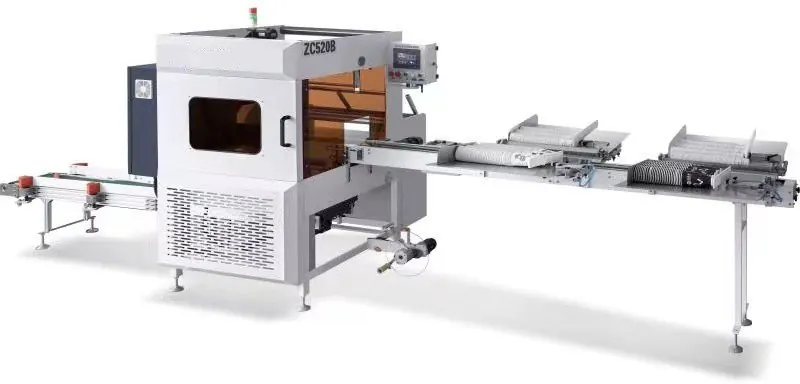
Review the paper cup packing machine for machine context, then use the packing film change validation guide for the adjacent check. Browse all Buyer Guides when building a wider project checklist.
Frequently asked questions
Can a blade be approved because its length matches?
No. Thickness, holes, edge geometry, holder fit and intended material must also match.
Should the blade contact the anvil harder when film is not cut?
Not automatically. Inspect alignment, mating surface, film and timing; excessive engagement can cause damage.
How should sharp blades be handled?
Use the machine and site procedure, protective storage and suitable cut-resistant handling; never test sharpness by touch.
What should a cut trial include?
Check both film layers, full width, cut position, debris, pack release and seal integrity at controlled speeds.
Review your machine configuration with HANNAI
Send the machine model, project reference, component labels, drawings, photos and a description of the required result. We will clarify which details must be confirmed before a quotation or technical recommendation.