Paper cup packing machine film feeding, tracking and cutting faults can produce skewed bags, wrinkled seals, variable bag length, incomplete cuts or film jams. These results are not corrected reliably by changing tension everywhere. A professional diagnosis defines the film and pack first, then follows unwind, guiding, drive, registration, sealing and cutting as separate but connected functions.
Confirm the approved pack and film specification
Record cup dimensions, nested pack count, stack length, bag style, film material, width, thickness specification, reel core, winding direction, print/registration requirement and sealing method. Retain the film label and an accepted pack. Do not compare machine performance using an unidentified replacement roll.
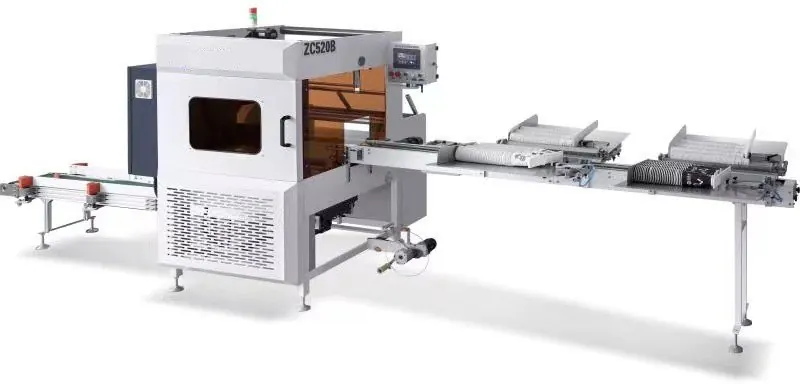
HANNAI’s paper cup packing machine is configured around cup size, packing quantity, bag length, output target and factory workflow. Use the delivered threading diagram, recipe and film recommendation rather than a generic online setting.
Map the symptom along the film path
| Symptom | Evidence to mark | First diagnostic branch |
|---|---|---|
| Film walks to one side | Reel centering, edge position at each roller and direction of drift | Unwind alignment, guide condition or uneven tension |
| Periodic wrinkle | Distance between repeats, roller rotation and seal/cycle position | Eccentric reel/roller, contamination or cyclic tension change |
| Variable bag length | Commanded length, actual samples, registration mark and drive status | Slippage, sensor, recipe or feed command |
| Incomplete or ragged cut | Cut position, blade/anvil condition, film layers and timing | Tool wear, contamination, support or sequence |
| Cut crosses a seal/print mark | Sensor status, mark quality, film direction and offset reference | Registration setup or unstable transport |
| Jam after cup count is complete | Stack position, transfer event, film state and first alarm | Cup handoff/sequence rather than film alone |
Inspect unwind, reel centering and film threading
Stop and isolate the machine before entering the film path. Verify reel orientation, core support, retainers and centering. Compare the path with the threading diagram and check that the film passes the intended side of every guide, dancer or roller. A reversed or skipped roller can create an apparent control fault.
Inspect rollers for contamination, damage, looseness and free movement by the approved method. Check whether the reel is telescoped, edge-damaged or wound unevenly. Replace or quarantine an abnormal roll rather than adjusting the machine around a damaged input.
Separate tracking from tension and transport
Mark the film edge at several safe observation points and determine where drift begins. If it enters centered and leaves one roller skewed, inspect that local roller, nip or guide. If the whole path moves together, review reel centering and web-guiding references. Uneven film properties can also produce drift.
Do not increase tension blindly. Excess tension can stretch film, distort registration, narrow the web or change seal and cut position; insufficient control can create slack and folds. Use only the approved adjustment and make one documented change at a time while measuring the finished bag.
Check length control and printed-mark registration
For a plain-film length mode, compare commanded and actual cut length across consecutive packs. Inspect the drive roller surface, nip, encoder or feedback arrangement and recipe reference according to the delivered design. For printed film, verify mark contrast, sensor position, clean lens, taught state and actual film direction.
A registration sensor should not be moved to compensate for unstable film transport. First prove that the film reaches it without slip or lateral drift. Preserve parameter backups before an authorized recipe or offset change, and verify more than one cycle because a cumulative error may not appear on the first bag.
Inspect the cutting system safely
Blades, hot knives and sealing/cutting assemblies can remain hot or move unexpectedly. Isolate electrical, pneumatic and thermal energy and allow the specified cool-down before access. Inspect blade or cutting edge, anvil/support, fasteners, contamination and alignment using the component procedure. Wear cut-resistant protection appropriate to the task.
Do not sharpen, shim or increase cutting force without confirming the supplied tooling design. A ragged cut may result from a worn blade, wrong film, folded layers, poor support, contamination or incorrect timing. Replace consumables with the verified part and record the change.
Reconnect film performance to cup transfer and sealing
A stable film path can still jam if the nested cup stack arrives late, tilted or at variable length. Compare cup count, stack compression, transfer position and film cycle. The counting and sealing troubleshooting guide covers this upstream/downstream relationship.
After correction, run a controlled sample through authorized speed stages. Measure bag length and cut position, inspect seals and wrinkles, verify pack count and confirm that the film does not drift over a sustained run. Retain packs from start, middle and end.
Frequently asked questions
Why does film track correctly at low speed but drift during production?
Dynamic tension, reel condition, roller alignment, nip slip and process timing can change with speed. Map where drift begins and inspect under isolation rather than adjusting a moving web.
Can the film sensor be moved whenever the cut is off position?
Not before film direction, transport stability, mark quality, taught state and the controlled offset are verified. Moving the sensor can hide slip or a wrong recipe.
Does a ragged cut always require more blade pressure?
No. Blade wear, contamination, support, folded film, film specification and timing can create the same result. Follow the delivered cutting-unit procedure.
What evidence should be provided for remote diagnosis?
Send film and pack specifications, reel-label photos, threading-path photos, marked examples, actual bag-length data, alarms, recipe reference and safe video showing where drift or wrinkles begin.
Send the packing-machine model, cup and pack details, film specification, reel evidence, marked defective packs, alarm history and a safe film-path video through our inquiry page. HANNAI can review the delivered configuration and diagnostic branch.