The forming collar converts flat film into a tube around the product path. Film width, collar centering, entry angle, pull-belt contact and longitudinal overlap determine whether the center seal runs straight. Moving the sealer alone cannot correct a tube that is already skewed.
Setup must use the approved film and pack format. This guide does not publish universal collar gaps, temperatures or overlap values. Keep heaters and motion isolated during mechanical adjustment and follow the installed machine procedure.
Decision matrix
| Setup input | Evidence | Decision |
|---|---|---|
| Film | Width, thickness, seal layer, artwork and roll condition | Matches the approved bag format |
| Former | Part ID, centerline, cleanliness and mounting datum | Creates the intended tube geometry |
| Web entry | Roll center, idlers, tension and edge position | Presents film symmetrically |
| Pull/seal | Belt/roller contact, overlap and sealer center | Carries and seals without lateral force |
| Trial pack | Seam position, wrinkles, seal integrity and cut relation | Approves the complete format |
Verify film and former identity
Match film code, width, thickness, seal layer, print repeat and winding direction to the job. Confirm the forming collar, tube and related change parts by part number. Similar bag widths may still require different geometry for product diameter or film behavior.
Inspect the former surfaces and edges for adhesive, scratches, dents and tape residue. Clean only with the approved method. A rough contact point can drag one side of the film and imitate poor centering.
Establish the machine centerline
Use the defined former or product-tube datum, not a visually convenient frame edge. Set the collar and tube square to the pull and sealing path. Record mounting scales or measured references before adjustment so the known setup can be recovered.
Omron describes the former and side-sealer as linked stages: film is shaped into a bag and then sealed longitudinally. Treat them as one geometry. Do not shift the center sealer to chase a changing overlap until entry and former alignment are stable.
Present film without lateral steering force
Center the unwind roll and verify every idler, dancer and guide is threaded correctly. Observe edge position before the collar. If the web moves laterally upstream, use the linked tracking guide to correct roll, roller or tension causes.
Adjust entry guides so they guide without pinching. Film should wrap the former smoothly with balanced contact and no isolated hard crease. Mark the film edges to see where a wrinkle begins.
Align pull belts and center seal
Confirm pull belts or rollers contact the formed tube evenly and run parallel. Unequal pressure or wear can rotate the tube after the collar. Set the intended film overlap from the approved pack drawing, then align the longitudinal sealing unit to that stable overlap.
Keep temperature and pressure at the validated recipe while making geometry trials. Changing heat, speed and collar position together makes the cause impossible to identify. Inspect for trapped folds, channel leaks and print scuffing.
Validate complete packs over a run
Produce controlled samples at setup speed, then increase speed in stages. Measure seam location around the pack, overlap, bag width, end-seal relationship and cut position. Inspect startup, stop/restart and steady-running samples.
Record film lot, former ID, datums, tracking and accepted samples. Send HANNAI the film specification, pack drawing and marked defect sequence when support is needed. A correct forming setup must remain stable, not merely produce one acceptable bag.
Technical references
- Omron vertical flow wrapper architecture — general component guidance; the installed machine documentation remains controlling.
Related machine and guide
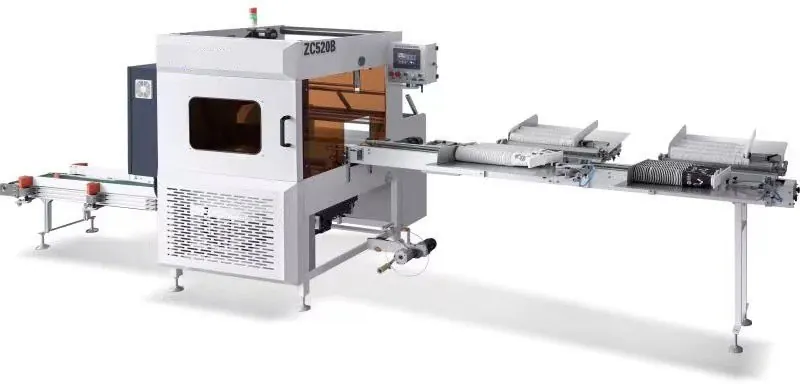
Review the paper cup packing machine for machine context, then use the film feeding and tracking guide for the adjacent check. Browse all Buyer Guides when building a wider project checklist.
Frequently asked questions
Can the center sealer correct a skewed film tube?
Not reliably; stabilize unwind, entry and former geometry first.
Why does overlap change during running?
Web tracking, tension, unequal pull or roll condition may move the tube.
Can a visually similar collar be used for another format?
Only after verifying the controlled part and required tube geometry.
What samples should be retained?
Keep startup, speed-change, stop/restart and steady-run packs with measured seam position.
Review your machine configuration with HANNAI
Send the machine model, project reference, component labels, drawings, photos and a description of the required result. We will clarify which details must be confirmed before a quotation or technical recommendation.