Paper cup packing seal strength and package leak integrity answer different questions. A seal may resist a pull while a narrow channel remains elsewhere along its width. Conversely, a package can appear closed but open too easily during handling. Evaluating one result alone can miss the actual packing problem.
Choose test methods suited to the installed film structure and the required package function. A cup bundle with intended vents is not a hermetic package. Do not apply medical sterile-barrier methods or acceptance limits to cup packing without confirming their suitability.
Diagnostic decision table
| Result | Next investigation | Important distinction |
|---|---|---|
| Strong peel result but a suspected channel | Seal continuity and local contamination | Strength is not complete integrity |
| Low strength across several positions | Process or material bonding | Compare a defined test method |
| Failure only near a fold or overlap | Local geometry and contact | Sample the difficult area |
| Air escapes through an intended vent | Package design requirement | A designed opening is not a seal defect |
Define the package function before testing
Confirm whether the bag is intended to contain a cup count, protect against dust, resist handling or meet another documented requirement. Identify any deliberate perforations or vent paths. An integrity test designed for a sealed barrier can give a meaningless failure result on a package intentionally designed to release air.
Record film supplier, structure, thickness identification and sealing-face orientation. Keep longitudinal seals, end seals and overlap intersections distinct on the package drawing. These regions can have different geometry and stress even when they are produced in the same machine cycle. Select the relevant acceptance methods with the film supplier and quality team.
Make strength measurements comparable
If the approved method uses peel specimens, define specimen location, width, conditioning, test speed and gripping arrangement through that method. Record the failure mode as well as the force result: separation within the seal, film tearing or another observed mechanism. Do not compare an informal hand pull with an instrumented specification.
Take samples from representative positions across the seal, including difficult fold or overlap regions where the method permits. A specimen from the easiest central area may not describe the complete package. Keep individual values and locations rather than only an average that can hide a local weak section.
Investigate continuity with a suitable integrity method
Ask the responsible quality specialist to choose a validated test for the film and package design. Visual inspection can identify obvious folds, contamination and incomplete contact, but cannot prove the absence of every fine channel. State the detection limits and scope of the selected method in the report.
Where an apparent leak is found, map its origin relative to the seal and film features. Check whether the path is in the seal, a puncture or an intentional opening. Preserve the sample before destructive examination changes it. Do not introduce unapproved dye or test chemicals near production cups or return tested product to saleable stock.
Relate the result to the sealing process
DuPont identifies temperature, dwell, pressure, material characteristics and the test method as factors affecting measured heat-seal strength. For the installed cup-packing film, use that general framework to organize a trial with the actual supplier recommendations. It does not provide a universal setting for this machine.
Inspect jaw cleanliness, alignment and the relevant local fold condition under the authorized safe procedure. If changing an approved process parameter, identify the change and repeat both required product checks. Raising temperature may improve one strength reading while affecting film appearance, opening behavior or another seal location. Do not judge the trial from force alone.
Release the process using both evidence streams
The final record should show the applicable package requirements, strength results, continuity or integrity findings, sample locations and production conditions. Keep immediate post-sealing observations separate from results after the specified conditioning period. State exactly which checks support acceptance and which were not required by the package design.
Send HANNAI the marked seal map, film identification, individual measurements and defect photographs when seeking a packing adjustment. Include intended vents and the observed failure mode. This prevents a service discussion from treating every air escape as a weak seal or every high peel value as proof that the entire bag is sound.
Related equipment and next checks
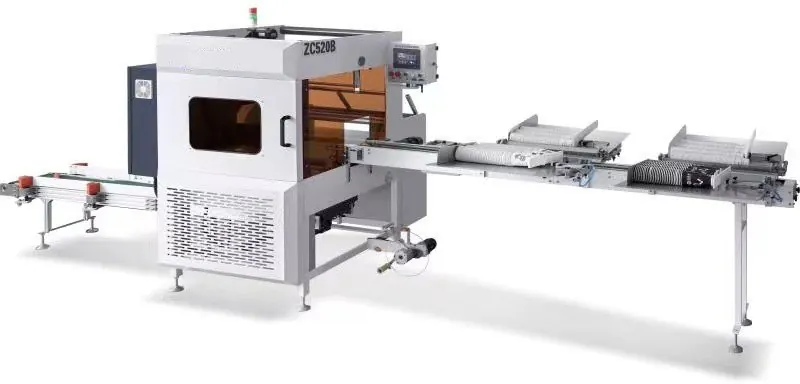
Review the paper cup packing equipment and the related guide to packing-film change validation. The Engineering Notes archive connects these checks with wider machine planning.
Technical reference
- DuPont general heat-sealing process guidance — general reference; confirm applicability to the installed equipment.
Frequently asked questions
Does a strong peel test prove the whole bag is leak-free?
No. Seal strength and continuity need the checks required by the package specification.
Should a vented bag pass a hermetic leak test?
Not unless that test has been adapted and validated for the intended design.
Can hand pulling replace an instrumented strength method?
No. Keep qualitative observations separate from specified measurements.
Should temperature be raised whenever a seal looks weak?
First check film, contact, contamination and the approved process conditions.
Review the evidence with HANNAI
Send your machine model, component identification and the observations described in this guide. Include the drawing or material reference and any before-and-after measurements so the required next check can be identified.