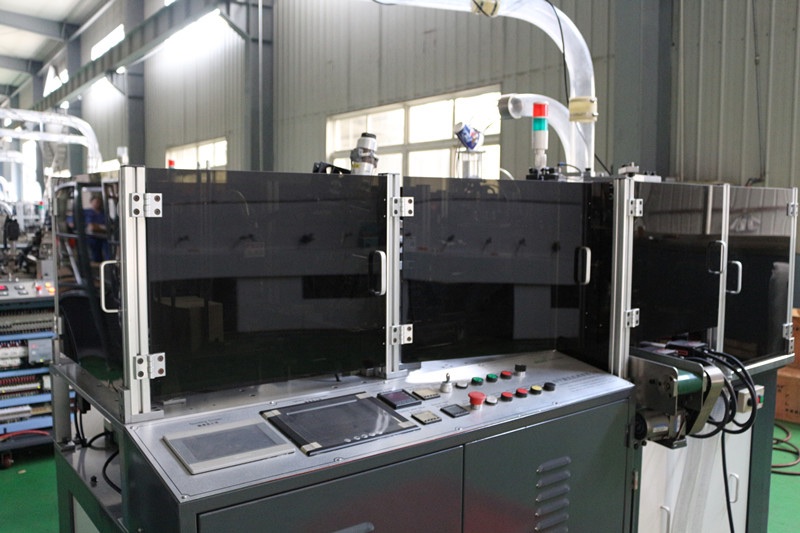
Paper cup machine operator training should establish what a person can perform correctly on the supplied machine and approved application. Attendance at a demonstration does not prove readiness for independent production. A useful training record connects tasks, observation and authorization.
Plan training around the current controls, cup specification and factory procedures. Separate routine operating tasks from maintenance and electrical work. Remote instruction can support learning, but tasks requiring qualified site personnel still need the appropriate local capability.
Define roles before building the checklist
Identify who may prepare material, start an approved job, inspect cups, perform authorized changeovers and release production. Specify which alarms or conditions require stopping and escalation rather than operator adjustment.
Use the supplied manual and the factory's authorization rules. Training does not grant unrestricted access to settings or guarded machine areas. Record role limits alongside demonstrated skills so a completed checklist cannot be misunderstood as permission for every intervention.
Start with the approved product and material
Have the trainee identify the current cup drawing, artwork, tooling and sidewall/bottom material references. Ask them to distinguish approved stock, held material and an unidentified remainder. Correct machine operation begins with the correct application.
The paper-requirements guide explains the information behind those references. Training should show where approved documents are found and what to do when labels or revisions disagree.
| Training task | Practical demonstration | Sign-off evidence |
|---|---|---|
| Job identification | Match cup, material and approved references | Correct references selected |
| Pre-start preparation | Follow the role-specific checklist | Required conditions verified |
| Controlled startup | Use the supplier-approved sequence | Assessor observations recorded |
| Cup inspection | Apply the agreed method to identified samples | Results correctly interpreted |
| Fault reporting | Explain a permitted scenario and escalation | Required information retained |
| Handover | Transfer status and open actions | Incoming responsibility confirmed |
Demonstrate startup and first-piece control
Observe the trainee following the actual pre-start and startup procedure. Include material checks, control-page identification and the required first-piece inspection. The assessor should record an error or assistance given rather than signing off only because cups emerged from the machine.
If the intended material or tooling is unavailable, mark that application as unverified. Do not convert training on a substitute setup into approval for every size. Link the record to the installation and startup checklist.
Teach inspection as a repeatable task
Use the approved methods for dimensions, rim, side seam, bottom integrity and any application-specific handling checks. Provide identified examples of relevant defects where the factory maintains approved references. Assess whether the trainee can record the observation and follow the reaction plan.
Avoid asking an operator to invent tolerance limits or decide independently that a failed cup is acceptable. Product disposition and quality release belong to the authorized roles. Record sample time and production identity so findings can be traced.
Practice fault reporting within safe limits
Use a permitted simulation, discussion or supervised event to assess the response to an alarm, recurring reject or material discrepancy. Do not create a hazard or defeat a protective function for a training exercise. The trainee should know when to stop and whom to contact.
Check that the report includes machine identity, alarm text, operating state, event time and recent changes. A photograph can support the report where allowed, but control credentials should not be shared. Use the remote evidence checklist as a reporting aid.
Include changeover and handover where authorized
For personnel assigned to size changes, assess the applicable parts list, material reconciliation and first-piece release rather than only mechanical completion. Keep the specific demonstrated application on the training record.
Have outgoing and incoming personnel practice a handover covering current order, material lots, quality status and unresolved work. The shift handover checklist helps turn those observations into an operating routine.
Record competence and review triggers
For each task, identify the assessor, machine/application, outcome, required supervision and remaining instruction. Allow incomplete tasks to remain open. Set review triggers when the configuration, procedure or responsibilities change, or when a recurring error indicates a gap.
There is no universal training duration or operator-to-machine ratio. Staffing depends on the process, handling, inspection and responsibilities. Discuss the HANNAI equipment configuration alongside those local resources before making a manpower assumption.
Frequently asked questions
Does attendance establish operator competence?
No. Observe the relevant tasks and record whether they were performed correctly, with or without assistance.
Can one sign-off cover all cup sizes?
Record the demonstrated application and review the evidence needed for other sizes or procedures.
Should operators adjust every setting during a fault?
No. Define permitted tasks and escalation boundaries using the supplier and factory instructions.
When is refresher training useful?
When the machine, application, procedure or role changes, or evidence shows a task is not being performed reliably.
Prepare a training brief
Share the machine/application scope, operator language, local maintenance resources and training needs through the HANNAI inquiry page. Identify which tasks must be demonstrated before independent operation.