Paper cup packing machine counting and sealing troubleshooting should follow the real sequence from cup presentation and detection to bag feeding, stack loading, sealing, cutting and discharge. A short pack or open seal is the final symptom; the cause may have entered several steps earlier.
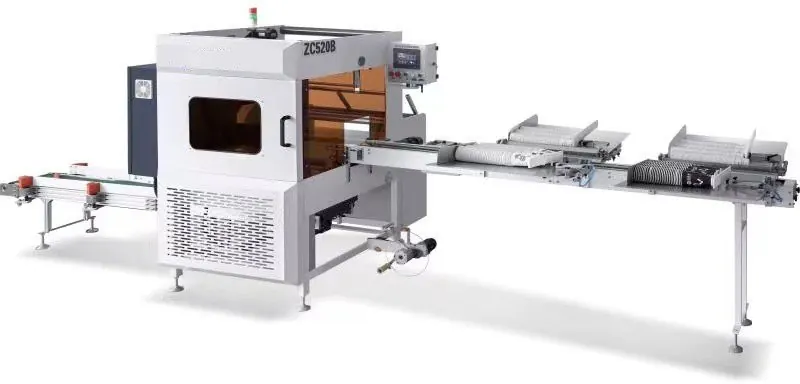
Define the packing defect before adjusting the machine
Separate short count, overcount, intermittent count, missing bag, poor stack position, incomplete seal, wrinkled seal, film cut error and damaged cups. Keep a labelled failed pack and an accepted comparison pack. Record the time, cup SKU, target count, film batch, machine state, operator action and whether the defect followed a stop, film splice or changeover.
The packing requirement must already be clear: approved cup, stack orientation, cups per pack, film specification, finished bag dimensions and acceptance method. If these inputs are still undecided, use the paper cup packing machine buyer guide to establish them before treating the issue as a maintenance fault.
Map the sequence from incoming cup to finished pack
Observe one complete cycle at a safe speed or approved diagnostic mode. Identify where cups are presented consistently, which device detects or counts them, how the completed stack is released, how film is positioned around it, when sealing is enabled and how the package leaves the machine.
Preserve the first abnormal event. A film jam may be the result of a leaning stack; a leaning stack may begin with inconsistent nesting; and an incorrect count may follow a restart rule rather than a failed sensor. Do not reach into moving equipment, bypass a guard or defeat an interlock to see the sequence.
Use a symptom-to-evidence troubleshooting table
| Observed symptom | First evidence to preserve | System boundaries to check |
|---|---|---|
| Short count | Actual count, sensor indication, cup spacing and stop/restart point | Incoming stack, detection, counter logic, stack release and reject handling |
| Overcount or double count | Sensor transition, cup bounce, overlap and counter history | Cup presentation, sensor alignment, signal stability and sequence timing |
| Intermittent count variation | Cup SKU, speed state, static or dust condition and changeover record | Cup geometry, guide setup, sensor condition, wiring and control logic |
| Open or incomplete seal | Seal position, film identity, surface condition and heater/controller evidence | Film path, sealing faces, temperature sensing, contact, pressure and cycle sequence |
| Wrinkled, displaced or cut seal | Film tracking, tension, stack position and jaw/cutter timing evidence | Film feed, guides, stack loading, sealing alignment and discharge |
| Jam after a machine stop | First alarm, retained cup/film position and restart action | Interrupted stack logic, incomplete cycle recovery, guarding and reject route |
Stabilize cup presentation before diagnosing the counter
Counting begins with repeatable cups. Check stack height progression, cup orientation, rim condition, nesting depth, leaning, sticking and deformation. Verify that guides support the approved cup without excessive clearance or compression. A sensor cannot correct an incoming stack that arrives inconsistently.
Compare the problem cup with an approved sample and review forming output. The paper cup stackability and de-nesting inspection guide helps separate packing-machine handling from upstream rim, taper, curl or dimensional variation.
Diagnose counting as a complete signal chain
Clean and inspect the sensor using the approved method, then check mounting security, alignment, target contrast or detection condition, connector state and cable routing. Observe whether the machine input changes once for each intended cup event. Do not increase sensitivity first; that may convert a missed count into bounce, edge or background detection.
Continue from the physical input to the counter and sequence logic. Confirm how the controller treats a completed count, interrupted stack, manual jog, guard opening, emergency stop, power recovery and rejected pack. If the displayed count is correct but the physical stack is wrong, investigate release and transfer. If the displayed count is already wrong, trace presentation, detection and input evidence before editing logic.
Separate film suitability from the sealing mechanism
Verify the film identity, construction, thickness reference, width, roll direction, storage condition and approved sealing surface. Look for contamination, folds, damage, incorrect splices or a material change. A film that looks similar may respond differently, so do not copy settings from another material without controlled trials and approval.
With the machine safely isolated and hot-surface energy controlled, inspect sealing faces, covers, mounting, contamination and damage. Qualified maintenance personnel should then compare heater command, sensor response, controller status, actual sealing-cycle evidence and the machine-specific setup. Never touch a sealing area assumed to be cool, bypass a temperature control or raise a setting repeatedly to hide a mechanical or material problem.
Check contact, alignment and sequence without guessing settings
A seal depends on the approved film and the combined condition of heat, contact, pressure, alignment and cycle sequence. An incomplete seal may follow a cold or contaminated area, poor contact, displaced film, a stack trapped in the sealing zone or an interrupted cycle. A distorted seal may originate in film tracking or stack position rather than temperature.
Mark the failed area and compare its location across several packs. A repeatable position points toward a local machine or path condition; a moving defect may follow film, stack or tension variation. Change only one authorized variable at a time, record it and return to the approved baseline if evidence does not improve.
Investigate stops, transitions and restart logic
Some defects occur only during automatic production even though single-cycle testing passes. Record the transition into full flow, the arrival interval between stacks and the state of downstream discharge. If the packing machine waits, starves or blocks, identify which device requested the stop and what remained in each station.
When forming and packing are connected, compare accepted incoming flow with the packing sequence rather than only rated machine speeds. The production-line bottleneck analysis guide helps distinguish a capacity mismatch from a local counting or sealing defect.
Control cleaning, maintenance and replacement evidence
Paper dust, film fragments and product debris can affect sensors, guides, sealing faces and moving mechanisms. Define safe cleaning points, tools, frequency and inspection acceptance. Avoid uncontrolled compressed air around sensors, electrical devices or finished cups, and do not use a chemical that can contaminate packaging or damage film-contact components.
Coordinate the task with the machine cleaning and hygiene checklist. When replacing a sensor, heater, controller or sealing component, record the original identity, wiring, mounting, parameter baseline and reason for replacement. A new part should not be used to erase unresolved process evidence.
Verify the correction with controlled packs
Run the approved cup and film through startup, steady production, a planned stop and controlled restart. Check the physical count using the defined sampling method; inspect seal continuity, position and appearance; and confirm the cups are not crushed, contaminated or deformed. Include downstream handling so a seal that looks acceptable at discharge is also assessed through normal carton packing.
Record the trial duration or sample basis, completed packs, defects, stops, adjustments and responsible release. Final acceptance settings and limits depend on the delivered paper cup packing machine, approved consumables, cup format and project procedure; they should not be copied as universal values.
Frequently asked questions
Should sensor sensitivity be increased when the machine misses cups?
Not as the first action. Preserve the failed count and inspect cup presentation, sensor cleanliness, alignment, mounting, signal transition, wiring and counter logic. An unsupported sensitivity change can create double counts or unstable detection.
Why can counting pass in manual mode but fail during continuous production?
Continuous operation adds changing cup intervals, stack transfer, upstream variation, stop/start transitions and downstream blocking. Reproduce the failure safely while recording the complete sequence instead of relying only on an isolated sensor test.
Can sealing settings be copied from another bag film?
Do not assume so. Confirm the exact film construction, dimensions, roll direction and approved package, then use the machine and consumable supplier’s controlled setup and acceptance method. Similar-looking films can behave differently.
What evidence should be sent for remote troubleshooting?
Send the machine model, cup and film specifications, target and actual count, failed and accepted pack photos, a safe video of the sequence, exact alarms, HMI or input status, operating stage, recent changes and the settings or parts already checked.
Send the packing machine model, cup sample and dimensions, cups per pack, film specification, failed-pack evidence, exact sequence and recent changes through our inquiry page. HANNAI can discuss the supplied configuration and the evidence required for the next troubleshooting step.