Paper cup packing machine discharge conveyor faults begin after a sealed pack is released and end where the next accepted handling process takes control. Packs that rotate, collide, bridge, back up or fall may be blamed on the conveyor even when the first cause is a distorted seal, changing pack length or a stopped downstream carton operation. Diagnosis should reconcile physical pack flow with the machine’s release and accumulation logic.
Map the downstream handoff
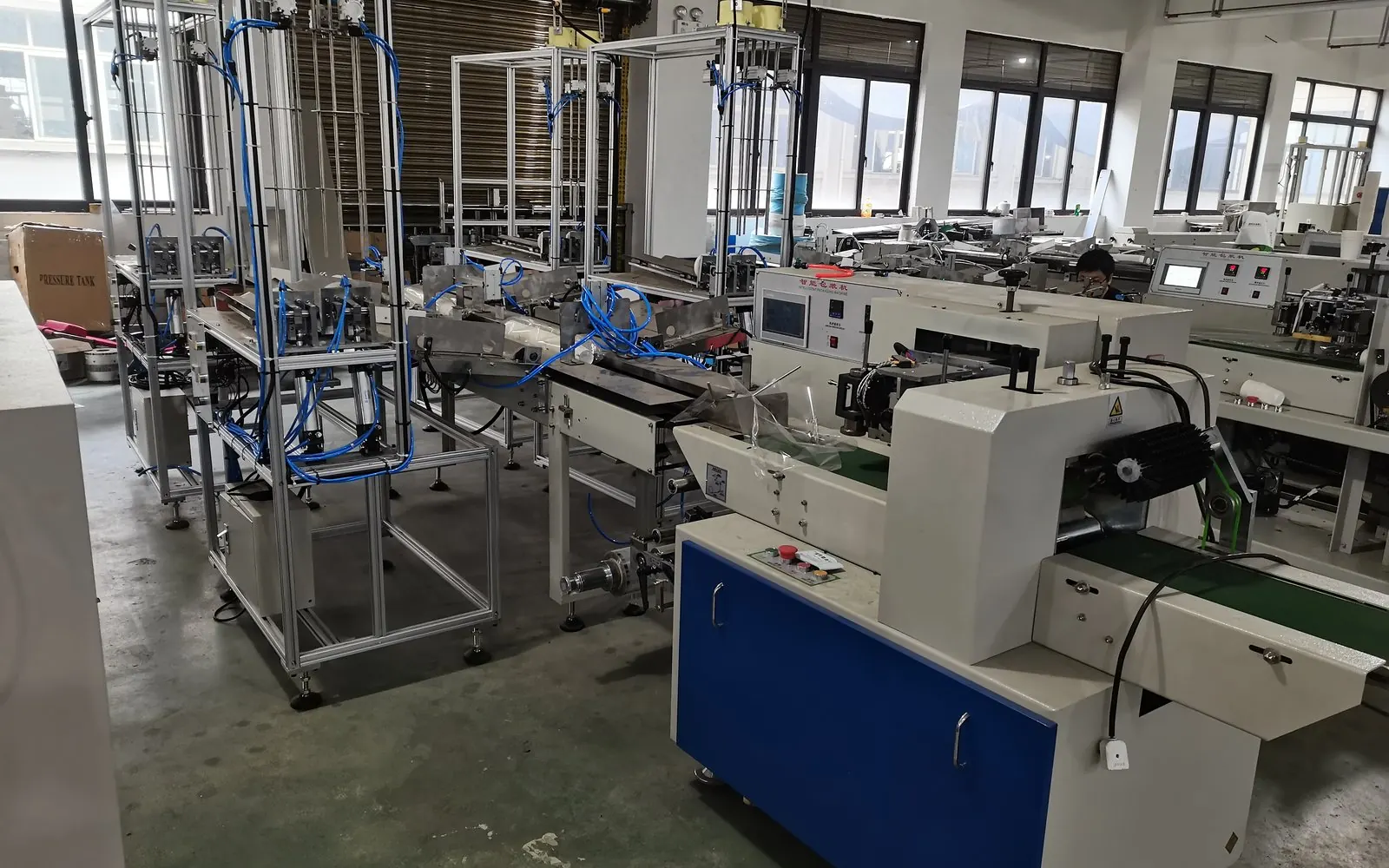
Identify the sealing-machine exit, belts or rollers, transfer plates, guides, sensors, reject or sample point, accumulation zone and final manual or automated handoff. Record which controller owns each stop, run-permission and downstream-ready signal. Configurations vary, so do not assume every conveyor can accumulate packs.
The counting and sealing guide covers formation of the finished bag. This guide begins only after the correct batch has been sealed and released.
Classify the first unstable event
Separate a pack that exits skewed, slips, rotates, catches a guide, collides with the preceding pack, backs up from downstream or drops at a height transition. Record pack SKU, cup count, film, seal position, machine speed stage and whether the event follows startup, a stop or a downstream interruption.
Mark consecutive packs by an approved method and record from outside guards. The last pack in a pile may be damaged by several later collisions, so preserve the earliest abnormal pack and its position in the sequence.
Use a discharge evidence table
| Observed pattern | Evidence to compare | Diagnostic direction |
|---|---|---|
| Pack rotates at first transfer | Exit orientation, seal shape, belt contact and guide position | Find asymmetric support or a distorted pack |
| Gaps between packs disappear | Release interval, conveyor speed, slip and downstream state | Review flow balance and changing accumulation |
| Packs bridge between guides | Pack dimensions, film tails, guide reference and surface friction | Separate product geometry from guide setup |
| Fault occurs when carton packing stops | Ready signal, buffer occupancy, stop command and queued packs | Review downstream interlock and buffer capacity |
| Pack falls at conveyor end | Handoff height, receiving readiness, pack momentum and support | Correct the receiving boundary rather than upstream seal |
Verify the incoming pack
Measure and inspect sealed packs using the approved specification. Check cup count, overall length and width, seal position, film tail, trapped air, wrinkles and product orientation. A swollen or poorly centered package can behave differently even when the discharge conveyor has not moved.
Use the sealing-jaw guide if pack shape changes at the seal. Do not widen every downstream guide to pass a defective package that should be contained upstream.
Inspect conveyor mechanics under isolation
Stop the line, apply lockout and verify isolation before reaching near belts, rollers, chains, nip points or transfer gaps. Control stored pneumatic and gravity energy. Photograph guide and transfer references before loosening components.
Inspect belt or roller surfaces, tensioning devices, tracking, bearings, transfer plates, guards, fasteners and guide edges. Look for film residue, paper dust, cuts, polished slip areas, loose mounts, a raised joint or an unsupported gap. Clean and service only through the supplied procedure.
Check sensors and accumulation logic
Confirm what each delivered sensor detects and where the controlled stopping point is. Clean accessible sensor faces in a safe state and inspect targets, mounts and cables. Compare the physical pack position with HMI or PLC indication using the approved diagnostic access.
When downstream becomes unavailable, determine whether upstream packing should stop, pause release or fill a defined buffer. Do not bypass a full-buffer or downstream-ready signal. A logic change requires qualified controls review and confirmation of the complete line sequence.
Measure flow rather than one conveyor speed
Count accepted packs entering the discharge, leaving the handoff and remaining in accumulation over a defined interval. Record stops, samples and manual removals. If incoming flow exceeds outgoing flow, the queue will grow even if the conveyor motor runs normally.
Compare pack spacing at repeatable points. A faster discharge belt may create an unstable transfer or excessive gap; a slower one may cause contact. Use only supplier-approved settings and evaluate the complete packing and receiving process.
Verify restart and downstream recovery
After correction, account for tools, restore guards and use the documented startup. Run identified packs through the first transfer, normal discharge and a controlled downstream stop only when the test plan permits it. Confirm stop, hold and restart behavior without losing batch identity.
Inspect packs for seal damage, scuffing, crushed cups, orientation and final count. Record product, film, conveyor references, sensor evidence, buffer state and downstream condition. Release production only when both physical packs and counted flow remain reconciled.
Frequently asked questions
Should the discharge conveyor always run faster than the packing machine?
No universal relationship applies. The supplied transfer and spacing design determines approved settings and interaction with downstream equipment.
Can guides be widened when packs bridge?
Only after pack dimensions, seal shape and the approved guide reference are confirmed. Wider guides can create rotation or loss of control.
Does a full buffer prove the conveyor is too slow?
No. Downstream stoppage, release logic, slipping packs or lower receiving capacity can also create accumulation. Reconcile flow at both ends.
What evidence supports discharge troubleshooting?
Provide pack dimensions and samples, safe sequence video, conveyor and guide photos under isolation, sensor states, flow counts and downstream stop history.
Send the packing-machine model, pack specification, film, labeled samples, discharge layout, sensor evidence and measured flow through our inquiry page. HANNAI can review the handoff for the supplied packing configuration.