Electrical terminal heating in a paper cup machine can develop from loose clamping, damaged conductors, overload, imbalance, contamination, incorrect hardware or repeated thermal cycling. Discoloration is important evidence, but tightening every terminal without identifying the circuit can create damage and erase the original condition. Inspection must be performed by qualified electrical personnel with the correct isolation and measurement procedure.
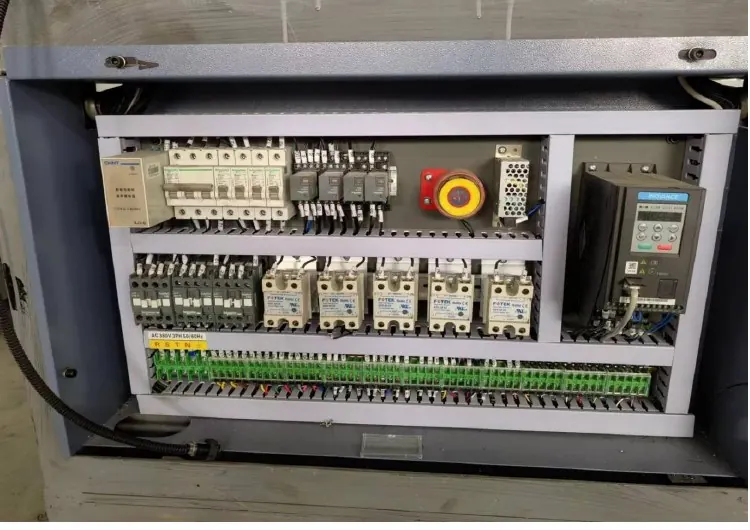
Identify the affected circuit before touching it
Use the current electrical drawing to record terminal designation, conductor route, protective device, connected load, voltage class and whether the point carries power, heater, motor, control or protective-earth current. Photograph wire markers and terminal numbering before covers or conductors are disturbed.
The electrical control cabinet inspection guide covers enclosure-level checks. This article concentrates on a terminal, conductor and load path that shows heating or connection movement.
Preserve operating evidence safely
Record when the concern appears: startup, heater demand, motor acceleration, stable production or an intermittent alarm. Capture load state, recent maintenance, odor, nuisance trips and any safe external temperature evidence under the facility electrical safety program. Do not open energized compartments merely to obtain a photograph.
Compare phases or equivalent circuits only when their duty and conductor arrangements are genuinely comparable. A thermal difference is a screening clue, not automatic proof of a loose screw.
Use a terminal-heating evidence table
| Observed condition | Evidence to inspect | Diagnostic direction |
|---|---|---|
| One terminal is hotter than adjacent points | Load, conductor condition, clamp interface and comparable phases | Separate connection resistance from circuit load |
| Insulation is discolored near the end | Stripping length, ferrule or lug, strand damage and heat spread | Inspect conductor preparation and clamping |
| Terminal loosens repeatedly | Hardware type, vibration, conductor movement and thermal cycling | Find the mechanical or application cause |
| Several terminals heat together | Cabinet cooling, load profile, voltage quality and device condition | Review the wider electrical environment |
| Heating remains after tightening | Damaged terminal, conductor, lug, load, upstream joints and downstream joints | Do not treat torque as the only cause |
Establish an electrically safe work condition
Qualified personnel must follow the site lockout and electrical safety procedure, identify every energy source and verify absence of voltage with approved equipment. Control stored energy in capacitors, drives and heater circuits. Check the instrument before and after verification according to the applicable procedure.
Never rely only on an HMI, selector switch or open breaker indication. Protect wire labels, terminal order and shielding or grounding arrangements during inspection.
Inspect the terminal and conductor preparation
Look for melted or discolored insulation, cracked housings, carbon tracking, corrosion, dust, oil, loose strands, cut strands, incorrect strip length, damaged ferrules or lugs and conductors pulled sideways. Inspect both sides of feed-through or device terminals where accessible.
A conductor may appear tight while only part of the strand bundle is clamped. Confirm terminal and conductor size compatibility from the component data. Replace heat-damaged parts according to the approved repair scope rather than reusing altered contact surfaces.
Verify hardware and tightening method
Identify whether the connection uses a screw clamp, spring clamp, stud and lug, plug connector or another design. Use the component manufacturer’s specified tool, preparation and torque method where applicable. Do not add washers, double conductors or thread compounds unless the design explicitly permits them.
Record as-found movement before correction when safe to do so. Repeated retightening can damage threads, deform conductors or conceal vibration and thermal-cycling causes.
Check load, imbalance and upstream conditions
After the connection is restored and covers and guards are in place, qualified personnel may compare operating current, phase balance and voltage behavior under representative load using the approved test method. Check protective-device rating, conductor identity and actual duty against the electrical design.
Use the power quality and voltage imbalance guide when several circuits or phases are affected. A sound terminal can still heat when the connected load or supply condition is abnormal.
Inspect mechanical and environmental influences
Check cable support, bend radius, gland retention, door movement, cabinet vibration, dust, moisture, cooling airflow and nearby heat sources. A heavy unsupported cable can apply continuous force to a terminal. Contamination can reduce insulation quality and interfere with spring or contact surfaces.
Correct the external cause so the repaired connection is not exposed to the same stress. Keep routing and separation consistent with the supplied design.
Restore, load and trend the repaired point
Account for tools, verify terminal covers, shielding, protective earth, cabinet panels and machine guards, then restore power through the approved startup process. Check that the connected device operates normally and that no fault or odor appears.
Reassess the point under a comparable stable load using the approved closed-panel or safe measurement method. Record current, operating state, temperature evidence, parts replaced and follow-up interval. Return to service only after the electrical authority accepts the result.
Frequently asked questions
Does a hot terminal always mean the screw is loose?
No. Connection resistance is one possibility, but overload, imbalance, damaged conductors, contamination and external heat must also be considered.
Can terminals be tightened while the machine is energized?
No routine adjustment should bypass the facility electrical safety procedure. Inspection and service must be performed by qualified personnel under an electrically safe condition.
Should a heat-discolored terminal be reused after tightening?
Not automatically. The terminal, conductor and insulation require assessment against the component and repair criteria because heat can permanently damage contact surfaces.
What records help prevent recurrence?
Keep circuit identity, as-found photos, conductor and terminal part data, load readings, corrective work, qualified approval and follow-up thermal evidence.
Send the machine model, electrical drawing reference, terminal designation, qualified as-found photos, load condition and corrective-work record through our inquiry page. HANNAI can help review the machine-specific circuit context.