The ultrasonic horn is a tuned mechanical component of an acoustic stack. Matching only the face dimensions or mounting thread can create overloads, weak energy transfer, heat, noise or damage. Replacement decisions must treat the power supply, converter, booster, horn, fixture and paper seam as one application.
Do not machine, weld or polish an ultrasonic horn in the field unless the original tooling supplier has provided an approved repair route. Geometry and material influence resonance; an apparently small modification can change the tuned behavior.
Decision matrix
| Compatibility item | Evidence | Approval question |
|---|---|---|
| Operating frequency | Generator and stack nameplates | Is the horn designed and tuned for the same system? |
| Stack interface | Converter, booster, stud, joint face and torque procedure | Can it be assembled without adapters or altered joints? |
| Horn geometry | Material, length, gain and face profile | Does it deliver the intended amplitude and contact pattern? |
| Machine integration | Mounting, clearance, cooling and fixture datum | Will it run without contact or alignment changes? |
| Process result | Load data, seam tests and retained samples | Is the finished cup acceptable across the approved operating window? |
Confirm the acoustic system identity
Record every stack component and its part number. Emerson’s Branson horn literature describes the horn as part of a system with power supply, converter and booster, and explains that geometry and material determine resonant behavior. That is why frequency and stack compatibility cannot be judged from an external drawing alone.
Photograph joint faces and mounting before disassembly. Follow the approved cleaning, stud, torque and assembly method; damaged or contaminated interfaces can mimic a bad horn.
Compare more than the sealing face
Check horn material, tuned frequency, gain, nodal mounting, joint interface, face profile and mass limits against the supplier record. A copied face can still have the wrong acoustic length or stress distribution.
Confirm fixture and anvil relationship at the same time. A new horn cannot correct a loose stack, worn fixture or uneven mechanical support.
Use diagnostics before a production trial
Perform the manufacturer’s approved stack scan or tuning check before loading product. Record frequency, amplitude setting and any overload or diagnostic result. Stop on abnormal noise, rapid heating, visible movement at a joint or repeated generator trips.
Never defeat overload protection to force the new component to run. The alarm is evidence that the acoustic or mechanical load needs investigation.
Validate the seam as a process
Use the approved paper and coating combination, machine speed and setup. Record seam appearance, peel or leak method defined by the factory, reject rate and stack data. Samples should cover startup and stable running, not only one hand-selected cup.
Avoid increasing amplitude or pressure simply until the seam looks closed. Excess loading may hide mismatch and shorten component life. Establish a stable window with supplier guidance.
Control tooling history
Give each horn a unique identity with supplier drawing, stack assignment, commissioning evidence, accumulated use and repair history. Protect joint and working faces during storage.
If the original fault has not been isolated, follow the linked system guide before purchasing a horn. HANNAI can review machine configuration and sealing evidence, but final acoustic compatibility must be supported by the tooling supplier’s data.
Technical references
- Emerson Branson horn catalog — used for the general component principle; the installed machine documentation remains controlling.
Related machine and guide
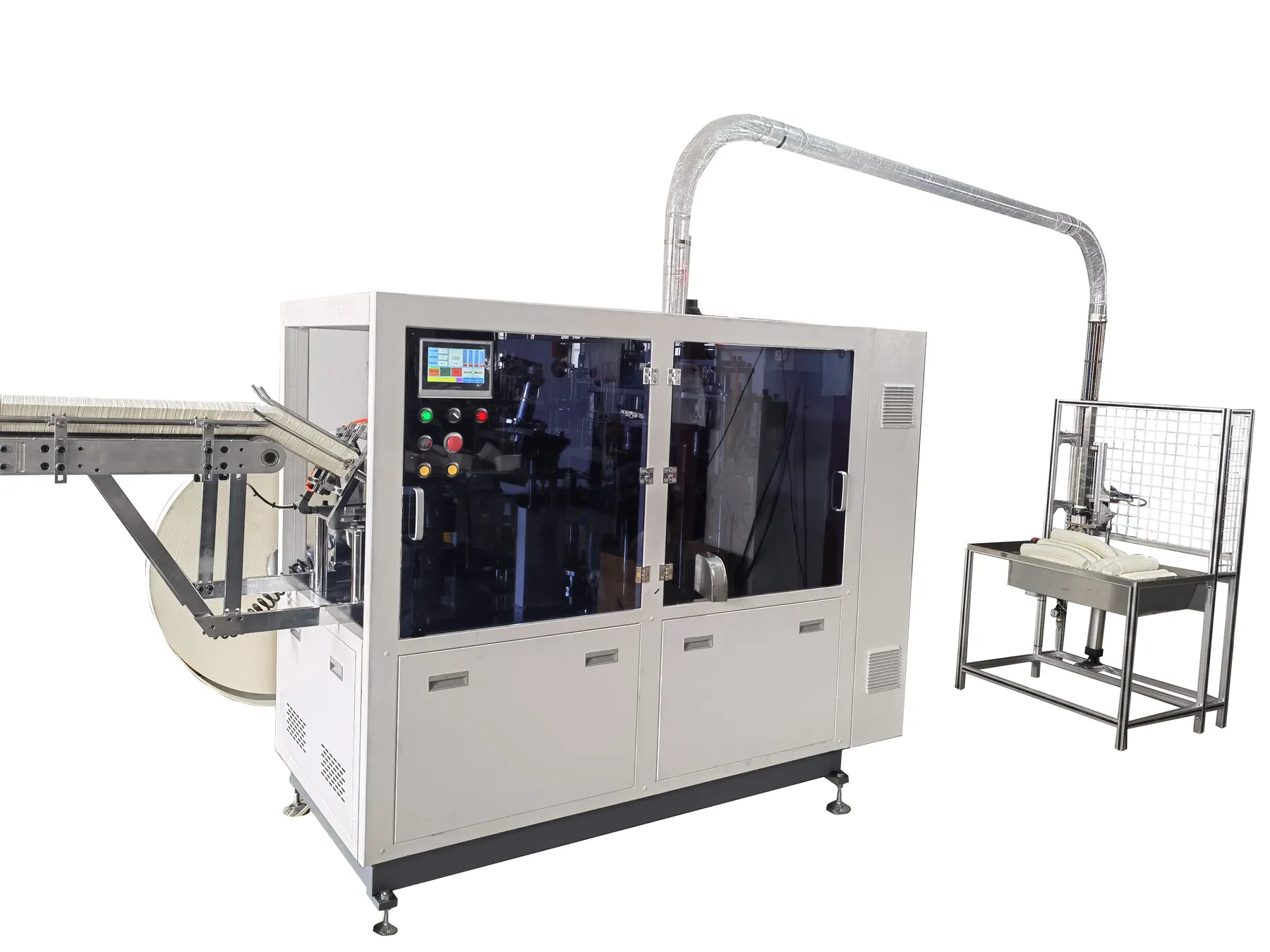
Review the HN-SF160 high-speed paper cup machine for machine context, then use the ultrasonic sealing troubleshooting guide for the adjacent maintenance or process check. Browse all Buyer Guides when building a wider project checklist.
Frequently asked questions
Can a horn with the same frequency label be installed directly?
Not automatically. Verify the complete stack interface, tuning, geometry, gain, mounting and application approval.
Can the horn face be machined locally?
Only through an approved tooling-supplier repair process that includes retuning and inspection.
Why does a replacement trigger overload?
Possible causes include acoustic mismatch, poor joint assembly, fixture load, contact, damage or an unsuitable process setting.
What should be included in an RFQ?
Provide generator, converter, booster and horn data, drawings, machine model, cup material, seam requirement, photos and diagnostic records.
Review your machine configuration with HANNAI
Send the machine model, cup or material drawings, component labels, photos and a description of the required result. We will clarify which details must be confirmed before a quotation or technical recommendation.