A paper cup machine ultrasonic sealing system converts electrical energy into controlled mechanical vibration at the sidewall seam. When sealing becomes weak, intermittent or alarm-prone, professional troubleshooting connects the generator, ultrasonic stack, tooling contact, material joint, machine timing and finished-cup evidence before any setting or component is changed.
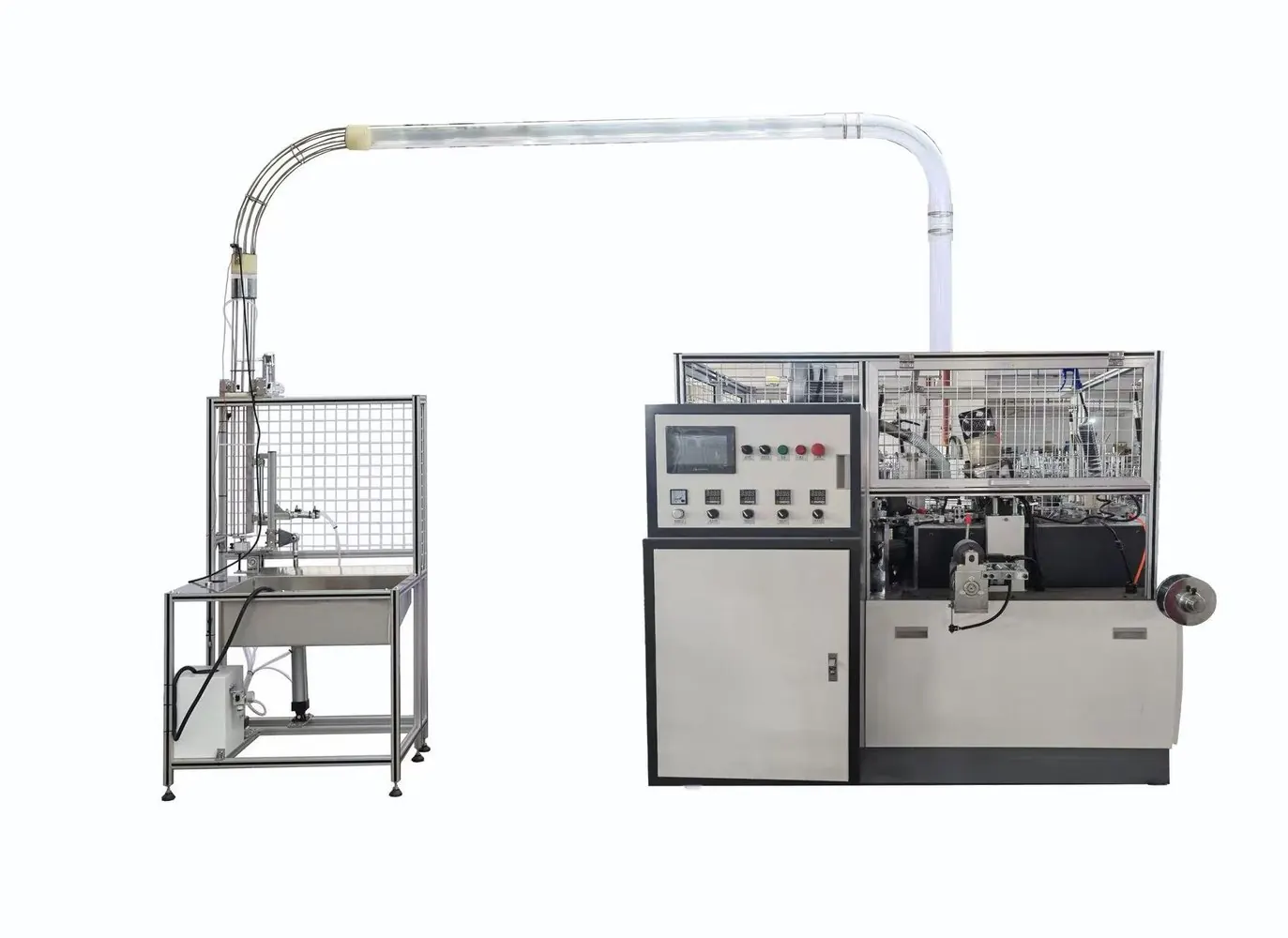
Understand the complete ultrasonic energy path
The installed system may include a generator, cables, transducer, booster, horn or sonotrode, mounting assembly, opposing contact surface and control signals. The mechanical stack must transfer energy to the intended overlap while the forming mechanism holds the joint in the specified position and condition.
The ultrasonic versus hot-air sealing guide explains configuration questions for buyers. This guide deals with evidence-based diagnosis of a supplied ultrasonic system, not selection of a universal frequency, amplitude, pressure or weld-time value.
Respect electrical, thermal and mechanical hazards
Ultrasonic equipment can involve hazardous voltage, hot surfaces, acoustic energy and fast clamping or forming movement. Only qualified personnel should open the generator, test electrical circuits, dismantle the stack or work inside the guarded sealing station. Follow the machine and site lockout procedure and verify stored energy is controlled.
Never run a dismantled or unsupported ultrasonic assembly, touch an energized stack, bypass a guard, or continue production with unusual noise, visible cracking, arcing, smoke or repeated protection alarms. Use hearing and other protection required by the factory risk assessment.
Use an ultrasonic troubleshooting evidence table
| Check point | Evidence to record | Decision question |
|---|---|---|
| Fault identity | Exact alarm, time, machine mode, speed and cycle position | Is the problem electrical, acoustic, mechanical or process-related? |
| Material joint | Paper, coating, overlap, edge condition and blank lot | Is an approved joint presented consistently? |
| Stack condition | Component identity, mounting, contact faces and visible damage | Can energy travel through the specified assembly? |
| Contact and timing | Joint position, support, pressure sequence and release point | Does the seam meet the tooling at the intended cycle stage? |
| Generator behavior | Status, load indication, alarm history and change from baseline | Does the system respond normally under the approved setup? |
| Cup result | Seam appearance, opening, leakage, damage and sample identity | Does the output meet the approved inspection plan? |
Classify the symptom before resetting the system
Separate a generator protection alarm from a seam-quality problem with no alarm. Record whether the issue is no seal, locally weak bonding, variable sealing, surface marking, material scorching, unusual sound, increasing heat or a fault that appears only after warm-up or at a certain production state.
Preserve the HMI message, generator display, cup samples and safe video of the cycle. Note the first affected cup, material lot, mold, machine setting reference and recent work. Resetting repeatedly can erase the relationship between the alarm and the process event.
Verify the blank, coating and seam overlap
Confirm the approved paper and coating structure, blank dimensions, edge condition, print orientation and side-seam overlap. Contamination, coating variation, damaged edges or incorrect blank geometry can reduce sealing consistency even when the ultrasonic equipment has not changed.
Use the paper and coating incoming inspection guide to keep material evidence separate from machine evidence. Do not increase energy to compensate for an unverified or unsuitable material change.
Inspect the mechanical stack without altering its reference
Under safe isolation, inspect visible horn, booster, transducer, mounting and cable condition according to the supplied procedure. Look for contamination, wear, fretting evidence, loose mounting, surface damage, cracking or contact with an unintended structure. Confirm that part identification matches the delivered system.
Stack assembly, tightening method and component orientation are manufacturer-specific. Do not use general torque values, machine the horn surface, add washers, substitute stack components or rotate parts casually. An unauthorized change can alter resonance, loading and component life.
Check seam presentation and opposing support
The horn cannot create a stable seal if the overlap is incorrectly positioned, unsupported, wrinkled or moving during contact. Inspect guides, forming position, opposing tool condition, parallel contact and the sequence that closes, energizes and releases the seam.
Compare the result with the sidewall seam overlap and sealing inspection guide. If the joint enters the station incorrectly, investigate feeding, tooling position and timing before treating the ultrasonic generator as the primary cause.
Review generator status and connections through qualified checks
Record the exact generator alarm and any available load, frequency-tracking or status information defined by the supplier. Inspect external cables, connectors, shielding, grounding and ventilation only within the authorized scope. Intermittent faults may follow vibration, cable movement, heat or contamination rather than a constant component failure.
Internal measurements, tuning and firmware or parameter changes belong to qualified service personnel. A cleared alarm does not prove that the original electrical or acoustic condition has been corrected.
Separate ultrasonic heat from other heating functions
Warm components can result from normal energy conversion, excessive loading, poor coupling, repeated cycling, ventilation problems or another process heat source. Record when and where temperature changes occur instead of judging by touch. Do not continue running a system that shows abnormal heat or odor.
Where a machine also uses hot air for other forming operations, trace each heat path independently. The heating and temperature control guide provides the wider process framework.
Return to production through controlled sample proof
After an authorized correction, restore covers, guards and cable routing, clear all tools and follow the documented startup sequence. Begin with the permitted test condition and observe repeated seams before increasing output. Inspect both the seam and any downstream cup effects.
Retain accepted and failed samples with material and setting identity. Both the HN-S120 and HN-M100 reference ultrasonic side sealing, but final components and process settings remain specific to the delivered project.
Frequently asked questions
Does a weak side seam prove the ultrasonic generator is faulty?
No. Material, coating, overlap, tooling contact, support, timing, stack condition and generator behavior can create similar results. Preserve the sample and identify where the process first departs from its approved reference.
Can amplitude or weld time be increased until the seam closes?
Not as an uncontrolled fix. Higher energy may damage paper, tooling or ultrasonic components while hiding a material or alignment problem. Any setting change must follow the supplied limits and sample-approval process.
Is unusual ultrasonic noise acceptable if cup quality still passes?
Do not assume it is acceptable. A changed sound can indicate looseness, contact, cracking, overload or another developing condition. Stop through the approved procedure and request qualified inspection.
When should supplier service be requested?
Escalate repeated generator alarms, abnormal heat or sound, suspected stack damage, lost assembly references, unclear tuning data, or any case requiring internal electrical work or unauthorized parameter access.
Send the paper cup machine model and configuration, generator and stack identification, exact alarm, approved material, seam samples, safe cycle video and recent changes through our inquiry page. HANNAI can review the evidence and discuss the next safe diagnostic step.