Film that feeds on the same roll width can still require a different sealing window. Sealant layer, thickness, treatment, slip, stiffness, shrink behavior and supplier variability affect bag opening, tracking, cutting and seal formation. A material change therefore needs a controlled validation rather than a temperature guess.
Use the film supplier’s technical data and the factory’s package requirements. This guide does not define a universal seal temperature, dwell time, pressure or test limit because those values depend on the film structure, machine configuration and intended package.
Decision matrix
| Validation stage | Controlled inputs | Evidence |
|---|---|---|
| Material identity | Supplier, structure, thickness, width, lot and sealant side | Certificate or specification and roll label |
| Machine baseline | Clean parallel jaws, sensor and tension condition | Inspection record before trials |
| Window trial | Approved ranges of temperature, time, pressure and speed | Labeled matrix of settings and results |
| Package checks | Appearance, continuity, opening, cut and integrity method | Recorded samples and measured results |
| Production confirmation | Startup, steady run and roll transition | Retained samples and release signature |
Confirm the exact film construction
Request a specification for the exact material, not only a trade name. Identify the sealant side and unwind orientation. Record roll width, core, thickness and treatment information relevant to sensors and handling.
Do not infer food-contact suitability or recyclability from appearance. Obtain the documentation required for the intended market and package use from the material supplier.
Prove the machine baseline first
Inspect sealing faces for residue, damage, temperature uniformity and parallel closing under the approved maintenance method. Confirm film path, tracking, tension, mark detection, cutter condition and bag opening before changing seal parameters.
A contaminated jaw can make a good film appear inconsistent. Use the linked jaw guide to resolve equipment variation before comparing materials.
Map a process window rather than one point
Use a planned trial matrix within supplier and machine limits. Adjust one factor at a time and label every sample with film lot, speed and settings. Include startup and repeat samples so apparent success is not based on one warm, hand-selected bag.
The center of a stable window is generally more robust than an edge condition, but final settings require site approval. Do not defeat guards or exceed equipment ratings during trials.
Evaluate functional package results
Check continuous seal formation, wrinkles, burn-through, contamination, cut position, opening and the factory’s defined integrity method. Visual appearance alone does not prove strength or leak performance. Also confirm that the film does not scuff or deform the cup stack.
If testing requires regulated methods, use the applicable customer, market or laboratory procedure. Do not claim sterile or barrier performance without appropriate evidence.
Release and monitor the change
Approve the specific supplier, structure and operating window. Retain labeled samples and define incoming checks for future lots. Monitor rejects during the first production campaign and review drift by roll or shift.
Send film data, sample photos and machine configuration to HANNAI when a packing-line trial or quotation must account for a new material.
Related machine and guide
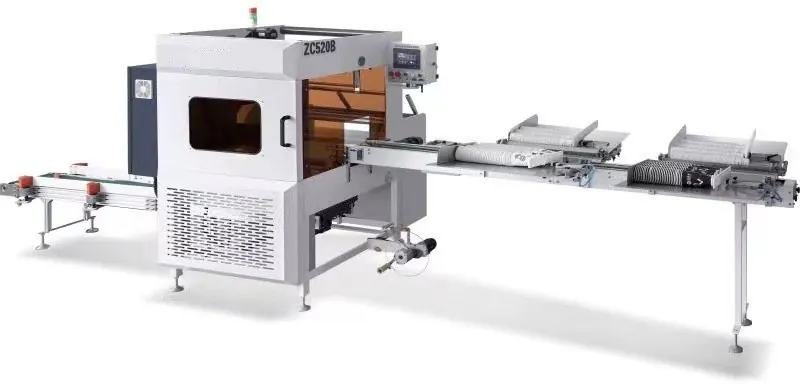
Review the paper cup packing machine for machine context, then use the sealing-jaw inspection guide for the adjacent maintenance or process check. Browse all Buyer Guides when building a wider project checklist.
Frequently asked questions
Can the old temperature be copied to a new film?
It can be a trial reference only when suppliers and machine limits permit; the new film still needs a controlled process-window validation.
Does a smooth-looking seal prove integrity?
No. Use the factory’s defined functional or integrity test as well as visual inspection.
Should jaw problems be corrected by higher temperature?
No. Cleanliness, parallelism, temperature uniformity and pressure condition should be proven first.
What material information should be retained?
Keep supplier, structure, sealant side, thickness, width, lot, compliance documents and approved settings.
Review your machine configuration with HANNAI
Send the machine model, cup or material drawings, component labels, photos and a description of the required result. We will clarify which details must be confirmed before a quotation or technical recommendation.