A double-wall sleeve is fitted to a three-dimensional inner cup, not to a nominal ounce label. Cup taper, top and bottom diameters, height, rim, side-seam step and forming variation determine how the sleeve seats. Blank geometry, grain direction, print position and adhesive pattern must be approved as a matched system.
This trial method focuses on fit and production repeatability. Thermal or insulation claims require a separate test method and product evidence; they should not be inferred merely because an outer sleeve is present.
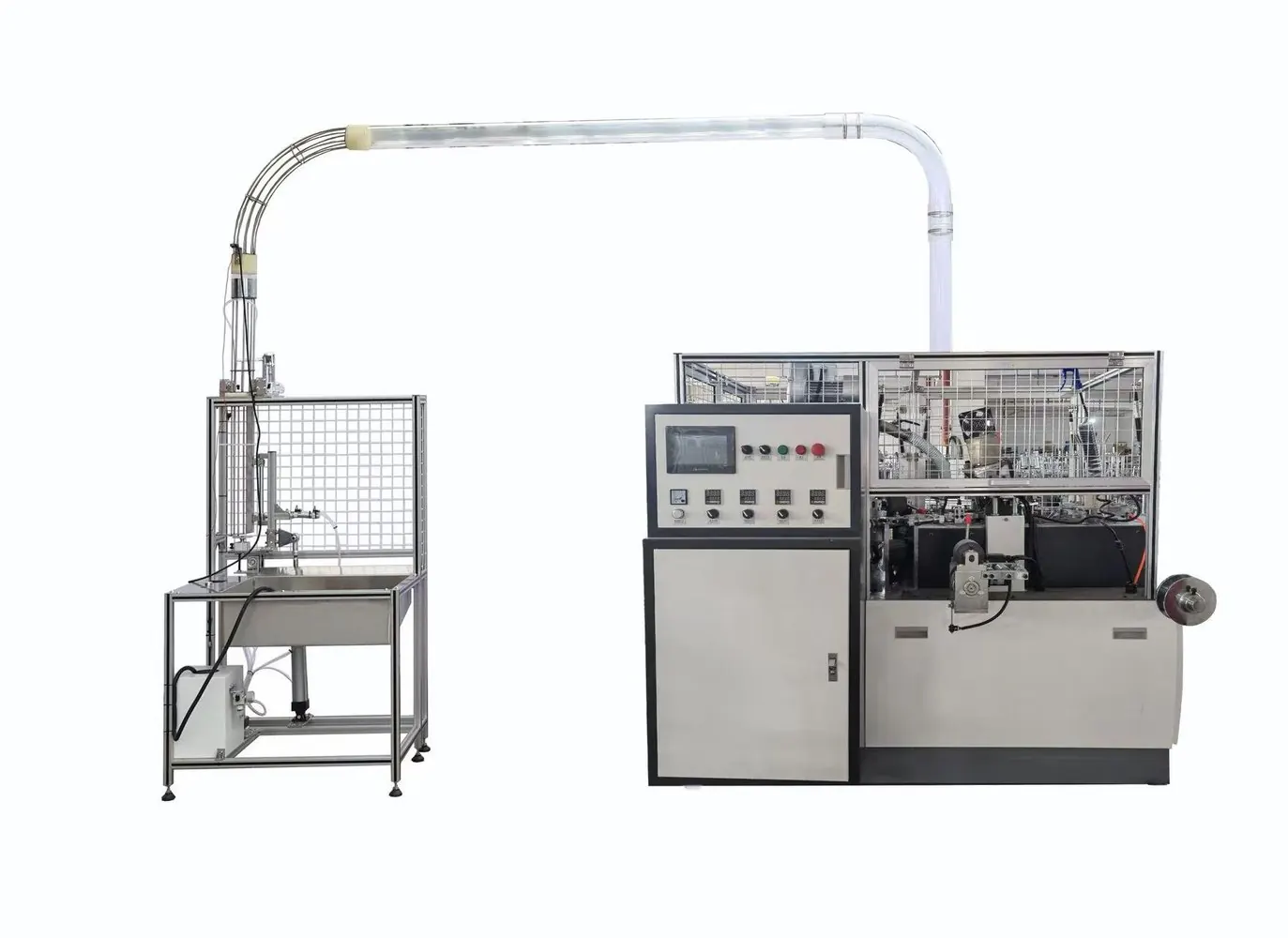
Decision matrix
| Trial input | Measure or record | Fit question |
|---|---|---|
| Inner cup | Height, diameters, taper, seam and rim profile | Is the approved production cup represented? |
| Sleeve blank | Arc, height, seam allowance, grain and print datum | Will it wrap without forcing or excessive gap? |
| Machine setup | Mandrel, guides, wrap datum and recipe | Does the sleeve reach the same position each cycle? |
| Bond system | Adhesive identity, pattern and set condition | Does the bond hold without squeeze-out or loose areas? |
| Assembled result | Top/bottom gap, seam, rotation and stack behavior | Is fit stable across the trial sample? |
Use production-representative components
Measure more than one inner cup from the intended forming condition. Record supplier, material lot, machine, mold and sample date. A hand-formed prototype or cup from another mold may have a different taper and seam step.
Likewise, identify the sleeve paper, coating side, grain and cutting lot. Keep printed and unprinted trial blanks separate if ink or varnish can affect handling or adhesion.
Establish geometry before changing adhesive
Dry-fit the sleeve around the inner cup and record top and bottom clearances, seam overlap or gap and any rocking around the inner-cup seam. If geometry is wrong, more adhesive will not make the sleeve sit correctly.
Compare the blank and approved drawing. Check that print and seam-safe areas remain correct after any geometry correction; a dimensional fix must not move artwork into the bond or trim zone.
Set wrap and bond as separate controls
First stabilize pickup, alignment, wrap datum and forming pressure using the approved setup. Then confirm adhesive identity, application position, amount and setting condition. Change one variable at a time and label samples.
Avoid judging bond immediately if the approved adhesive requires a defined set time. Conversely, do not stack or compress samples in a way that artificially holds a poor bond closed.
Inspect a distribution, not one best cup
Measure a planned sample across startup and stable production. Check sleeve height, top and bottom gap, seam position, rotation, bulge, loose edges and stack or pack behavior. Preserve both acceptable and rejected examples with labels.
A sleeve that fits tightly at room conditions may behave differently after paper conditioning. Record environment and material conditioning when fit changes between runs.
Release a matched SKU configuration
The release should connect inner-cup drawing, sleeve drawing, paper specifications, machine recipe, tooling, adhesive pattern, sample results and signed approval. A change to the inner cup may require the sleeve to be reviewed again.
Use the linked troubleshooting guide if fit was previously approved but begins drifting in production. HANNAI can review samples and dimensional data for a double-wall machine project.
Related machine and guide
Review the double-wall paper cup machine for machine context, then use the sleeve wrapping and bonding guide for the adjacent maintenance or process check. Browse all Buyer Guides when building a wider project checklist.
Frequently asked questions
Can sleeve size be selected by cup ounces?
No. Use measured inner-cup geometry and the approved drawings; nominal volume is not enough.
Will more adhesive correct a loose sleeve?
Not if the blank geometry or wrapping datum is wrong. Establish fit before adjusting the bond.
Should one good assembled cup release the job?
No. Inspect a defined sample across startup and steady running for repeatability.
Does a double wall automatically prove insulation performance?
No. Any performance claim requires an appropriate test and documented result.
Review your machine configuration with HANNAI
Send the machine model, cup or material drawings, component labels, photos and a description of the required result. We will clarify which details must be confirmed before a quotation or technical recommendation.