Sleeve blank feeding must separate one printed blank, hold it through transfer and present its edges consistently to the forming tools. Static, curl, tight guides, worn suction cups or mistimed vacuum can cause double feed, late pickup and print damage. Increasing vacuum alone may worsen separation.
Diagnosis should begin with the approved sleeve blank and machine sequence. Isolate motion and stored pneumatic/vacuum energy before reaching into the magazine or pickup path. Final settings depend on blank geometry, coating and delivered machine configuration.
Decision matrix
| Feeding factor | Evidence | Acceptance |
|---|---|---|
| Blank lot | Dimensions, curl, coating, static and print orientation | Input matches approved sleeve |
| Magazine | Guide width, support, stack height and contact marks | Blanks move without pinch or uncontrolled lean |
| Separation | Air aid, friction features and double-feed evidence | One blank leaves per cycle |
| Vacuum | Cup condition, rise/decay and valve timing | Blank is held and released at correct events |
| Transfer | Datum position, sensor state and formed sleeve result | Presentation remains repeatable |
Qualify the sleeve blank stack
Compare blank dimensions, score or crease, grain, coating, print orientation and curl with the approved sample. Condition material under the factory procedure and remove damaged edges. Record lot and stack height when the fault appears.
Fan-shaped blanks can interlock or cling through static and surface friction. Do not bend the stack manually to make it feed. Separate material-condition evidence from machine adjustment by testing a retained known-good lot where available.
Set magazine support without pinching
Clean the magazine and inspect side guides, bottom supports and separators for wear or adhesive. Set guides from the defined blank datum with enough control to prevent skew but without squeezing the stack. Check the full stack-height range.
Mark contact areas on test blanks. A guide that is correct at the top may pinch near the bottom if rails are not parallel. Do not lubricate paper-contact surfaces unless the machine documentation explicitly permits it.
Prove single-blank separation
Observe pickup in safe slow motion and identify whether two blanks leave together, the top blank remains stuck, or pickup occurs off-center. Inspect static-control or air-separation devices and confirm they operate at the intended sequence event.
More air or vacuum is not automatically better. Excess air can disturb registration, while high vacuum can hold multiple porous blanks. Change one controlled factor and keep labeled samples.
Map vacuum and release timing
Record valve command, vacuum-switch state, pickup contact, transfer start and release position. Measure vacuum rise and decay at the pickup branch. Inspect cups, hoses and fittings; use the vacuum check-valve guide where the circuit cannot hold.
Adjust timing only within the approved PLC/HMI recipe and preserve the previous value. Early vacuum can pull a blank before presentation; late vacuum can miss contact. Delayed release can drag the sleeve into the former.
Validate formed sleeve and print condition
Run repeated cycles across low and production speeds with the real inner cup and adhesive process where applicable. Inspect blank datum, overlap, print orientation, scuffing, double feed, missed feed and completed sleeve geometry.
Record blank lot, guide datums, vacuum trend, timing and accepted samples. Send HANNAI the sleeve drawing, stack photos and slow-motion sequence. Approve the setup only when feeding remains stable through stack-height change and stop/restart.
Related machine and guide
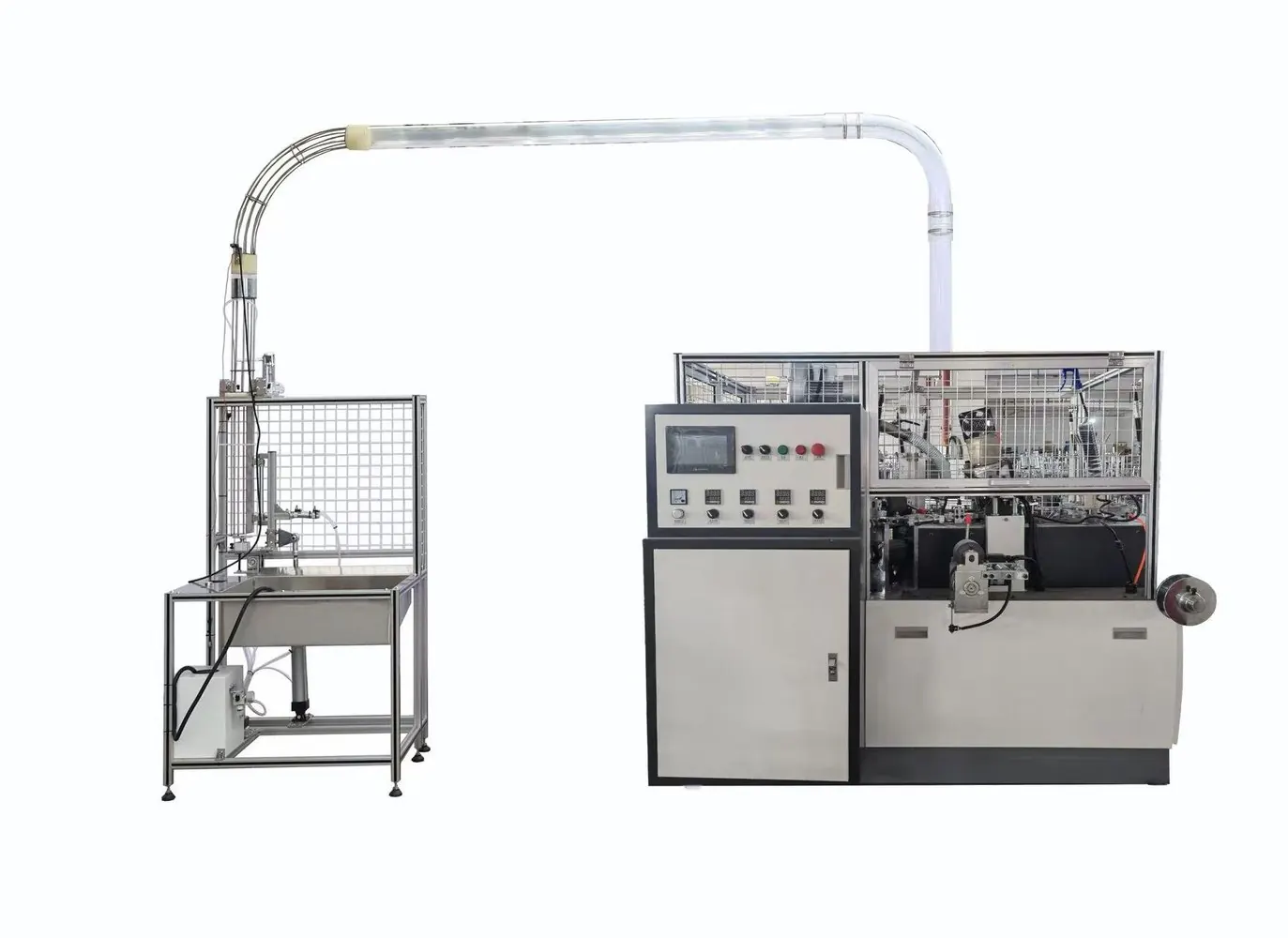
Review the double-wall paper cup machine for machine context, then use the fan blank inspection and feeding guide for the adjacent check. Browse all Buyer Guides when building a wider project checklist.
Frequently asked questions
Does double feeding always mean vacuum is too high?
No. Static, stack pressure, separators, air aid and blank surface also affect separation.
Should magazine guides tightly clamp the blanks?
No. They should control position without pinching or marking the stack.
Why inspect different stack heights?
Guide pressure and blank lean can change as the magazine empties.
What proves correct timing?
One blank is acquired, held through transfer and released at the intended position repeatedly.
Review your machine configuration with HANNAI
Send the machine model, project reference, component labels, drawings, photos and a description of the required result. We will clarify which details must be confirmed before a quotation or technical recommendation.