Hamburger box machine carton squareness depends on the blank’s cut and crease geometry, its orientation at pickup, controlled forming contact and stable release. A box can close yet still have a twisted base, unequal walls, displaced lid or stressed corner. Troubleshooting should measure the first geometric change instead of increasing forming pressure or adhesive to hold an inaccurate shape.
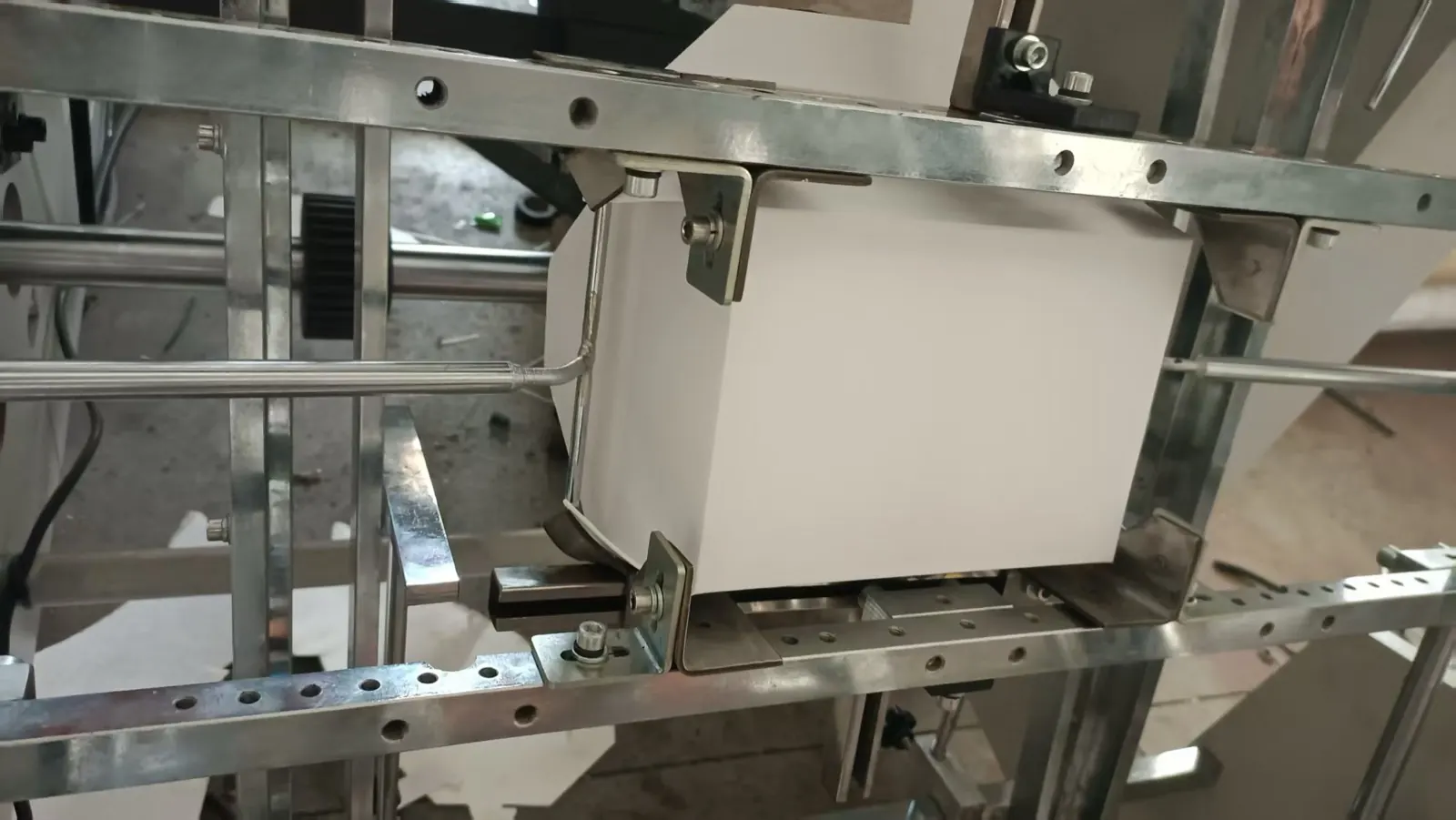
Define the required carton geometry
Start with the released blank drawing and accepted erected sample. Identify base dimensions, wall angles, fold-line positions, corner sequence, lid relationship, closure features and print orientation relevant to the design. Use the agreed inspection method; do not assume that a visually centered logo proves crease registration.
The feeding, forming and gluing guide covers the entire route. This guide narrows the investigation to dimensional relationship and fold-line presentation through the forming process.
Separate blank error from forming error
Measure and label flat blanks before production. Check cut profile, crease location, score direction, slots, locking features and print-to-cut reference. Compare several positions from the stack and preserve the blank lot. If a crease is displaced on the flat blank, machine alignment cannot restore the intended carton geometry.
Condition material according to the supplier agreement and record curl or moisture history where controlled. A curled blank can sit against one guide but lift at another, changing the effective reference during pickup. Compare an accepted blank lot before altering the forming station.
Use a geometry evidence table
| Carton pattern | Evidence to compare | Diagnostic boundary |
|---|---|---|
| Base is parallelogram shaped | Flat blank diagonals, feed skew, first forming contact and final compression | Find where parallel references are lost |
| One wall stands higher | Crease positions, blank seating, support height and corner sequence | Separate blank geometry from asymmetric forming |
| Lid misses the closure | Base dimensions, hinge crease, lid form and product release | Trace cumulative geometry rather than the latch alone |
| Corner cracks or buckles | Material grain, crease quality, fold direction and contact point | Review material conversion and folding support |
| Fault starts after format change | Installed change parts, orientation, recipe and first-off record | Confirm the complete approved setup |
Track the blank reference through feeding
Observe from outside guards as the blank separates, travels and reaches the forming reference. Record which edge or feature establishes position and whether the blank rebounds, rotates or contacts a guide before forming. A small skew at feed can become a large diagonal difference after walls are erected.
Mark test blanks only by a method approved for the trial. Use a safe video with visible orientation references. If pickup or blank separation is unstable, correct that first; forming adjustments made around a randomly skewed blank will not be repeatable.
Inspect tooling references under isolation
Apply lockout, verify isolation and control stored pneumatic or mechanical energy before accessing forming tools. Confirm tool and change-part identity, seating, orientation, locating surfaces, fasteners, guides, stops and supports. Look for paper buildup, adhesive contamination, burrs, impact marks, looseness or an incorrectly installed spacer.
Do not bend guides or add shims from visual judgment. Compare physical references with the supplier drawing and approved setup record. Tooling dimensions and clearances depend on the carton design and delivered machine; fixed values from another box are not transferable.
Observe the folding and compression sequence
Determine which wall or flap moves first and where the blank is supported during each fold. Compare labeled samples immediately after the earliest accessible stage and after final compression. If geometry is correct before compression but distorted afterward, focus on final alignment, contact or release.
Adhesive can hold a distorted box but cannot correct fold-line registration. The adhesive delivery guide is relevant only after the bond location is geometrically correct. Do not increase glue quantity to compensate for a wall that does not meet its intended surface.
Measure the erected carton consistently
Allow the carton to reach the inspection condition defined by the quality plan. Use a fixture or method that does not force the box square while measuring it. Check base dimensions, diagonals, wall relationship, lid alignment, closure and stacking. Record measurement locations and orientation.
Compare consecutive cartons and retain accepted and rejected samples. Averages alone can hide an alternating or intermittent feed condition. Link results to blank lot, tooling set, recipe, station evidence and intervention time so the actual source remains traceable.
Verify the correction through use conditions
After approved adjustment or service, account for tools, restore guards and use the documented restart sequence. Run controlled first-off samples. Verify flat-blank dimensions, feed orientation, erected geometry, bond placement, closure and visible surface condition before increasing the run.
Where part of the acceptance plan, test representative cartons with the customer’s filling, closing, stacking or packing process. Do not promise universal performance from one empty carton. Release the format only through the responsible quality and production approval.
Frequently asked questions
Can more forming pressure make a twisted carton square?
Not reliably. First confirm blank geometry, feed reference, tooling setup and fold sequence. Excess force may damage creases or hide the original error.
Does a closing lid prove the box dimensions are correct?
No. Flexible material can close while the base, walls or hinge remain displaced. Measure using the approved geometry and functional checks.
Should adhesive be adjusted when one corner opens?
Only after verifying that the intended surfaces meet correctly. Fold position, contamination, compression and material may be responsible before adhesive delivery.
What evidence helps diagnose squareness remotely?
Send the blank drawing, measured flat and erected samples, orientation photos, diagonal results, safe sequence video, tooling identity and recent setup history.
Send the machine model, carton and blank drawings, material, measured samples, tooling setup, safe forming video and first-off record through our inquiry page. HANNAI can review the blank-to-forming relationship.