Folding rails and guides should progressively control a scored carton blank without dragging print, crushing edges or forcing the wrong crease. A size change that begins from nominal box dimensions alone can misplace every contact point.
Setup should start from the controlled flat-blank drawing, score geometry and approved sample. This guide does not publish universal rail gaps or positions because tooling and blank behavior depend on the delivered machine and material.
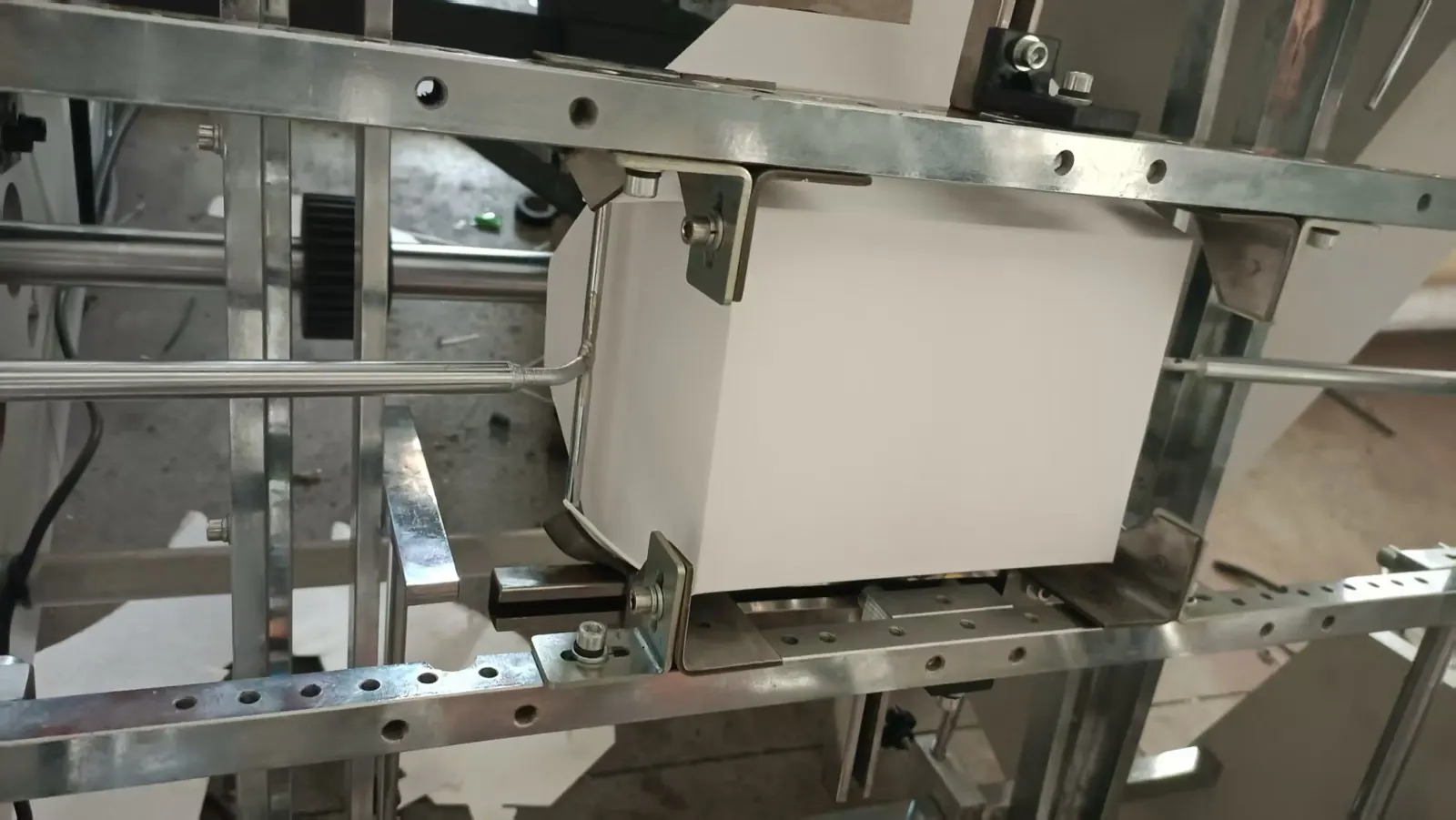
Decision matrix
| Setup input | Evidence | Decision |
|---|---|---|
| Blank definition | Drawing, grain, board/coating, score and print orientation | Selects the correct change parts and direction |
| Reference datums | Centerline, side guide, stop and station positions | Builds a repeatable setup |
| Rail contact | Entry angle, progressive fold and clearance | Avoids shock, scuffing and false creases |
| Transfer | Belts, grippers, suction and blank support | Keeps the blank registered through folding |
| First article | Squareness, seam, lid/base fit, marks and ejection | Approves the full formed box |
Verify blank and change-part identity
Match the production blank to its controlled drawing and approved sample. Record length/width, score positions, tabs, grain direction, coating, print side and feed direction. Inspect incoming blanks for warp and score inconsistency.
Confirm rail, guide, former, stop and nozzle change parts by part number. Do not mix parts from a visually similar box. Label removed hardware and preserve the previous recipe and datum measurements.
Establish centerline and feed datums
Use the machine’s defined centerline or fixed side datum, then set entry guides to present the blank consistently without pinching it. Confirm sensor and suction/gripper references follow the same blank edge or feature used by the setup drawing.
A narrow entry can buckle or scuff the blank; a loose entry can allow skew before the fold begins. Hand-feed or jog only under the safe setup procedure with guards and motion controls as designed.
Create progressive folding contact
Position each rail so contact begins on the intended panel and increases gradually along the score. Inspect entry angle, height, lateral position and smooth transitions between guides. Avoid a single abrupt point that forces the board.
Use marked blanks to identify where rubbing, edge catching or false creasing begins. Do not bend rails casually to solve a downstream symptom. Confirm the correct part and mounting datum before making an approved adjustment.
Coordinate adhesive and forming timing
After mechanical folding is stable, confirm adhesive placement, compression/hold and forming-tool relationship. A rail shift can move the surface under a nozzle or change overlap. Keep adhesive settings tied to the specific blank and machine recipe.
Run first articles at setup speed and inspect panel squareness, fold-line use, seam overlap, lid/base relationship, printed-surface marks and release. Use the linked guide for dimensional mapping when a defect repeats at one fold.
Validate changeover repeatability
Record rail and guide datums, part IDs, recipe, blank lot and first-article measurements. Restart from the documented setup after a controlled removal/reinstall when qualifying a new changeover method.
Increase speed in stages and sample startup and steady production. Send HANNAI the blank drawing, machine/tooling photos, datum record and labeled defects when reviewing a new box size or unstable fold.
Related machine and guide
Review the hamburger box machine for machine context, then use the carton squareness and fold-line guide for the adjacent check. Browse all Buyer Guides when building a wider project checklist.
Frequently asked questions
Can rails be set from the finished box dimensions alone?
No. Use the controlled flat blank, scores, grain, feed direction and machine datums.
Why should folding contact be progressive?
Gradual contact reduces shock, scuffing, buckling and unintended crease formation.
Should adhesive timing be set before rail geometry?
First stabilize blank presentation and fold geometry, then verify adhesive and compression together.
What makes a changeover repeatable?
Identified parts, measured datums, controlled recipe and documented first-article results.
Review your machine configuration with HANNAI
Send the machine model, project reference, component labels, drawings, photos and a description of the required result. We will clarify which details must be confirmed before a quotation or technical recommendation.