Paper cup machine event timestamp alignment makes a fault sequence easier to interpret. If the HMI clock, drive record and packing report differ, the event listed first may not have happened first.
Use this method for evidence comparison and a supplier-approved clock review. It does not prescribe a network time service or change controller clocks. Supported clock and synchronization functions depend on the installed devices.
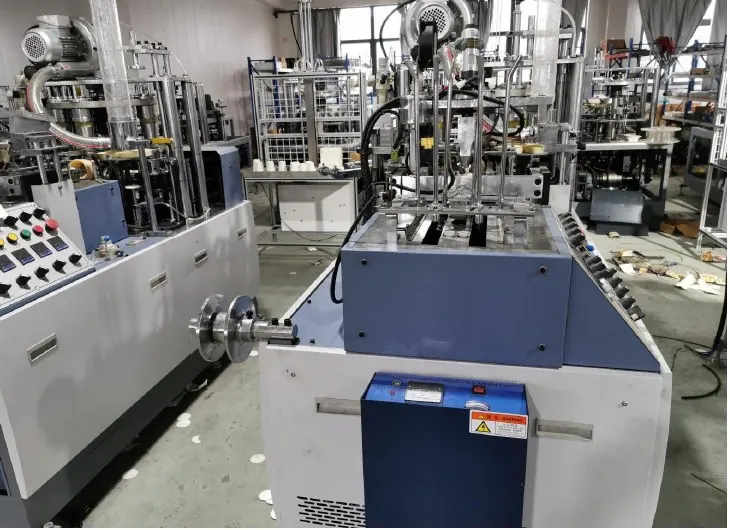
Decision worksheet
| Evidence source | Clock information to retain | Comparison rule |
|---|---|---|
| HMI alarm record | Displayed time zone and clock reading | Preserve the original export |
| Controller or drive log | Clock source, resolution and offset | Identify uncertain event order |
| Production record | Time basis and manual-entry method | Do not assume exact event timing |
| Service observation | Reference time and machine state | Link observations to one comparison window |
Inventory clocks rather than assuming one machine time
Identify each source used in the investigation: HMI alarms, controller diagnostics, drive faults, packing logs and manual production records. Record whether each uses its own clock, a shared reference, elapsed time or a counter. Ask the supplier which sources can be synchronized and how their timestamps are generated.
Document time zone and daylight-saving behavior where applicable. A date and time without that context can be ambiguous, especially in remote support across countries. Keep the original event values and labels intact. Do not rewrite source logs merely to make them appear consistent with the preferred investigation sequence.
Measure the comparison offset transparently
During an approved observation window, record each displayed clock against one agreed reference and note the observation method. Include the date because offsets may change after restarts or manual corrections. Use the available timestamp resolution honestly; a display rounded to minutes cannot establish second-level ordering.
For example, two sources may differ by roughly a minute while the suspected events occurred seconds apart. The comparison should flag their ordering as uncertain unless additional evidence resolves it. A neat merged timeline should not imply more precision than the clocks and capture method support.
Preserve raw evidence and add an interpretation layer
Store original exports separately from the comparison worksheet. In the worksheet, retain source name, original timestamp, stated time basis, measured offset and any normalized comparison value. Document how the normalized value was calculated so another reviewer can reproduce the reasoning.
Label clock resets, gaps and estimated times. A manually written shift note may describe when an operator noticed a fault rather than when it began. Treat that distinction as useful context. Do not move the observation time backward to match a machine alarm without evidence connecting the two events.
Review supported synchronization with the supplier
If inconsistent clocks repeatedly obstruct diagnosis, ask the builder and site IT or OT owner to assess an approved synchronization arrangement. Confirm supported devices, permitted reference sources, network requirements and behavior during loss of the time source. Some devices may not provide the same functions as the main controller.
Plan any clock change under the site procedure. Changing time can affect event ordering, records or software behavior, depending on the system. Preserve relevant logs first and note the change in the investigation record. Do not introduce an external service or alter a running controller merely to tidy a report.
Use the timeline to narrow the investigation
Compare the aligned evidence with machine state, material identity and operator observations. Look for sequences that remain supported despite timestamp uncertainty. If an electrical fault and a quality change occur within an unresolved interval, record a possible relationship rather than asserting cause.
The deliverable is a timeline with explicit confidence and limitations, plus a clock-source register for future work. Where event order is critical and the available resolution is insufficient, obtain additional approved diagnostic evidence. Good timestamp practice improves the questions sent to the supplier; it does not replace physical investigation or prove root cause by chronology alone.
Related equipment and next checks
Review the HN-M100 Automatic Paper Cup Machine and the related downtime event classification. The Engineering Notes archive connects these checks with wider machine planning.
Technical reference
- Siemens time synchronization documentation — an example of device-specific clock behavior — general reference; confirm applicability to the installed equipment.
Frequently asked questions
Can timestamps alone prove root cause?
No. They help establish sequence, but a causal conclusion requires supporting machine and process evidence.
Should original logs be corrected to one time zone?
Preserve originals. Put conversions and measured offsets in a separate, documented comparison layer.
What if a drive has no reliable real-time clock?
Record its actual time basis and limitations, then use additional evidence to compare events.
Can the clock be changed during production?
Use the supplier-approved procedure and assess record and operating effects before an authorized change.
Review the evidence with HANNAI
Send the log sources, their stated time zones and a concise event description. HANNAI can help clarify the machine-specific diagnostic information needed to compare the sequence.