A paper cup machine layout should be planned around material flow, utilities, operation, inspection and maintenance access—not only the machine footprint shown on a quotation.
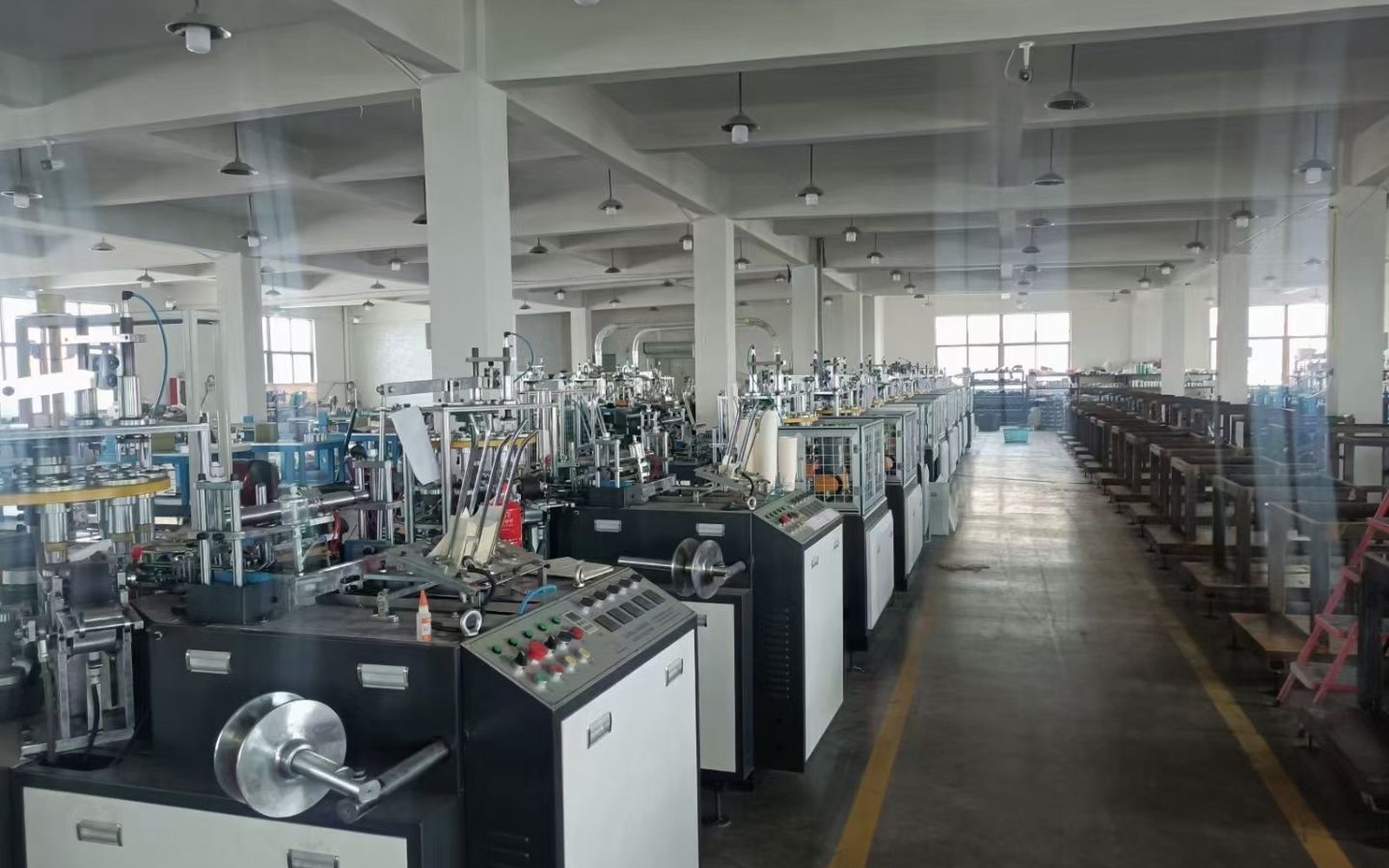
Start with the complete production flow
Before drawing a floor plan, define how material and finished cups will move through the factory. A typical project may include printed cup fans, bottom paper, forming, cup collection, inspection, packing and finished-goods storage. Projects that prepare blanks in-house may also include printing and die cutting.
Draw the flow in production order. Avoid sending raw material, operators and finished cartons repeatedly across the same aisle. Buyers planning several processes can review the paper cup production line and discuss which equipment will be installed now and which space should be reserved for future expansion.
Do not use machine dimensions as the required floor area
The machine body is only one part of the working area. The final layout must also include the clearances required by the machine documentation, local safety rules and the approved operating procedure. Confirm access for loading paper, removing cups, opening service areas, cleaning, inspection and moving parts or moulds.
| Layout zone | What to confirm | Why it matters |
|---|---|---|
| Material staging | Cup fan, bottom roll and approved batch storage near the loading point | Reduces mixed materials and unnecessary handling. |
| Machine working area | Operator position, controls, guards and normal observation points | Supports consistent operation without blocking aisles. |
| Maintenance access | Space specified for inspection, service and component removal | Prevents walls or other machines from obstructing approved service work. |
| Cup collection | Collection table, counter, conveyor or connected packing method | The downstream area must match the intended production flow. |
| Quality station | Sampling, dimensional checks, leakage testing and record keeping | Keeps accepted and held products clearly separated. |
| Packing and storage | Bagging, carton handling and finished-goods routes | Avoids finished cups accumulating beside the forming machine. |
Map every required utility before installation
Confirm the final machine configuration before designing electrical and compressed-air connections. Send the destination voltage and frequency when requesting a quotation. The electrical supply, cable, isolation, grounding and protection must be designed and installed by qualified personnel according to the machine documentation and local requirements.
If the selected machine or connected equipment requires compressed air, confirm the required pressure, flow and air-quality conditions for the complete line. Do not size an air compressor from a generic online value. Use the supplier-confirmed requirement and include simultaneous demand from all equipment. See the paper cup machine air compressor checklist for the questions to prepare.
Plan material, operator and finished-cup routes
A clear route makes the layout easier to operate and audit. Mark where approved material enters, where it is checked, where operators load it, where cups are inspected and where accepted cartons leave the production area. Provide a separate location for rejected or quarantined material so it cannot return to production by mistake.
- Keep material labels and cup SKU identification visible.
- Leave aisles clear for the actual carts or handling equipment used by the factory.
- Keep inspection samples and production records close to the quality station.
- Position packing so cup collection does not obstruct machine operation.
- Protect paper and finished cups from moisture, dust and uncontrolled storage conditions.
Include ventilation, lighting and the working environment
Review heat sources, ventilation, lighting, cleanliness and the environmental conditions required for paper storage and machine operation. The machine supplier can confirm equipment requirements, while the factory owner and qualified local professionals must confirm building, electrical, fire, occupational-safety and food-packaging requirements.
Lighting should support safe operation and meaningful cup inspection. Glare, shadows and poor access can make it harder to see paper feeding, formed-cup condition or warning indicators. Keep the machine area clean without placing cleaning materials where they can contaminate paper or finished cups.
Plan one machine and future expansion together
A startup project may begin with one HN-M100 automatic paper cup machine or an HN-S120 paper cup making machine. If demand may grow, reserve practical routes for additional forming machines, cup collection and packing. Utility capacity, material staging and finished-goods space should be reviewed at the same time.
Expansion space is useful only when the future workflow still works. Adding a second machine beside the first one should not block maintenance access, create unsafe cable or air-line routes, or overwhelm the inspection and packing area.
Prepare a layout package for supplier review
Send a dimensioned factory drawing rather than a phone photo alone. Mark doors, columns, ceiling height, floor levels, utility entry points and fixed obstacles. Add the intended flow from material receiving to finished products.
- Factory length, width and usable height
- Door sizes and equipment movement route
- Column positions, stairs, drains and fixed structures
- Available voltage, frequency and compressed-air plan
- Target cup sizes, machine quantity and daily output
- Blank supply, cup collection, inspection and packing method
- Equipment planned for a later production stage
After the layout is reviewed, use the installation and startup checklist to prepare the site before the machine arrives.
Frequently asked questions
How much space does a paper cup machine need?
Use the confirmed machine dimensions plus supplier-required operating and service clearances, material loading, cup collection, inspection, packing and safe aisles. The correct total depends on the selected machine and factory workflow.
Should the air compressor stand next to the machine?
Not automatically. Compressor location depends on noise, heat, ventilation, maintenance access, air treatment and pressure loss in the distribution system. Ask qualified local professionals to design the installation using the confirmed equipment demand.
Can I finalize the layout before choosing a machine?
You can prepare a concept, but the final utility points, clearances and collection method should follow the approved machine configuration and technical documents.
What should I send HANNAI for layout review?
Send a dimensioned floor plan, photos, column and door locations, available utilities, target cup range, output target, machine quantity and the equipment you plan to connect.
Send your floor plan, cup specification, daily output target and equipment list through our inquiry page. HANNAI can help review the machine arrangement and information needed for a practical line discussion.