A small tube or push-in fitting affects both sealing and flow. Wrong outside diameter, incompatible material, poor cutting, incomplete insertion or tight bending can create leakage, slow cylinder response and intermittent machine timing faults.
Replacement should preserve the approved pneumatic function and routing. Depressurize stored air, support gravity-loaded mechanisms and label both ends of every tube before disconnection. The exact component data controls pressure, temperature and media compatibility.
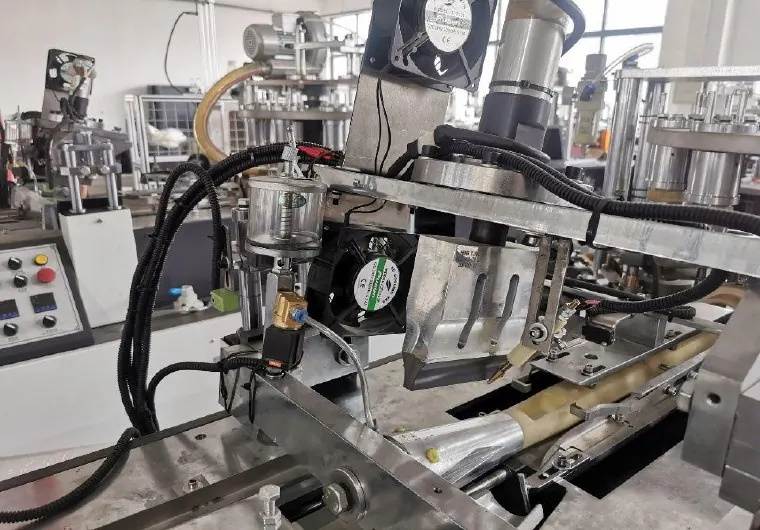
Decision matrix
| Selection item | Record | Acceptance |
|---|---|---|
| Tubing | Material, outside/inside diameter and supplier code | Matches fitting, media and environment |
| Fitting | Thread, tube size, seal type and port orientation | Fits the component without adapters |
| Routing | Length, bend radius, movement and heat/edge exposure | Avoids kinks, abrasion and tension |
| Assembly | Square cut, deburring, insertion and retention check | Creates a reliable internal seal |
| Test | Static leak, dynamic response and repeat cycles | Proves sealing and flow under demand |
Identify the failed connection
Mark the port, actuator function and tube route. Inspect for bubbles, hiss, abrasion, flattening, discoloration, cuts near the collet and movement at the fitting. Record whether the fault appears at rest, during motion or only at higher cycle demand.
Do not assume the fitting is the only leak source. Check the threaded connection, tube surface, valve body and cylinder. A slow actuator may result from restricted exhaust or flow control rather than supply leakage.
Match tube and fitting specifications
Use the complete fitting and tubing codes. Match tube outside diameter exactly, plus material, wall construction, permitted bend, pressure, temperature and chemical exposure. Match fitting thread standard and seal arrangement to the receiving port.
Festo documentation distinguishes metric, G and R thread sealing and tubing combinations. Similar thread diameters can use different sealing methods. Do not force a tapered thread into an incompatible port or add uncontrolled sealant.
Prepare and insert the tube correctly
Use a suitable tube cutter to create a square, clean end. Remove damaged or deeply marked sections. Do not use scissors that crush the tube or leave angled edges. Keep cuttings out of open valves and lines.
Insert the tube fully through the internal seal to the fitting stop, then perform the manufacturer’s gentle retention check. Festo warns that contact with the seal can be mistaken for the final stop. Avoid side load on the releasing ring.
Route for motion and serviceability
Recreate the approved length and route, keeping clear of heaters, sharp edges, pinch points and moving tooling. Respect the tube’s bending capability and allow controlled movement where a cylinder or assembly travels.
Do not shorten a tube until it pulls on the fitting or lengthen it into a loop that can snag. Use compatible clips and labels without crushing the tube. Preserve access for future disconnection and port identification.
Leak-test and validate response
Pressurize gradually under the machine procedure. Use an approved leak-detection method and inspect threaded and push-in interfaces. Then observe actuator extend/retract time, cushioning, pressure-switch state and sequence timing through controlled cycles.
Record the component codes, route, removed fault evidence and results. Use the linked demand guide if several circuits remain slow. Send HANNAI photos of both ports, tube markings, fitting codes and affected mechanism for review.
Technical references
- Festo push-in fitting installation information — general component guidance; the installed machine documentation remains controlling.
Related machine and guide
Review the HN-M100 automatic paper cup machine for machine context, then use the compressed-air leak and demand guide for the adjacent check. Browse all Buyer Guides when building a wider project checklist.
Frequently asked questions
Can tubing be selected only by outside diameter?
No. Material, inside diameter, pressure, temperature, bend and fitting compatibility also matter.
Why does a newly inserted tube still leak?
Check square cutting, surface damage, full insertion, fitting seal, thread seal and side loading.
Can similar-looking threads be interchanged?
Not safely without confirming the thread standard and sealing method.
What should be checked dynamically?
Confirm leakage, actuator response, cushioning, pressure signal and sequence timing under real demand.
Review your machine configuration with HANNAI
Send the machine model, project reference, component labels, drawings, photos and a description of the required result. We will clarify which details must be confirmed before a quotation or technical recommendation.