A paper cup machine preventive maintenance review asks whether each scheduled task still addresses a credible failure mode with an effective method. Repeating inherited checks without evidence can consume shutdown time while important developing failures remain uncontrolled.
This article does not recommend fixed intervals or authorize removal of statutory, safety or manufacturer-required work. Changes require technical review using the machine manual, failure evidence and site governance. Preserve the original program, approval date and trial results. Coordinate revisions with production and quality so a schedule change does not silently remove a required control.
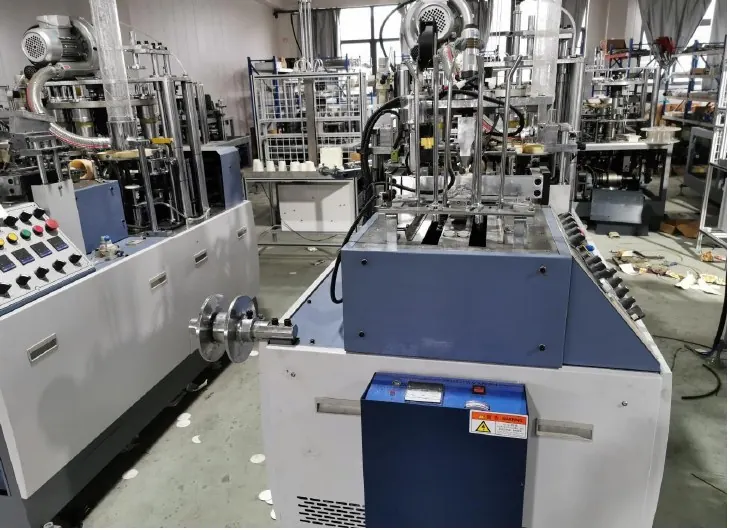
Diagnostic decision table
| Review question | Evidence | Weak decision |
|---|---|---|
| Why task exists | Failure mode and consequence | Always on checklist |
| Can task detect or prevent it? | Method capability and findings | Technician experience |
| Is timing suitable? | Condition and event history | Calendar tradition |
| Was it executed correctly? | Completion quality and measurements | Signed on time |
Link every task to a failure mode
State the function, failure mechanism, consequence and indication the task addresses. Distinguish restoration, inspection, functional test, replacement and condition monitoring. One vague inspect task may hide several different decisions.
Retain manufacturer and regulatory origins. If the reason is unknown, investigate before deletion. A task with no recorded findings may be ineffective, poorly executed or applied to a stable condition; the history alone does not decide which.
Evaluate task technical effectiveness
Ask whether the failure develops in a detectable way and whether the method can identify it before consequence. Define measurement location, machine state, tool, limit and response. Check repeatability when judgement affects the outcome.
For hidden protective functions, use an approved functional challenge. For random failures without a useful warning, time-based inspection may add little value; redesign, spares or response planning may be more appropriate.
Review interval with exposure and condition
Compare findings, failures, operating exposure, product mix and environment. Separate early-life issues, wear-related change and externally caused events. Use trends rather than one convenient observation.
Do not extend an interval only because no defect was recorded if inspections were inconsistent. Do not shorten it after one unrelated breakdown. State uncertainty and trial any change with monitoring and a review date.
Check execution quality and burden
Audit whether technicians access the correct point, use calibrated tools, record actual values and follow abnormal-result actions. Review task duration, duplicate checks and production disruption. Poor execution can make a technically sound task appear useless.
Combine tasks only when access and safety benefits do not blur individual results. Remove redundant data entry while retaining traceability. Protect high-value checks from being rushed inside an overloaded route.
Approve changes and verify outcomes
Document the old task, evidence, proposed change, risk review, owner and success criteria. Update job plans, training, spares and schedules together. Preserve version history so later failures can be evaluated against the active program.
Monitor missed defects, emergency work and quality loss after change. Contact HANNAI with the machine configuration, failure mode and task evidence when manufacturer guidance is needed.
Related equipment and next checks
Review the HN-M100 automatic paper cup machine and the related guide to paper cup machine maintenance checklist. The Engineering Notes archive connects these checks with wider machine planning.
Frequently asked questions
Can a task be removed because it found nothing?
Not without checking method quality, failure behavior and consequence.
Should all preventive work be time based?
No. Use the task type suited to the failure behavior.
What makes an inspection actionable?
A defined method, limit, response and owner.
How should interval changes be controlled?
Approve, version and monitor them against stated outcomes.
Review the evidence with HANNAI
Send your machine model, component identification and the observations described in this guide. Include the drawing or material reference and any before-and-after measurements so the required next check can be identified.