Paper cup machine chain elongation is a wear measurement, not a visual judgment about sag. A tensioner can remove slack while worn pin and bush interfaces still increase the effective pitch over a measured span. Continued adjustment therefore needs evidence that the chain remains within its approved service condition.
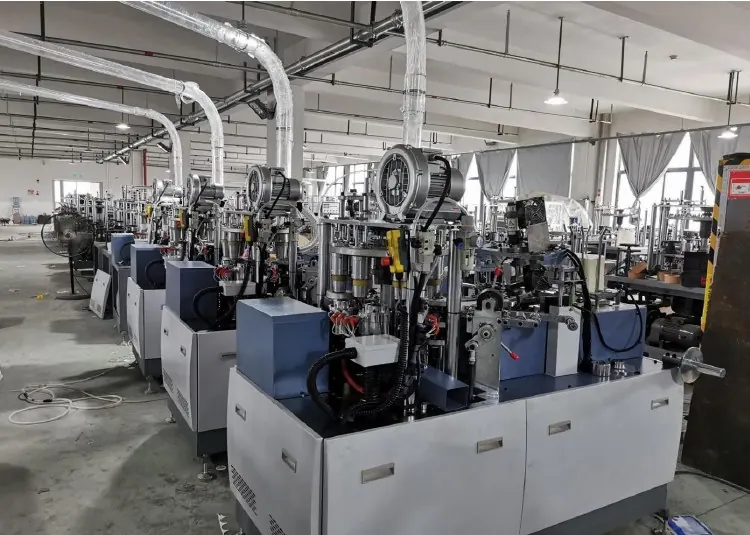
Apply this method only to the installed roller chain and the chain maker measurement procedure. Timing belts and other transmission designs require different checks. The workshop image illustrates machine context, not a measurement location or permission to operate without guards.
Diagnostic decision table
| Finding | Interpretation to test | Next evidence |
|---|---|---|
| Slack reduced after adjustment | Tension changed, wear may remain | Measured span length |
| Different spans give different results | Uneven wear or measurement error | Repeated location records |
| Chain binds at some positions | Local damage or articulation issue | Isolated joint inspection |
| Acceptable elongation but poor timing | Another drive fault may exist | Sprocket and timing review |
Identify pitch and the correct measurement method
Read the chain marking and confirm the part against the machine documentation. Establish nominal pitch, strand arrangement and the manufacturer wear limit for the actual application. Do not infer chain identity from an approximate ruler measurement of a single link.
Obtain the specified measuring span and loading condition. Tsubaki guidance describes assessing wear across a defined chain length rather than relying only on slack. The exact allowable elongation can depend on chain and drive requirements, so use the approved limit instead of a generic internet percentage. Retain the chain identity beside the measurement record.
Prepare a safe and repeatable inspection
Stop and isolate electrical power and stored motion according to the maintenance procedure. Secure mechanisms that could rotate or move when chain tension is released. Remove guards only under the authorized access procedure and do not turn a powered drive to bring a convenient section within reach.
Clean the measurement area by the approved method so dirt does not obscure contact points. Inspect for damaged plates, corrosion, stiff joints and unusual side contact before measuring. A chain with visible structural damage may require removal from service regardless of the elongation result. Keep the inspection findings separate from the numerical wear calculation.
Measure a defined number of pitches
Follow the chain maker method for applying the specified straightening load and selecting contact points. Use a suitable calibrated measuring tool and record exactly how many pitch intervals the span contains. Counting rollers rather than intervals can create a systematic error in the nominal length.
Where the approved method uses nominal span length L0 and measured length L, the elongation percentage is 100 multiplied by (L minus L0) divided by L0. L0 equals the specified pitch multiplied by the number of pitch intervals. This relationship does not replace the required load, contact geometry or measurement-tool instructions.
Repeat around the chain and evaluate the drive
Measure the prescribed sections and retain each result, including the largest verified reading rather than only an average. Repeat an unexpected value using the same method before making a replacement decision. Uneven wear, contamination or inconsistent loading can explain differences between locations.
Inspect the mating sprockets, lubrication condition and alignment using their separate procedures. A worn sprocket can compromise a replacement chain, while an over-tightened chain can load bearings unnecessarily. Do not shorten a worn chain to disguise elongation. Ask the supplier whether the findings require a matched drive-component replacement and restoration of station timing.
Record the service decision and verify restart
Document the chain part, span definition, load method, instrument, location and approved acceptance limit. State whether the outcome is continued service, planned replacement or removal from operation. If the measurement is uncertain, resolve the method before declaring the drive acceptable.
After authorized adjustment or replacement, restore lubrication, guards and the documented timing relationship. Verify staged operation and product transfer without reaching into the running mechanism. Keep the baseline measurements for future comparison, but choose the next inspection timing from the supplier maintenance plan and actual duty. Send HANNAI the measured spans and sprocket photographs when requesting a replacement recommendation.
Related equipment and next checks
Review the paper cup forming equipment and the related guide to chain tensioner and sprocket inspection. The Engineering Notes archive connects these checks with wider machine planning.
Technical reference
- Tsubaki chain wear measurement resources — general reference; confirm applicability to the installed equipment.
Frequently asked questions
Does correct slack prove low chain wear?
No. Slack and pitch elongation measure different conditions.
Can one pitch give a reliable wear assessment?
Use the span prescribed by the chain manufacturer.
Should only the average measurement be retained?
Keep all specified locations and the largest verified result.
Can shortening the chain correct wear?
No. It does not restore worn joint geometry.
Review the evidence with HANNAI
Send your machine model, component identification and the observations described in this guide. Include the drawing or material reference and any before-and-after measurements so the required next check can be identified.