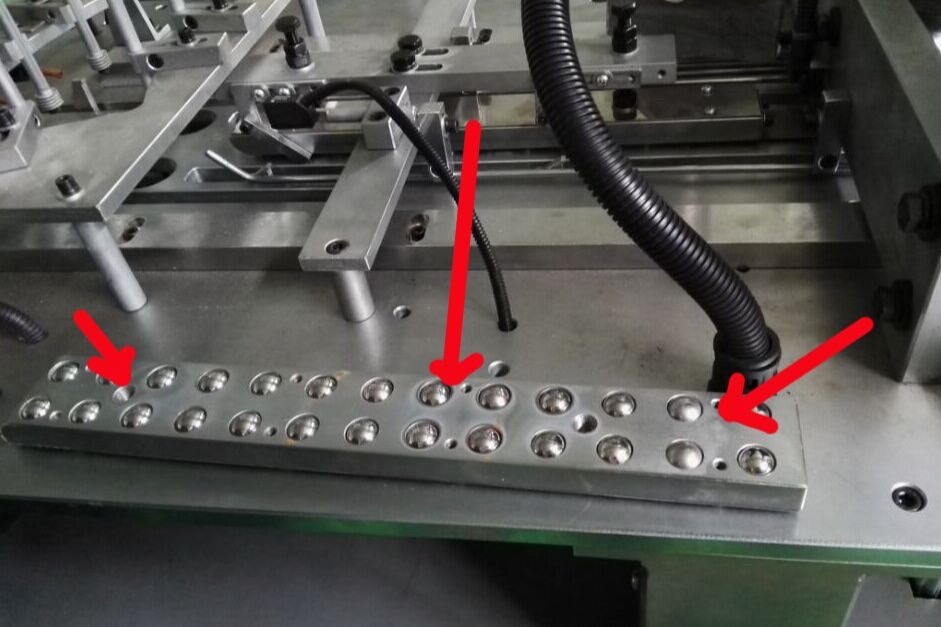
A paper cup machine spare parts checklist should identify compatible parts for the delivered configuration and explain why the factory needs to stock them. A generic kit can contain unnecessary items while omitting a component that the local team cannot source quickly.
Start with the machine identity, installed options and supplier documentation. Keep part selection, inventory quantity and replacement authorization as separate decisions. Possessing a spare does not mean any operator is qualified to fit it.
Build a configuration-specific parts register
Record model, serial identity and relevant component revision. Request supplier-approved identifiers for wear items and service components, together with diagrams or photographs that show where they belong. Separate complete assemblies from components supplied individually.
When a supplier supersedes a part, obtain compatibility confirmation for the installed configuration. Similar size, appearance or an abbreviated commercial description does not establish interchangeability. Keep the replacement reference linked to the original machine record.
Distinguish wear items, critical parts and consumables
Classify items by their function and the consequence of unavailability. Routine wear items may justify planned replenishment; an infrequently replaced part may still be critical if its absence stops production and there is no approved alternative.
Consumables, tools and machine components need different records. Do not count a tool as a replacement part or assume that a lubrication product is suitable without the supplier's specification. Use the delivered manual to determine the applicable maintenance requirements.
| Register field | What to retain | Why it matters |
|---|---|---|
| Machine/configuration | Model and installed revision | Prevents cross-machine substitutions |
| Part identity | Approved code, description and image | Supports an accurate order |
| Compatibility | Applicable assembly and supersession | Confirms replacement suitability |
| Stock decision | Consequence, usage evidence and lead-time basis | Explains quantity held |
| Storage | Location and supplier preservation instructions | Protects condition and availability |
| Issue record | Date, machine and work reference | Connects usage to maintenance history |
Choose stock quantity from an explicit risk review
Consider observed use, replenishment time, failure consequence and local availability. Ask for current lead-time information rather than treating a past delivery as a permanent guarantee. Identify which inputs remain assumptions during startup.
Avoid a universal spare-stock percentage. A factory with several identical configurations and local technical support has different requirements from one operating a single machine at a remote site. Shared stock is useful only where compatibility has been confirmed.
Check what the purchase already includes
Compare the order's included spare list with optional recommended items and buyer-supplied tools. Verify quantities and identifiers at receiving. An item mentioned during quotation discussions is not necessarily included in the shipment.
The after-sales service checklist helps define ordering and support responsibilities. Keep warranty conditions separate from spare ownership and replenishment so the factory knows which request process applies.
Preserve stored parts and make them retrievable
Use supplier-specified packaging and preservation conditions. Identify locations and separate acceptable stock from damaged, returned or unverified components. Check expiry or storage limits where the supplier provides them; do not invent a shelf life for every item.
For removed components, record whether they are failed, awaiting assessment or approved for reuse. A used part placed back on the shelf without status can later be mistaken for a serviceable spare. Track repair or inspection before changing its status.
Link part issue to the maintenance event
Record the work reference, removed component, fitted replacement and any approved configuration change. Qualified personnel should perform the replacement and required restart checks. Do not bypass a protective function because a matching spare is unavailable.
After fitting, verify the affected function and relevant cup quality according to the supplier's procedure. The post-repair verification guide provides a useful handover framework.
Review repeated use before increasing inventory
Repeated replacement can indicate an application, installation or maintenance problem as well as normal consumption. Compare usage by machine and operating condition, and investigate unexpected patterns before simply ordering more parts.
For equipment discussions, provide the actual cup/material application and expected maintenance resources to the HANNAI product team. A useful starting-spares proposal should reflect the configuration the factory will operate.
Frequently asked questions
Is a universal spare-parts kit sufficient?
Not without configuration confirmation. Check its identifiers, compatibility and coverage against the supplied machine.
Can a similar-looking component be used temporarily?
Only after appropriate supplier and qualified-site confirmation. Appearance alone is not compatibility evidence.
Should every spare have the same stock quantity?
No. Usage, lead time, consequence and available alternatives differ by item and factory.
Does stocking an electrical part authorize an operator to replace it?
No. Replacement responsibility depends on qualification, authorization and the required procedure.
Request a parts-scope review
Send machine identity, configuration, current part list and local support conditions through the HANNAI inquiry page. Mark components with uncertain identity or recurring consumption separately.