A paper cup machine temporary repair restores limited function until an approved permanent repair can be completed. Without a defined boundary and expiry, a temporary bracket, bypass, substitute part or software workaround can become an undocumented permanent configuration.
This guide does not authorize bypassing safeguards or using an unapproved repair. Site safety, engineering, quality and equipment requirements govern every decision. Product made under a temporary configuration requires the approved traceability and quality controls. Retain all approval evidence.
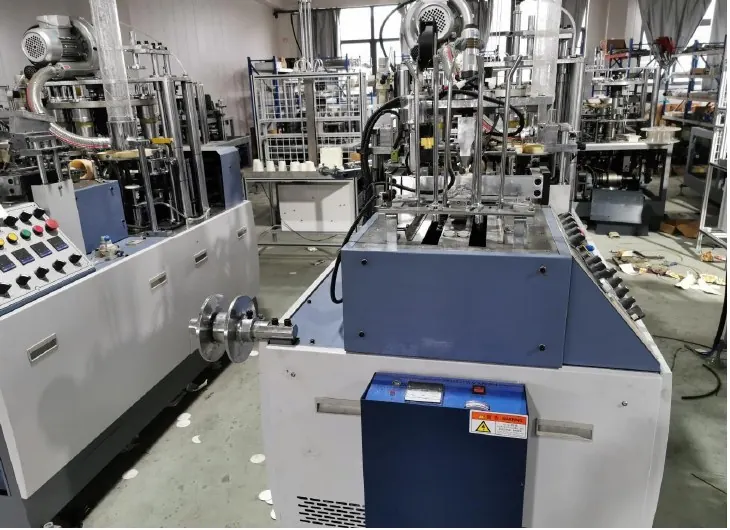
Diagnostic decision table
| Temporary repair control | Required definition | Uncontrolled outcome |
|---|---|---|
| Purpose | Specific failed function | General keep-running action |
| Operating boundary | Load, mode and monitoring | Normal operation assumed |
| Expiry | Date, cycles or event | Leave until failure |
| Restoration | Permanent plan and owner | No replacement scheduled |
Describe failure and immediate condition
Record the failed function, symptoms, alarms, affected product and as-found configuration. Identify whether safety, guarding, heating, motion, compressed air, lubrication, detection or data integrity is involved. Stop and isolate conditions that cannot be controlled safely.
Preserve failed components and evidence where investigation is needed. Do not begin with a preferred workaround and then redefine the problem to fit it. The failure statement should support both temporary risk review and permanent correction.
Design the temporary repair within authority
Define material, component, drawing, wiring, software or mechanical method, including interfaces and possible secondary effects. Confirm compatibility with temperature, load, speed, food-zone controls and electrical requirements as applicable. Obtain the required engineering and safety approvals before installation.
A substitute that physically fits may change sensor response, strength or service behavior. Do not defeat an interlock, guard or alarm to regain production. If approved function cannot be maintained, keep the machine unavailable.
Set operating limits and monitoring
State permitted products, modes, speed or load boundaries where appropriate, inspection frequency, condition checks and stop criteria. Mark the repair and communicate it across shifts. Link the temporary configuration to production and maintenance records.
Monitoring must be capable of detecting deterioration before the risk becomes unacceptable. A visual check is insufficient for a hidden electrical or software failure. Retain all observations, including stable results, so the decision can be reviewed.
Define expiry and permanent work
Use a date, operating quantity, cycle count or event limit based on the approved assessment. Create the permanent work order, reserve parts and assign an owner and planned window before releasing the temporary repair. Systems should prevent silent extension.
If expiry must change, repeat the risk review with current condition evidence. Do not copy the original approval. Repeated extensions signal a planning or technical problem and require management escalation.
Remove, verify and close
At permanent repair, identify and remove every temporary component, jumper, instruction and software change. Restore the approved configuration and verify affected safety and product functions. Compare results with the temporary monitoring history.
Close both records only after configuration, parts and documents agree. Send HANNAI the original failure, temporary arrangement and restoration evidence for technical support when needed. A successful temporary run does not validate permanent use.
Related equipment and next checks
Review the HN-M100 automatic paper cup machine and the related guide to paper cup temporary deviation control. The Engineering Notes archive connects these checks with wider machine planning.
Frequently asked questions
Can a temporary repair bypass an interlock?
No. Follow safety requirements and approved machine design.
How should expiry be defined?
Use an approved date, quantity, cycle or event boundary.
Can expiry be extended automatically?
No. Repeat review using current evidence and approval.
What closes the temporary repair?
Removal, approved restoration and verified machine and product functions.
Review the evidence with HANNAI
Send your machine model, component identification and the observations described in this guide. Include the drawing or material reference and any before-and-after measurements so the required next check can be identified.