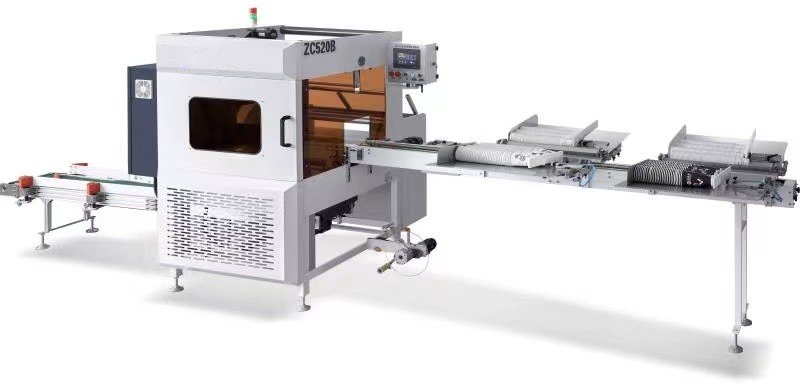
A paper cup packing machine should be selected from the finished cup, pack count, bag specification, forming output, collection method and downstream carton workflow.
Start with the required retail or transport pack
The packing project begins with the pack that the customer will receive, not with a machine speed number. Define the cup style, quantity per bag, bag material, bag dimensions, sealing expectation, label requirement and final carton quantity. A sample of an approved pack is more useful than a general request for “automatic packing.”
Also state whether cups are nested directly from one forming machine, collected from several machines or transferred through an intermediate inspection area. Buyers can review the HANNAI paper cup packing machine page before sending the project information.
Prepare a packing requirement sheet
| Requirement | Information to provide | Why it matters |
|---|---|---|
| Finished cup | Sample, top and bottom diameters, height and cup structure | Confirms handling, nesting and bag dimensions |
| Pack format | Cups per bag, bag material, sealing style and label plan | Defines the finished package and consumables |
| Incoming flow | Forming machine model, accepted cups per minute and collection method | Shows the real load entering packing |
| Quality checks | Inspection points and reject handling before packing | Prevents defective cups from entering sealed packs |
| Carton plan | Bags per carton, carton size and pallet or warehouse method | Connects bagging to dispatch logistics |
| Factory conditions | Layout, voltage, air source and available operators | Supports installation and staffing planning |
Use accepted cup output instead of rated speed
The packing machine should be matched to sellable cups after normal rejects, planned stops and changeovers. A forming machine’s headline speed is not automatically the continuous flow that reaches packing. Record accepted output over representative production periods and note variation between cup sizes.
If several forming machines feed one packing area, calculate the combined peak and normal flow. The paper cup machine capacity guide explains why rated speed, formed pieces and accepted output should be kept separate.
Confirm cup nesting and transfer
Cups must arrive in a consistent orientation and stack condition. Confirm how cups leave the forming machine, how stacks are transferred and where an operator can intervene safely when cups lean, stick or arrive irregularly. Cup geometry, rim condition and static can influence handling.
A layout drawing should show the forming discharge, conveyor or collection point, inspection position, packing machine, consumables area and finished-carton route. Avoid placing high-traffic material movement across the clean finished-cup path.
Define counting accuracy and changeover rules
State the acceptable quantity per bag and how the count will be checked. Sampling frequency, response to a short pack and the treatment of interrupted stacks should be included in the operating procedure. Counting performance should be demonstrated using the target cup and pack count.
For multiple cup sizes, ask which guides, settings or tooling must change. Record the setup sequence and first-pack approval. A quick mechanical change is not complete until the new bag has passed count, seal, appearance and handling checks.
Approve the bag and sealing result
Provide the intended bag material and dimensions for testing. Confirm that the packed stack fits without excessive compression, loose movement or cup deformation. The seal should be evaluated for continuity, appearance and resistance to normal carton handling.
If labels, printed film, ventilation holes or special closures are required, identify them before quotation. These details can change consumable control and the equipment discussion. Do not assume that a demonstration with a different film proves the target package.
Keep inspection before final closure
Packing automation should not remove necessary quality control. Define where operators or inspection equipment check rim shape, side seams, bottom condition, contamination, print appearance and stack consistency. Reject cups need a controlled route that does not mix them back into approved production.
The paper cup leakage and quality checklist can help buyers define upstream inspection points before sealed packing.
Plan labour and consumables together
Automation changes the work rather than eliminating every task. Operators may still load film, remove packs, replenish cartons, clear irregular stacks, perform inspections and record output. Maintenance support is also needed for cleaning, sensors, sealing areas and scheduled checks.
Use the factory manpower planning guide to assign ownership across forming, quality control, packing and warehouse work.
Run an integrated acceptance test
Test with the approved cup, bag and pack count. Record the forming or simulated incoming rate, packing duration, completed packs, rejects, stops and adjustments. Inspect count accuracy, seal quality, cup condition, pack appearance and carton fit.
For a complete line, the test should include the transfer between forming, collection and packing. A packing machine can perform correctly by itself while the combined line still develops a bottleneck. Review the paper cup production line when planning connected equipment.
Frequently asked questions
When should a paper cup factory add automatic packing?
Consider it when stable forming output, labour pressure, pack consistency or hygiene requirements justify a controlled packing process. Some new factories can begin with manual packing and add automation after demand is proven.
What cup information is needed for quotation?
Send a finished cup, full dimensions, cup structure, cups per bag, bag sample or specification, accepted production output, voltage, layout and destination country.
Can one packing machine handle several cup sizes?
Possibly, but never assume it. Confirm every cup and bag format, the required change parts or settings, the changeover procedure and the approved test result.
Should packing speed equal the paper cup machine speed?
The system should be sized from real incoming flow with suitable handling margin. Use accepted cup output and include stops, inspection and cup-size variation rather than comparing only headline speeds.
Send your cup sample, pack count, bag specification, accepted forming output, voltage and layout through our inquiry page. HANNAI can discuss a packing workflow matched to the production line.