The film opening section, static-control path, air opener and mechanical bag guides are part of the production sequence, and their condition can contribute to film layers that cling together, a bag mouth that collapses, intermittent stack entry or wrinkles before sealing.
Final limits, parts and adjustments remain configuration-specific; use the film supplier data, delivered packing machine operating values and documented static-control and pneumatic procedures instead of applying a universal value.
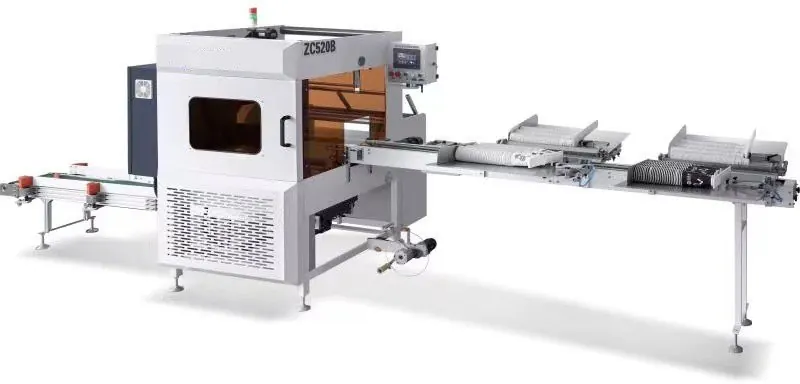
Observe the failed bag-opening sequence
Retain film structure and roll lot, unwind direction, bag length, opener device, air circuit, guides and sequence step. Mark when the concern appears during new roll startup, continuous production, low-humidity period, machine restart and different cup-stack lengths. Include the operator observation, machine state, film or job identity and the last known acceptable production period. This prevents several different faults from being grouped under one general alarm or quality description.
Separate static, film and sequence effects
| Observed condition | Evidence to collect | Diagnostic direction |
|---|---|---|
| Both film layers remain closed | Roll identity, surface-charge observation and opener contact | Static, blocking or missing separation force |
| Mouth opens then collapses | Air timing, airflow, guide position and stack arrival | Sequence or support loss |
| Failure increases as roll diameter falls | Unwind tension and web path at several diameters | Tension, curl memory or guide geometry |
| One film lot fails more often | Thickness, surface treatment, storage and room conditions | Film interaction or conditioning |
| Stack catches one edge | Centered stack video, guide clearance and bag symmetry | Alignment or entry timing |
The diagnostic directions are possibilities to investigate, not confirmed causes. Compare observations with the actual circuit, tooling and component documentation before replacing a part or changing a setting.
Control hazardous energy and preserve references
Apply the site lockout and isolation procedure for electrical, pneumatic, vacuum, thermal, gravity and stored mechanical energy that applies to this equipment. Verify the zero-energy state before guards, terminals, tubing, tooling or drive components are accessed. Hot surfaces and charged electrical parts may remain hazardous after the machine stops.
Photograph connectors, tube routing, witness marks, adjustment positions, wiring labels and component orientation before disassembly. Qualified personnel should perform live electrical or pressure measurements only when the documented diagnostic procedure specifically requires them and appropriate controls are in place.
Inspect the component in its complete load path
Observe the failure before adding air pressure or mechanical force. Compare film conditioning, unwind tension, static-control device condition, opener airflow, guide symmetry, bag-forming geometry and the position of the incoming cup stack.
Compare the affected component with the related film feeding, tracking and cutting guide before deciding that one observation identifies the cause.
Verify the repair in stages
Before power or pressure is restored, confirm tools are removed, connections are secure, guards are reinstated and the work area is clear. Use the service manual, jog or slow-cycle test first, then progress through small controlled production stages while watching the original symptom and any secondary effect.
Use labeled film sections and cup stacks to measure successful opening, centered entry, wrinkle formation and seal presentation through startup and stable speed. Do not release the machine based only on one acceptable cycle. Document the parts or operating values changed, final observations, retained samples and the person authorized to return the equipment to production.
Will more opener air always solve a closed bag mouth?
No. Excess airflow can destabilize thin film, spread wrinkles or move the bag away from its guides.
Can room humidity be used as the only diagnosis?
No. Retain it as context, but also verify film lot, storage, static control, guides, tension and timing.
Should an ionizing device be added without a risk review?
No. Electrical installation, placement, cleaning and compatibility must be documented for the machine and production environment.
Which video angle is most useful?
Record the film layers, opener, guides and stack entry together in slow motion with the cycle step visible.
Send the machine model, component identity, labeled samples, sequence video, recorded values and service history through our inquiry page. HANNAI can review the evidence against the original machine configuration.