Packing machine sealing jaw release tape is a functional part of some sealing arrangements. A worn covering can make film stick, while an unsuitable replacement can change heat transfer or contact at the seal. The correct replacement decision depends on the actual jaw design, not just the appearance of a non-stick surface.
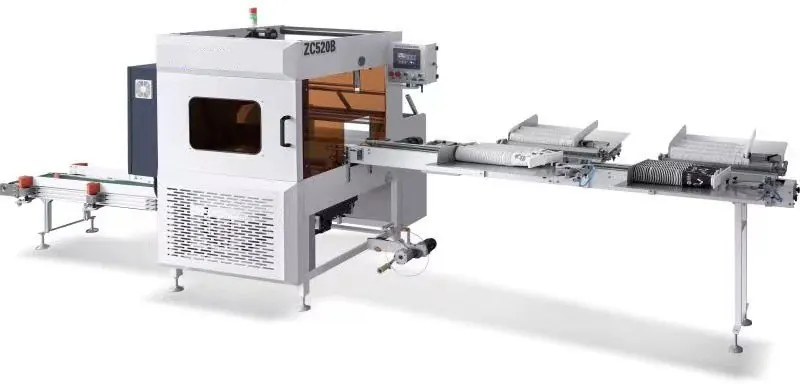
Some jaws use a replaceable fabric or film covering; others use a permanent coating or an uncovered machined profile. Apply this guide only where the machine documentation specifies a replaceable covering. The machine overview photograph does not identify the installed jaw surface.
Diagnostic decision table
| Evidence | Check before replacing | Do not assume |
|---|---|---|
| Film sticks at one location | Cover damage and local residue | The temperature must be increased |
| Weak seal after replacement | Material, thickness and wrinkles | Any non-stick tape is equivalent |
| Cover moves during cycling | Attachment method and surface preparation | More adhesive is acceptable |
| Repeated edge damage | Jaw alignment and interference | The tape alone caused the failure |
Confirm the jaw construction and spare part
Obtain the jaw drawing or service instruction and identify where a replaceable covering is required. Record part code, backing, thickness, width, adhesive type or mechanical retention method. Distinguish a release layer from an electrical insulation layer or an impulse-heater element.
If the instruction does not show a replaceable tape, stop before applying one. Covering a toothed jaw or sensor contact area can change its function. Send a clear cold-jaw photo and the machine model to the supplier when the construction is uncertain.
Preserve the original defect pattern
Retain examples of stuck film, weak seals and the removed covering. Mark where the defect occurred across the package width. Compare damage on the jaw with damage on the pack: a repeatable local mark can identify a raised edge, contamination or interference.
Review the preceding change, such as a new film, cleaning product or jaw service. A seal problem that started immediately after a covering change deserves a material and installation check before broader recipe changes. Keep film lot and machine settings attached to the sample record.
Remove the worn covering safely
Isolate power and motion, allow the jaw to cool as required, and follow the documented removal method. Avoid scraping with tools that score the sealing surface or damage insulation. Inspect exposed edges, fasteners and the mating jaw for the reason the previous covering failed.
Use only a cleaner compatible with the jaw, adhesive and nearby electrical parts. Do not soak heater connections or sensor openings. Prepare the surface to the condition specified by the tape or machine supplier and allow the required drying period before fitting the replacement.
Install without changing the contact geometry
Cut and position the approved material according to the machine pattern. Avoid folds, loose edges, unintended overlap and covering of sensors or mounting points. Some arrangements use clamps rather than adhesive; restore that retention method.
Do not add layers to compensate for wear or poor alignment. Extra thickness can alter the effective jaw gap and thermal response. Record the replacement batch and installation orientation, then check free movement and clearances through the safe maintenance method before powered operation.
Validate release and seal strength together
Restore guards and use the approved film and recipe for initial trials. Inspect packages for clean release, consistent seal appearance, distortion and cutting interaction. Where the quality plan specifies strength or integrity tests, apply them after the required conditioning period.
Repeat after warm-up and a stop/restart, not only on the first good package. If sealing changes, investigate material and mounting before changing temperature, pressure or dwell. Send HANNAI the covering specification, film details and labeled samples to establish a repeatable replacement instruction for that machine.
Related equipment and next checks
Review the paper cup packing machine and the related guide to sealing-jaw condition checks. The Engineering Notes archive connects these checks with wider machine planning.
Frequently asked questions
Can ordinary non-stick tape be used?
Only a covering approved for the actual jaw construction should be fitted.
Should a second layer be added to improve release?
No. Unapproved layers can change gap and heat transfer.
Does a smooth-looking seal prove integrity?
No. Apply the project’s required seal tests.
Do all packing jaws require tape?
No. Some use other coatings or uncovered profiles.
Review the evidence with HANNAI
Send your machine model, component identification and the observations described in this guide. Include the drawing or material reference and any before-and-after measurements so the required next check can be identified.