Paper cup packing rate conversion prevents a common line-sizing error: comparing forming output in cups per minute with packing output in bags per minute. The units can be converted, but the result is meaningful only when pack count, transfer capability, rejects and running-time definitions also match.
All rates below are illustrative calculation inputs, not equipment specifications. Confirm the actual pack format and sustained performance with the supplier. A calculated cups-per-minute equivalent does not establish sealing quality, hygienic suitability or successful transfer of your cup stack.
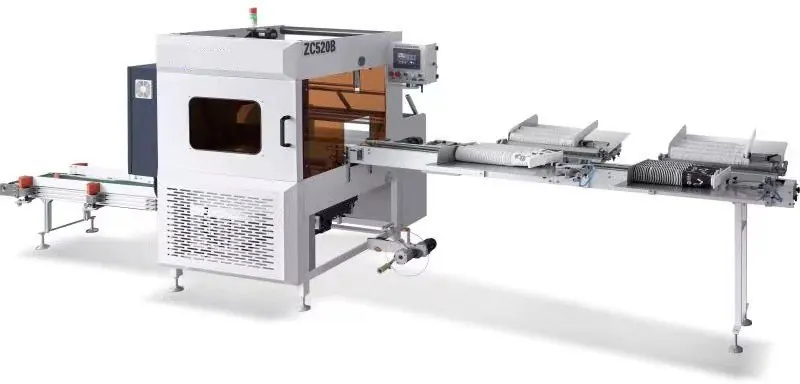
Decision worksheet
| Rate shown | Additional input | Comparable unit |
|---|---|---|
| Cups per minute | Accepted-count boundary | Accepted cups per minute |
| Stacks per minute | Verified cups per stack | Cups per minute |
| Bags per minute | Accepted bags and cups per bag | Packed cups per minute |
| Cycles per minute | Actual output per cycle | Product rate |
| Cartons per hour | Bags and cups per carton | Released cups per hour |
Write the count hierarchy before comparing rates
Define cups per stack, stacks per bag, bags per carton and which operation performs each count. Some arrangements combine several stacks in a bag; others feed one stack per cycle. Do not infer the hierarchy from a photograph or model name. Record the actual trial configuration and the dimensions of the intended stack.
Use the same definition of accepted product at both ends of the comparison. A forming counter may include later rejects, while a packing counter may count sealing cycles including empty or rejected bags. Observe physical product and reconcile it with counters before using either value for line selection.
Convert each rate with explicit units
Packed cups per minute equals accepted bags per minute multiplied by cups per accepted bag. If an illustrative process produces 3 accepted bags per minute with 40 cups in each bag, the equivalent is 120 packed cups per minute. With 20 cups per bag at the same bag rate, the result is only 60 cups per minute.
The machine may not preserve the same bag rate when pack length or stack height changes. Therefore, the second result is a scenario, not proof of achievable performance. Repeat the conversion using the measured bag rate for each actual format, including the approved count and sealing conditions.
Align running time and elapsed time
A brief running rate excludes film changes, bag rejects, replenishment, blocked discharge and operator interruptions. For order planning, calculate accepted packed cups divided by a representative elapsed period. Keep fixed format changeover time separate when it falls outside that observed period.
For example, 3,600 accepted cups packed over 30 elapsed minutes gives 120 cups per minute across that observation, even if the best running interval was faster. Do not apply availability again if the elapsed rate already includes the relevant stops. State which losses are included so the rate remains reproducible.
Check the transfer and labor bottlenecks
Even when the packer’s theoretical equivalent exceeds forming output, stack delivery can limit the line. Measure stack accumulation, orientation, manual transfers, bag loading and carton removal. Include the shared operator’s other duties rather than assuming continuous attention to one machine.
Observe several normal replenishment and discharge events. Identify whether a shortage of accepted stacks or a full discharge causes the apparent slow rate. A packing trial supplied by prebuilt stacks can demonstrate packing capability but does not validate an integrated forming-to-packing interface. Keep those two claims separate in the acceptance record.
Prepare a format-specific comparison sheet
Use one row per cup and pack combination with columns for cup drawing, stack count, bag dimensions, observed bag rate, accepted packed-cup rate, trial duration and interruptions. Mark untested combinations. Compare the forming demand with the packing result at the same time basis and retain a justified recovery margin where accumulation exists.
Send HANNAI the format sheet, stack photographs, required bag counts and discharge arrangement. Ask for a trial that includes counting, sealing and product handling at the intended configuration. Repeat the conversion whenever marketing changes the pack count, since a small pack-size change can materially alter required bag throughput.
Related equipment and next checks
Review the paper cup production line and the related guide to paper cup packing machine buyer guide. The Engineering Notes archive connects these checks with wider machine planning.
Frequently asked questions
Is one packing cycle always one accepted bag?
No. Verify empty cycles, rejects and the actual machine sequence.
Does halving cups per bag preserve cup throughput?
Not unless accepted bag throughput increases enough at the new format.
Can a preloaded-stack trial prove integrated line output?
It proves a limited packing condition; transfer and forming integration need separate evidence.
Which rate should support an order plan?
A representative accepted rate with a stated elapsed-time boundary.
Review the evidence with HANNAI
Send cup dimensions, cups per stack, stacks per bag, intended bags per minute and discharge requirements. Ask for a format-specific counting, sealing and transfer review.