A paper cup sealing factorial trial can investigate whether the effect of one approved process factor depends on another. This matters when a change helps at one condition but fails at another. A planned experiment provides more useful evidence than repeatedly adjusting settings until a short run appears acceptable.
This guide explains trial structure, not machine settings. A qualified process engineer and the equipment supplier must approve every factor, level and combination. Never explore beyond approved limits, bypass interlocks or combine settings whose compatibility has not been established.
Diagnostic decision table
| Planning question | Required record | Common mistake |
|---|---|---|
| Which factors will vary? | Actual controlled factors and approved levels | Using a display label without understanding it |
| Can all combinations be run? | Supplier-approved operating envelope | Assuming separate limits guarantee safe combinations |
| What counts as a repeat? | Independent run and sample identities | Calling many cups from one run independent runs |
| What does success mean? | Quality responses and release conditions | Optimizing reject count alone |
Start with a specific process question
Select a narrow question supported by an observed problem. For example, ask whether two supplier-approved process factors jointly affect a defined seam result. Describe the material, tooling and cup construction to which the answer will apply. Avoid adding every adjustable variable to the first investigation.
Choose responses that describe finished-cup performance as well as the process symptom. Keep leak-test conditions, sample preparation and scoring consistent. Establish the measurement method before planning the trial, because unstable inspection can obscure real differences between conditions or create an apparent improvement that is only measurement noise.
Approve the complete trial envelope
Have the supplier review the proposed factor levels and their combinations against the installed sealing system. A value permitted under one recipe is not automatically acceptable with every other proposed value. Record the approval basis and the conditions that require the trial to stop for technical review.
Keep unrelated settings fixed at their approved baseline and record actual process observations where available. Distinguish a commanded value from the physical condition it is intended to control. If a factor cannot settle or be changed independently, explain that limitation to the analyst before treating the planned combinations as equivalent experimental runs.
Separate runs, samples and sequence
A two-factor, two-level full factorial arrangement contains four combinations. NIST describes full factorial designs as including all combinations of the selected factor levels. That structure can expose an interaction, but four runs alone do not automatically establish repeatability or provide adequate uncertainty estimates for a production decision.
Plan independent repeat runs, sample counts and order with the analyst. Several cups measured during one unchanged run are samples within that run, not independent replications of the setting change. Account for warming, material position and drift through suitable blocking or permitted run-order randomization. Record any sequence restrictions rather than pretending the order was unrestricted.
Read interactions before choosing a recipe
Compare how the response changes with the first factor at each level of the second. If the apparent effect depends strongly on the other factor, a single average main effect may be misleading. Have the analyst examine uncertainty and the adequacy of the design before labeling the pattern a confirmed interaction.
Review each relevant quality response separately. A combination that reduces visible seam rejects may still worsen another agreed characteristic. Record failed or interrupted trials with their reason; silently removing them can make an unsuitable combination appear more reliable than it was. Do not extrapolate outside the tested, approved range.
Confirm the candidate under routine conditions
Treat the experimental result as a candidate setting decision. Run the agreed confirmation with independent material and representative production conditions, preserving the same inspection definitions. Include the startup and transition conditions relevant to normal use rather than approving a recipe from the most favorable portion of one laboratory-style trial.
Issue a controlled recipe revision only after the responsible authority accepts the confirmation evidence. Keep the previous approved version and a documented recovery path. Send HANNAI the design matrix, actual sequence, raw responses and interruptions so that advice is based on the full experiment rather than only its best result.
Related equipment and next checks
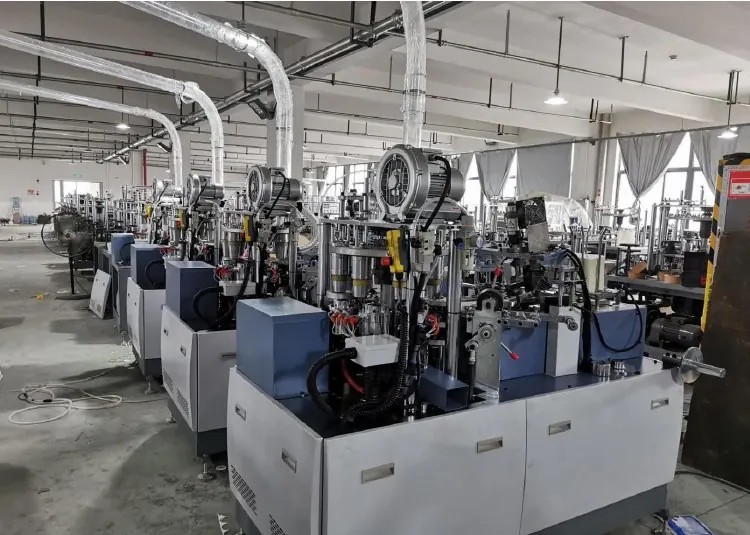
Review the HN-M100 automatic paper cup machine and the related guide to production change control. The Engineering Notes archive connects these checks with wider machine planning.
Technical reference
- NIST: two-level full factorial designs — general reference; confirm applicability to the installed equipment.
Frequently asked questions
Does a factorial trial authorize higher settings?
No. Every level and combination must remain within supplier-approved operation.
Are ten cups from one run ten independent trial runs?
No. They are observations within that run.
Can the lowest reject result become the recipe immediately?
It needs review of all quality responses and independent confirmation.
Can results be extended to another coating automatically?
No. Material changes require an appropriate review and verification.
Review the evidence with HANNAI
Send your machine model, component identification and the observations described in this guide. Include the drawing or material reference and any before-and-after measurements so the required next check can be identified.