Roll die cutter web dust should be traced to its origin before installing a cleaner or increasing extraction. Loose material may arrive on the reel, be generated at a contact point or appear after cutting. These locations call for different corrective actions and different verification samples.
This note concerns loose surface contamination and dust transfer on paper and coated packaging webs. It is separate from large waste-matrix removal. Any cleaning or extraction modification requires supplier review, including material compatibility, machine guarding and the site dust-risk assessment.
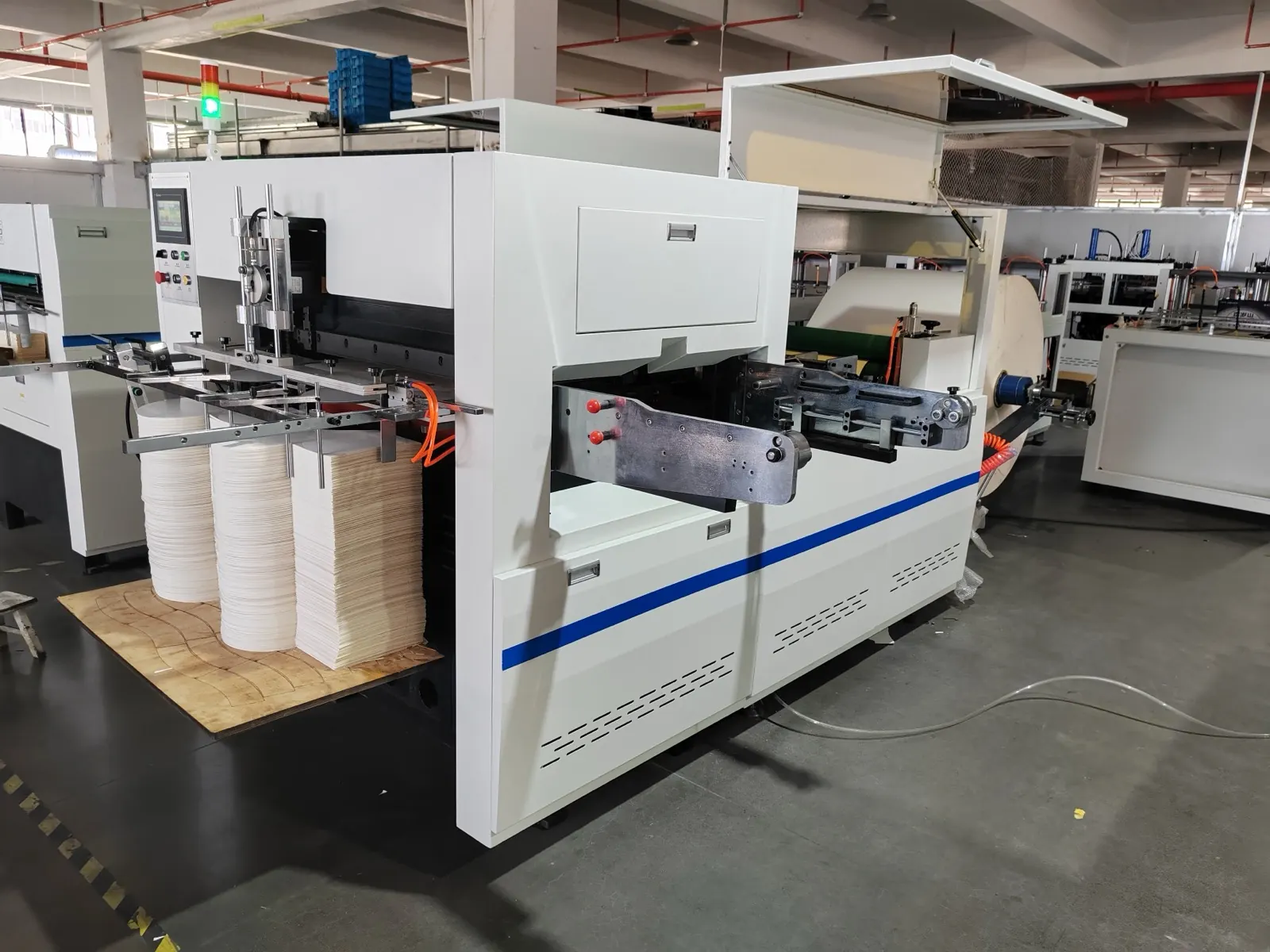
Diagnostic decision table
| Where dust first appears | Investigation | Comparison sample |
|---|---|---|
| On the incoming reel | Material condition and handling | Unprocessed stock |
| After a guide or roller | Abrasion and contact condition | Before and after contact |
| After the cutting section | Cutting condition and extraction | Blank face and cut edge |
| After stacking only | Transfer and handling contamination | Exit blank versus stack |
Build a contamination map along the web path
Identify safe sampling locations before cutting, after cutting and after stacking. Collect samples only through the approved stopped-machine or guarded sampling method. Label reel identity, material face, machine direction and collection point so samples are not confused during comparison.
Use the same approved inspection method at each point, such as controlled visual examination under fixed lighting or a validated surface test. Avoid adhesive sampling methods that could damage the coating unless the material supplier approves them. Distinguish loose fibres, coating debris and external dirt instead of reporting every particle as paper dust.
Check incoming material and contact surfaces
Compare the affected reel with a retained sample or approved reference lot. Inspect accessible reel edges and wrapping condition. Contamination introduced during storage or unpacking may persist through a correctly operating machine, while a clean incoming sample points toward a downstream source.
Under isolation, inspect guide surfaces and rollers for deposits, sharp damage or unusual rubbing. Confirm the intended web path rather than moving guides merely to avoid a dirty area. A damaged surface can generate debris continuously. Cleaning the finished blanks will not remove the underlying abrasion mechanism and may hide a condition that also affects registration.
Separate particle generation from extraction failure
Inspect the cutting section using the tooling maker service instructions. Preserve samples showing the cut edge and surrounding coating. Excess debris can accompany material or cutting-condition changes, but the samples must support that conclusion; dust alone does not prove a dull tool.
Check the installed extraction route, collection system and service indicators through the approved maintenance procedure. A detached hose, blocked pickup or neglected collector can change capture without changing the cut. Do not defeat interlocks or open a running collector. The responsible supplier should assess airflow and dust hazards before any duct or extraction-capacity modification.
Select a compatible cleaning principle
Meech describes contact and non-contact web-cleaning approaches. Selection depends on the contamination, substrate and process, not only machine width. Coated food-packaging stock needs a compatibility review so the proposed contact or airflow does not damage the functional surface or introduce contamination.
Do not improvise by directing compressed air across an exposed moving web. It may redistribute particles and create other risks rather than capture them. Ask the supplier to define cleaning location, capture method, maintenance access and performance verification. Any added device must fit the available guarded space and preserve web control.
Validate cleanliness without trading away quality
Compare the same sampling points before and after the approved corrective action using the same material and inspection method. Record whether particle levels improved at the source or only at the final surface. Review print appearance, coating condition, cut quality and downstream forming behavior alongside cleanliness.
Keep the intervention, collector service state and sample photographs together. Define routine checks through the supplier plan instead of inventing a fixed cleaning interval. Send HANNAI the contamination map and samples from each process location when requesting support. This makes it possible to distinguish a reel problem, local abrasion, cutting debris and ineffective capture.
Related equipment and next checks
Review the roll-fed die cutting machine and the related guide to web handling and register control. The Engineering Notes archive connects these checks with wider machine planning.
Technical reference
- Meech web-cleaning technologies and applications — general reference; confirm applicability to the installed equipment.
Frequently asked questions
Does dust always mean the cutting tool is worn?
No. Trace where contamination first appears.
Is more compressed air a cleaning solution?
Not without an approved capture and safety design.
Can a contact cleaner damage coated stock?
Compatibility must be confirmed for the actual coating and method.
Should only finished blanks be inspected?
No. Compare samples across the process to locate the source.
Review the evidence with HANNAI
Send your machine model, component identification and the observations described in this guide. Include the drawing or material reference and any before-and-after measurements so the required next check can be identified.