Paper cup machine spare part storage protects readiness only when the stored item remains correct, traceable and serviceable. A critical spare can fail at installation because of corrosion, moisture, battery depletion, damaged packaging, obsolete revision or uncontrolled substitution.
This article does not prescribe shelf life or environmental limits for specific components. Follow supplier data, material requirements and the site inventory system. Storage owners should define inspection responsibility, quarantine status and disposition of damaged, opened or unidentified stock before it can be selected for maintenance. Record storage excursions and any subsequent technical assessment. Recheck condition before installation after extended storage.
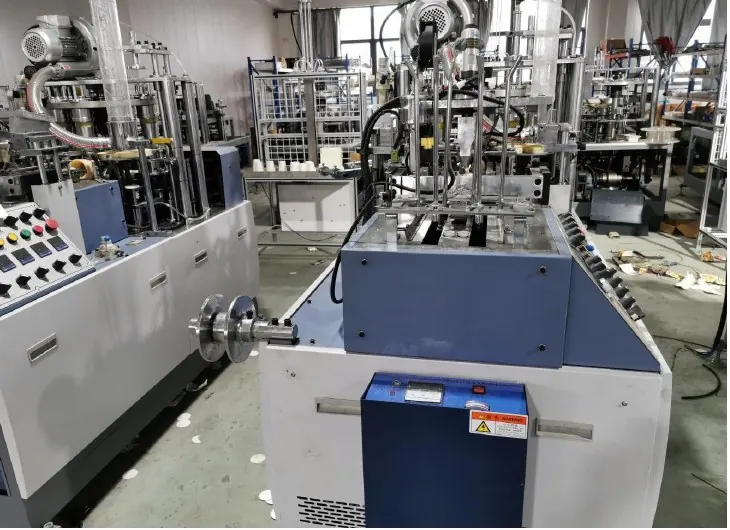
Diagnostic decision table
| Storage risk | Control | Discovery if missed |
|---|---|---|
| Wrong identity | Part and revision verification | Does not fit during breakdown |
| Environment damage | Packaging and condition controls | Corrosion or insulation failure |
| Age-sensitive item | Review and rotation plan | Expired battery or seal |
| Issue without trace | Machine and work-order link | Configuration history lost |
Define criticality and exact identity
Classify spares by failure consequence, lead time, substitution difficulty and recovery strategy. Record manufacturer, part number, revision, specifications and approved alternatives. Link photographs and drawings when similar items can be confused.
Critical does not necessarily mean expensive. A small proprietary sensor or seal may stop production for longer than a large common motor. Review the list after failures, redesigns and supplier changes.
Set storage controls by component need
Follow supplier guidance for temperature, humidity, light, dust, electrostatic protection, orientation and packaging. Separate lubricants, electronics, elastomers, bearings, heaters and finished tooling where their risks differ. Protect precision surfaces from contact and corrosion.
Do not remove protective packaging for convenience. If packaging must be opened for inspection, reseal and record it. Keep heavy items supported safely so long storage does not deform them or create handling risk.
Inspect age and condition periodically
Define checks from component sensitivity and storage history. Review packaging, corrosion, contamination, battery date, seals, connectors, calibration status and preservation treatment as relevant. Record results against the individual inventory item.
A clean box does not prove serviceability. Some stored assemblies require controlled functional tests or rotation into service. Never energize or rotate equipment without the approved method and safety controls.
Control issue and return
Issue parts against a work order and machine. Verify identity at picking and installation. Record serial number, revision and source where needed for configuration. Quarantine returned, opened or suspected parts until condition is assessed.
Avoid placing the removed failed part in the new spare’s packaging without clear status. Reconcile inventory promptly so planners do not rely on a quantity that no longer exists. Record parts used for troubleshooting even if later removed.
Review obsolescence and replenishment
Monitor supplier status, actual consumption, lead time and machine configuration. Purchase decisions should balance holding cost, deterioration, repairability and failure consequence. Validate alternate parts before the original becomes unavailable.
Send HANNAI current part identification, machine serial context and photographs when confirming compatibility. Storage preservation supports availability, but installation still requires controlled verification and return-to-service checks.
Related equipment and next checks
Review the HN-M100 automatic paper cup machine and the related guide to paper cup machine spare parts checklist. The Engineering Notes archive connects these checks with wider machine planning.
Frequently asked questions
Are the most expensive parts always critical?
No. Consider consequence, lead time and substitution difficulty.
Can opened parts return directly to stock?
Assess, identify and control their condition first.
Should stored spares be inspected?
Yes, according to component risk and supplier guidance.
What should an issue record include?
Link the item, revision, machine and work order.
Review the evidence with HANNAI
Send your machine model, component identification and the observations described in this guide. Include the drawing or material reference and any before-and-after measurements so the required next check can be identified.