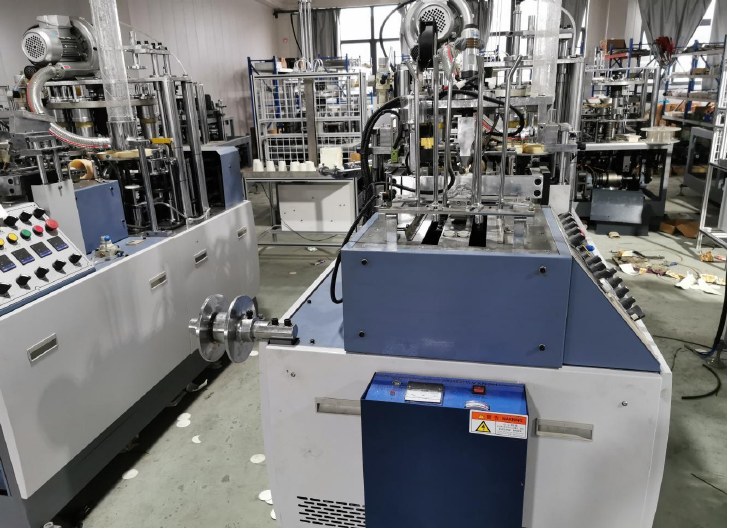
Paper cup machine maintenance planning should produce a workable task list for a specific asset, not a calendar copied from another factory. The buyer or production manager needs to know which tasks are required by the machine documentation, who may perform them, what evidence closes them and how overdue findings affect production. Begin with the installed configuration and its actual operating exposure.
Establish the machine baseline
Identify the machine, tooling set, installed options and current manuals. Keep supplier instructions for lubrication, cleaning, inspection and replacement linked to that asset. A generic instruction such as “lubricate regularly” is incomplete if the point, lubricant, method and responsible role are unknown. Ask the supplier to resolve those details before adding the task to the schedule.
Record operating hours or cycles where available, cup applications, material changes and recurring faults. A machine running several shifts has different exposure from one waiting for occasional orders. Exposure helps review the plan; it does not authorize inventing a new service interval or overriding a supplier requirement.
Separate routine care from technical intervention
Operators can report visible deterioration and perform tasks specifically assigned to them. Internal electrical work, adjustments to protective devices and mechanical intervention belong to authorized personnel following the machine's isolation procedure. A maintenance plan must define those boundaries instead of assuming every person can perform every check.
Link daily observations to the operator training checklist. Where an abnormal condition needs investigation, preserve the symptom and operating context before replacing a component. Repeated repair of the same symptom deserves a review of the cause, not merely a shorter replacement cycle.
Build a task register with a clear closeout
| Planning element | Required entry | Review question |
|---|---|---|
| Asset and location | Machine identity and exact inspection point | Can another technician locate it? |
| Task basis | Manual section or approved condition finding | Why is this task needed? |
| Trigger | Supplier interval or approved exposure basis | What makes the task due? |
| Method and resource | Procedure, tools and compatible consumables | Can it be completed correctly? |
| Responsibility | Qualified owner and production contact | Who performs and accepts it? |
| Evidence | Observation, measurement or replaced-part record | What proves completion? |
| Release | Outstanding risks and handback authorization | Is production permitted? |
Do not mark a task complete only because somebody attended the machine. Record the finding, work performed, unresolved items and release decision. Identify replaced parts so future technicians can distinguish the original configuration from later changes. The spare parts planning guide can support identification and availability review.
Review the plan using failures and production impact
Compare the task register with fault history and downtime. If an inspection repeatedly reports a developing problem without follow-up, the issue is action ownership. If failures occur despite apparently completed tasks, review the method, evidence quality and component application before adding more checks.
Use a planned stop to combine compatible tasks, while keeping sufficient time for inspection and restart verification. Make the production schedule reflect that stop rather than assuming maintenance happens outside available hours. Review overdue work by consequence and current condition; do not quietly reset due dates to improve completion figures.
For a new paper cup production line, request maintenance documentation and task ownership as part of the handover. The maintenance checklist supplies a complementary field-check structure; this guide explains how to organize the plan behind it.
Frequently asked questions
Can all machines use the same maintenance interval?
No. Use the documentation for the installed machine and review operating exposure and condition findings with the supplier. A shared calendar does not establish compatibility.
Should every recurring fault become a preventive replacement task?
Not automatically. Confirm the failure mode and whether replacement addresses it. Material, alignment or operating conditions can create symptoms that a new part does not remove.
What should happen when a task is overdue?
Record the reason, current condition and responsible decision. Escalate any unresolved issue that prevents authorized production release; do not hide it by editing the original due date.
What should a buyer request before machine handover?
Ask for the applicable manuals, approved consumables, component identification, task boundaries and release checks. Confirm any missing intervals directly with the supplier.
Send HANNAI your machine model, operating pattern and maintenance-document questions to discuss the information needed for your project.