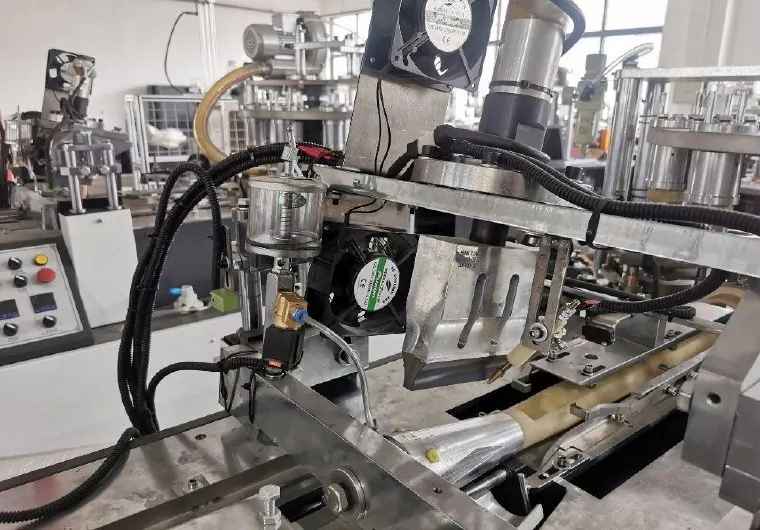
Paper cup machine drive maintenance should preserve the manufacturer's sequence references. A repeated interruption or unusual sound can justify inspection, but it does not identify which chain, cam or other drive component needs adjustment. Begin with the actual machine documents and condition history. Qualified personnel should decide the work scope, isolation and recovery checks before any mechanism is accessed.
Build the component and document reference
Record the machine model, serial reference, relevant assembly drawing and maintenance instructions. Identify the drive components actually fitted to that configuration. Do not assume that a general illustration represents every machine or that timing references from another model apply.
Keep component identity, approved lubricant references and prior work records together. The technical documentation checklist helps specify the information needed for a maintenance handover. A photograph of a mechanism can support identification, but it cannot replace the correct drawing or an approved timing procedure.
Preserve the condition before intervention
Record the event, operating stage and recent authorized work. Note sounds, repeated alarms or visible condition only from a safe permitted position. Do not place a hand, camera or measuring tool inside moving machinery to capture an observation.
| Maintenance record | Evidence to retain | Decision supported |
|---|---|---|
| Component identity | Drawing and part reference | Selects the correct procedure and replacement |
| Event history | Stage, alarm and repeatability | Defines the investigation boundary |
| Isolated inspection | Condition recorded by qualified personnel | Supports an approved repair decision |
| Timing reference | Manufacturer's procedure and work record | Prevents an improvised sequence adjustment |
| Handback | Protective checks and controlled trial | Supports return to production |
Inspection within guarded assemblies requires the approved energy-isolation procedure, including relevant stored-energy hazards. The authorized team must establish the required safe condition before access. This article does not provide tension values, timing angles, alignment instructions or an alternative to the manufacturer's maintenance method.
Separate wear, lubrication and sequence evidence
Qualified personnel should assess components against their specific instructions and acceptance criteria. Preserve photographs and records of relevant condition before parts are cleaned, adjusted or replaced. Avoid interpreting one visible mark as proof of its age, cause or remaining service life.
Review the lubrication plan when the inspection raises a lubrication question. Confirm the prescribed point and product rather than applying a general lubricant to every component. More lubricant is not an evidence-based repair for uncertain wear or timing.
If a process alarm accompanies the event, compare the sensor troubleshooting record. A reported position problem can involve the sequence or detection conditions; the alarm alone does not determine which component is responsible. Use the approved diagnostic plan to distinguish observations from conclusions.
Control repairs and return to service
Confirm replacement identity and any approved configuration change before installation. Record the work performed, responsible personnel and manufacturer references used. Do not copy a timing arrangement from an unverified internet image or trial-and-error operation with protective devices defeated.
The handback should include restoration of guards and the required protective-function checks. Follow the specified controlled restart procedure and inspect resulting cups for the relevant quality characteristics. A mechanism moving without an immediate alarm does not establish that the complete sequence and product requirements have been validated.
If the event repeats or the correct reference cannot be established, keep the affected operation stopped and escalate with the record. For a planned intervention, use the shutdown and restart checklist to connect maintenance completion with production release.
Contact HANNAI with machine identity, component references and event evidence. Review the equipment range when planning a line, and agree on maintenance documents, training and support scope for the actual configuration.
Frequently asked questions
Can a general guide specify the correct chain tension?
Use the manufacturer's requirement for the actual assembly. This article provides a planning record, not a universal adjustment value.
Does an unusual sound identify a worn cam?
No. It is an observation to preserve. Qualified diagnosis needs the relevant component, sequence and condition evidence.
Can timing be copied from a similar machine?
Do not assume compatibility. Use the approved procedure and references for the exact configuration and document any authorized change.
What belongs in the maintenance handback?
Record component identity, work completed, protective equipment restoration, required function checks and the controlled production trial results.