Paper cup machine power quality and voltage imbalance should be investigated as a system condition involving the utility supply, factory distribution, machine input, connected loads and operating sequence. A drive trip, hot motor or unstable control circuit is evidence to preserve—not proof that one component has failed.
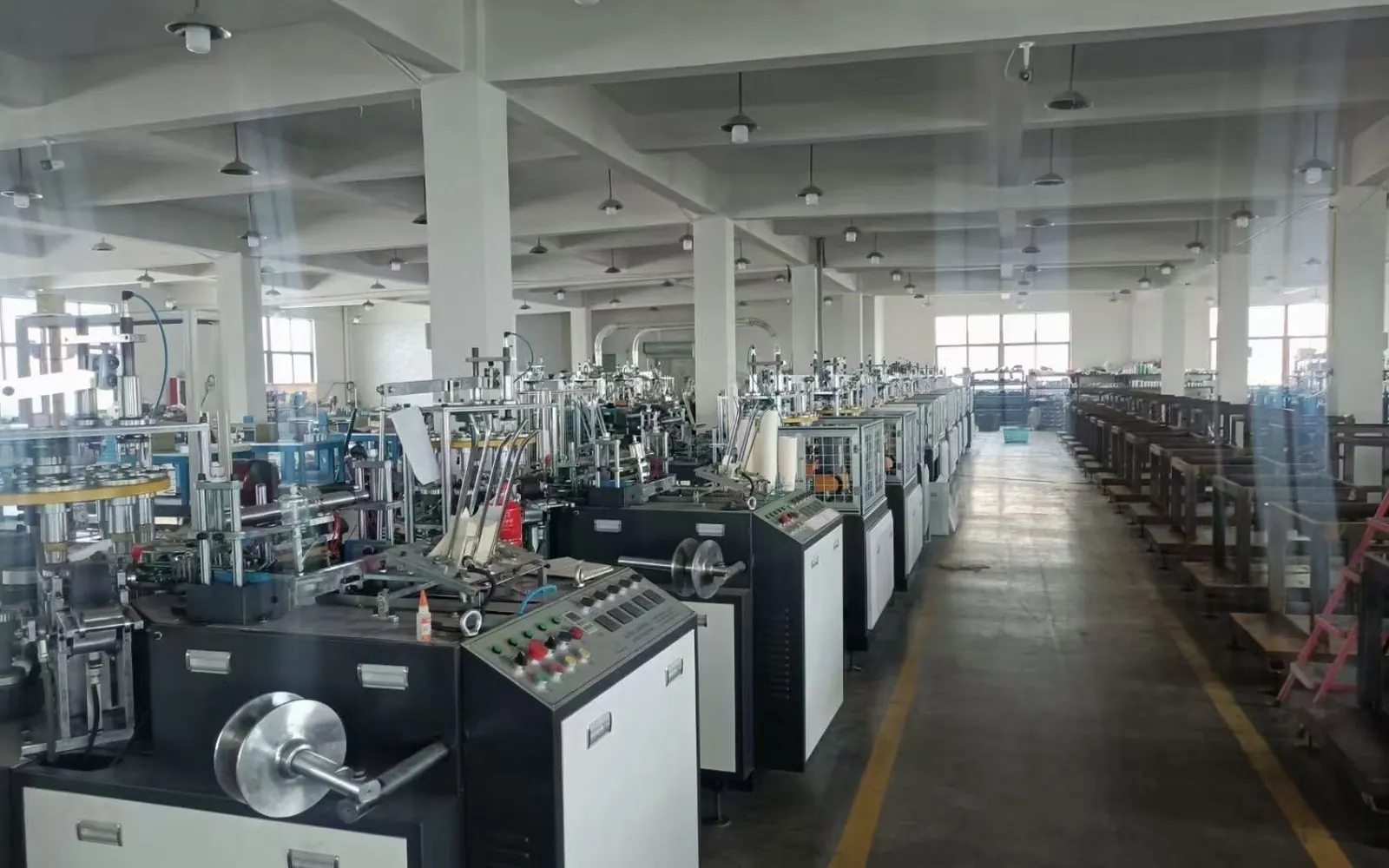
Separate supply quality from a machine fault
Paper cup forming combines motors, drives, heaters, control power, sensors and switching loads. A disturbance may appear as an undervoltage or phase-related alarm, unexpected controller reset, inconsistent heater response, motor heating, contactor dropout or a stop that occurs when another factory load starts. Those symptoms can also have machine-level causes, so the diagnosis must compare evidence across the complete electrical path.
Begin with the machine nameplate, supplied electrical drawing and agreed destination configuration. Buyers preparing a new installation should first confirm the basic information in the paper cup machine voltage guide; power-quality diagnosis starts after the nominal supply, frequency and phase arrangement are known.
Set a strict electrical safety boundary
Operators should record external evidence only: time, alarm text, HMI status, sound, smell, visible indicator state and the production action occurring when the event happened. They should not open an energized cabinet, expose terminals, bypass interlocks or place probes on conductors.
Electrical access, instrument selection and any energized measurement must be planned and performed by qualified personnel under the factory’s electrical-safety program. The task requires an approved risk assessment, suitable isolation and absence-of-voltage procedure where applicable, control of stored energy, correctly rated test equipment, protected probe access and the required personal protective measures. If those conditions cannot be established, stop and use a safer diagnostic method.
Preserve the event before changing settings
Record the exact alarm code and timestamp before resetting a drive or controller. Note the active cup size, machine mode, heater state, forming speed stage, air-system condition and any other load that started or stopped at the same time. Ask whether the event occurs during initial energization, heater warm-up, motor acceleration, steady production or shutdown.
Review recent factory changes such as a new transformer, cable extension, generator, compressor, welding equipment, packing machine or revised distribution circuit. A timeline can reveal a common supply event that is invisible when only the paper cup machine is inspected.
Use a qualified power-quality measurement plan
| Control point | Evidence to collect | Decision question |
|---|---|---|
| Supply identity | Nominal voltage, frequency, phase arrangement, source and grounding information | Does the available supply match the delivered machine configuration? |
| Distribution path | Transformer, protective devices, conductor route, joints and other connected loads | Where could voltage drop, phase asymmetry or an intermittent connection enter the path? |
| Phase measurements | All applicable phase-to-phase and phase-to-neutral readings taken by the approved method | Are the phases being compared at the same location, time and load state? |
| Current and load | Phase currents, machine operating stage and simultaneous factory loads | Does the electrical variation follow a particular load or sequence? |
| Time-based events | Minimum, maximum, trend or event capture synchronized with alarm history | Is a short disturbance being missed by a single spot reading? |
| Machine evidence | Drive logs, control-power status, protection event and component temperature evidence | Which device first detected or responded to the event? |
| Acceptance basis | Applicable code, component manuals, project documents and approved limits | Which verified requirement governs the decision? |
Interpret voltage and current imbalance separately
Do not judge a three-phase supply from one voltage pair. Qualified personnel should record the complete applicable set under a defined machine state, then use the calculation method required by the governing standard or project procedure. The same method, instrument location and load condition must be used when comparing results.
Voltage imbalance and current imbalance are related evidence, but they are not interchangeable. Motor load, connection condition, drive input arrangement and distribution impedance can affect the observed current. A current difference therefore requires both supply-side and load-side investigation rather than an immediate conclusion about the incoming utility.
There is no responsible universal percentage to apply to every paper cup machine installation. Acceptance must be based on the destination electrical rules, transformer and distribution design, supplied motor and drive documentation, protective-device requirements and the agreed machine configuration.
Trace the problem across defined boundaries
Compare evidence at logical boundaries approved for testing: the facility source, the machine feeder, the incoming machine terminals and the relevant downstream circuit. If a condition is already present upstream, investigate the supply and factory distribution. If it appears only after a specific boundary, inspect the intervening protection, conductor, terminal, switching device or connected load.
Never create an unsafe temporary bypass to prove the boundary. Inspect de-energized connection condition, conductor damage, protection history and thermal evidence under the procedure in the electrical control cabinet inspection guide. Repeatedly resetting a breaker, installing a higher-rated fuse without engineering approval or relaxing a drive setting hides evidence and may increase damage.
Connect electrical evidence to machine functions
For motors and drives, correlate the event with acceleration, deceleration, mechanical load and drive history. A supply disturbance, overloaded mechanism, poor connection and incorrect parameter can produce different evidence even when the operator sees the same stop. Preserve the sequence before replacing a drive or motor.
For heaters, compare control command, actual temperature response, switching state and supply condition rather than assuming that slow heating is a power-quality problem. The heating and temperature control guide explains how sensor, controller, heater and process evidence should be separated.
For PLCs, sensors and interlocks, inspect the control-power event and I/O sequence. A short control-voltage interruption may appear as unrelated sensor alarms after a restart. Use the sensor and interlock troubleshooting guide to preserve the first-fault evidence.
Correct the cause and perform a controlled release
The corrective action depends on the confirmed boundary. It may involve the facility supply, transformer loading, feeder design, conductor or connection repair, separation of disturbing loads, protection coordination or a machine component. Design and modification decisions belong to qualified electrical personnel using the approved project requirements.
After correction, repeat the same measurement plan under comparable operating stages. Confirm protection and alarm status, observe warm-up and acceleration, run a representative production period and inspect the resulting cups. Record the before-and-after evidence, changed parts or distribution work, instrument details and release authorization.
Prepare better electrical information before commissioning
For equipment such as the HN-S120 paper cup making machine, send the actual factory supply information rather than relying only on the destination country’s typical voltage. Include the source type, frequency, phase arrangement, available feeder, nearby large loads and any generator or transformer plan.
The final machine and site requirements remain project-specific. Early confirmation helps the buyer, machine supplier and local electrician define responsibilities and plan commissioning evidence before the equipment arrives.
Frequently asked questions
Can an operator measure voltage inside the paper cup machine cabinet?
Not unless that person is qualified and formally authorized for the planned electrical task. Operators should capture external alarms and operating context; exposed or energized measurements require the factory’s approved electrical-safety procedure and suitable equipment.
Do equal-looking spot voltage readings prove that power quality is acceptable?
No. A short disturbance may occur only during warm-up, acceleration or another factory load change. Qualified testing should compare the complete applicable phase set and, when justified, synchronized time-based evidence under defined load conditions.
Does a drive phase or undervoltage alarm mean the drive is defective?
Not by itself. Preserve the drive event, supply measurements, distribution condition, connections, load state and parameter record before deciding whether the cause is upstream, within the machine circuit or in the drive.
What voltage-imbalance limit should every paper cup factory use?
There is no single limit that should be copied into every project. Use the applicable destination rules, component and machine documentation, supply design and agreed acceptance procedure, with the assessment performed by qualified personnel.
Send the machine model, destination, confirmed voltage/frequency/phase arrangement, source and distribution information, electrical drawing reference, exact alarms and qualified measurement record through our inquiry page. HANNAI can discuss the delivered machine configuration and the information needed for technical review.