A supplier splice, damaged roll section or emergency in-house joint can introduce extra thickness, adhesive, poor tracking or an unapproved material into the bottom-paper path. If the joint reaches punching and forming tooling, it can create jams, contaminate surfaces or produce cups that cannot be released as normal product.
The safe production rule should be defined before a splice reaches the machine. Unless the equipment and material specification explicitly support automatic splice passage, plan to identify, stop and remove the affected section rather than improvising with tape.
Decision matrix
| Control point | Required record | Release purpose |
|---|---|---|
| Incoming roll | Lot, supplier label, visible splice marker | Establish where a joint may enter production |
| Approach | Remaining distance and planned stop position | Prevent the joint entering punch or sealing tooling |
| Removal | Cut boundaries and disposed material | Show the full splice and adhesive were removed |
| Affected cups | Time, counter range and segregation label | Prevent uncertain product from mixing with good output |
| Restart | Threading, registration and first-off checks | Prove stable feed and bottom-seal quality again |
Set the material acceptance rule
Ask the roll supplier how splices are identified and what construction is used. Include allowable splice count and notification requirements in the agreed material specification where they matter to the process. Incoming inspection should preserve the roll label and note any marker.
An unseen splice is a traceability risk. Do not remove a marker before transferring its position to the production record.
Plan the stop before the joint reaches tooling
Estimate travel using a reliable roll marker, unwind distance or controlled observation. Stop under the machine’s approved procedure with the joint in an accessible section before the feed, punch or forming zone. Isolate energy where hands enter a guarded area.
Never reach toward moving web or use a handheld knife near rotating components. The exact access and lockout method must follow site and machine safety instructions.
Remove and rethread without creating a new hazard
Remove the complete joint, tape, adhesive residue and damaged adjacent paper. Make a clean approved edge for rethreading. Do not create another taped lap and feed it through merely to save material unless the machine and process have a validated splicing system.
Inspect rollers and guides for transferred adhesive. Restore web alignment and tension settings from the approved job recipe rather than adjusting unrelated stations.
Segregate product by a conservative window
Identify the last confirmed good cup and hold output from the uncertain interval. Counter values, time stamps and operator records make the hold defensible. If the exact boundary is unclear, use the site quality procedure to define a conservative range.
Inspect bottom-disc presence, position, knurl or seal appearance and leakage using the factory’s approved quality plan. One visual sample alone does not release the interval.
Close the event and improve procurement
Record roll lot, splice location, photos, removed length, downtime, affected product and restart approval. Repeated splice issues should be reviewed with the material supplier using evidence rather than absorbed as unexplained machine downtime.
Use the linked bottom-feed guide if instability continues after clean paper is installed. Share material and machine details with HANNAI when the feed path or change procedure needs review.
Related machine and guide
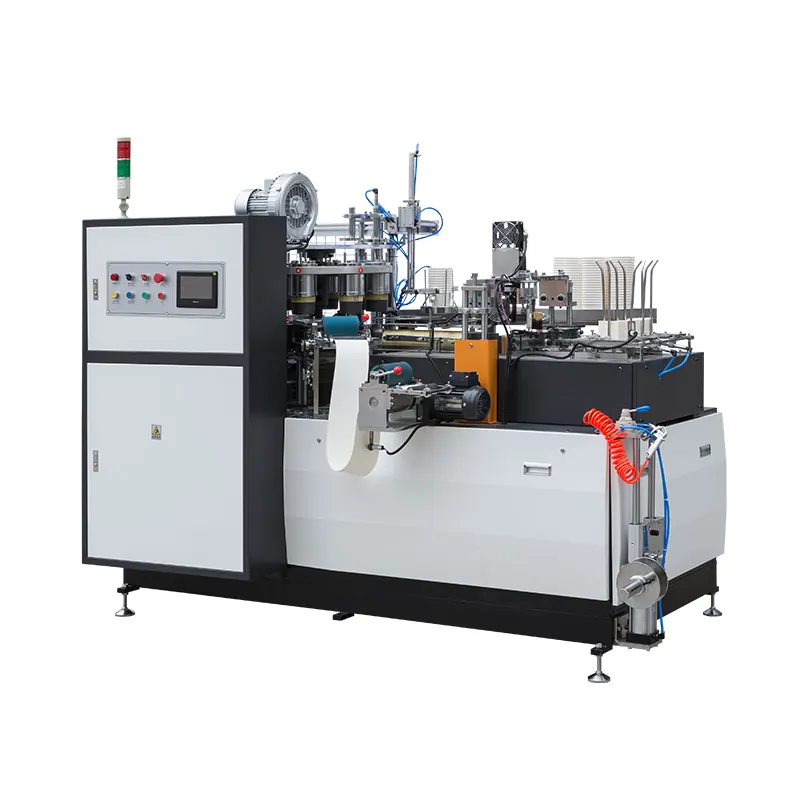
Review the HN-M100 automatic paper cup machine for machine context, then use the bottom paper feed and transfer guide for the adjacent maintenance or process check. Browse all Buyer Guides when building a wider project checklist.
Frequently asked questions
Can a taped splice run through the machine?
Do not assume it can. Use the approved machine and material procedure; otherwise stop and remove the joint before tooling.
How many cups should be held?
Use traceable time or counter boundaries and the site quality procedure; there is no universal fixed number.
Should settings be changed after a splice jam?
First restore clean material, correct threading and the approved recipe. Change settings only from measured evidence.
What evidence helps a supplier claim?
Keep roll labels, splice markers, photos, removed material, event time, downtime and affected-product records.
Review your machine configuration with HANNAI
Send the machine model, cup or material drawings, component labels, photos and a description of the required result. We will clarify which details must be confirmed before a quotation or technical recommendation.