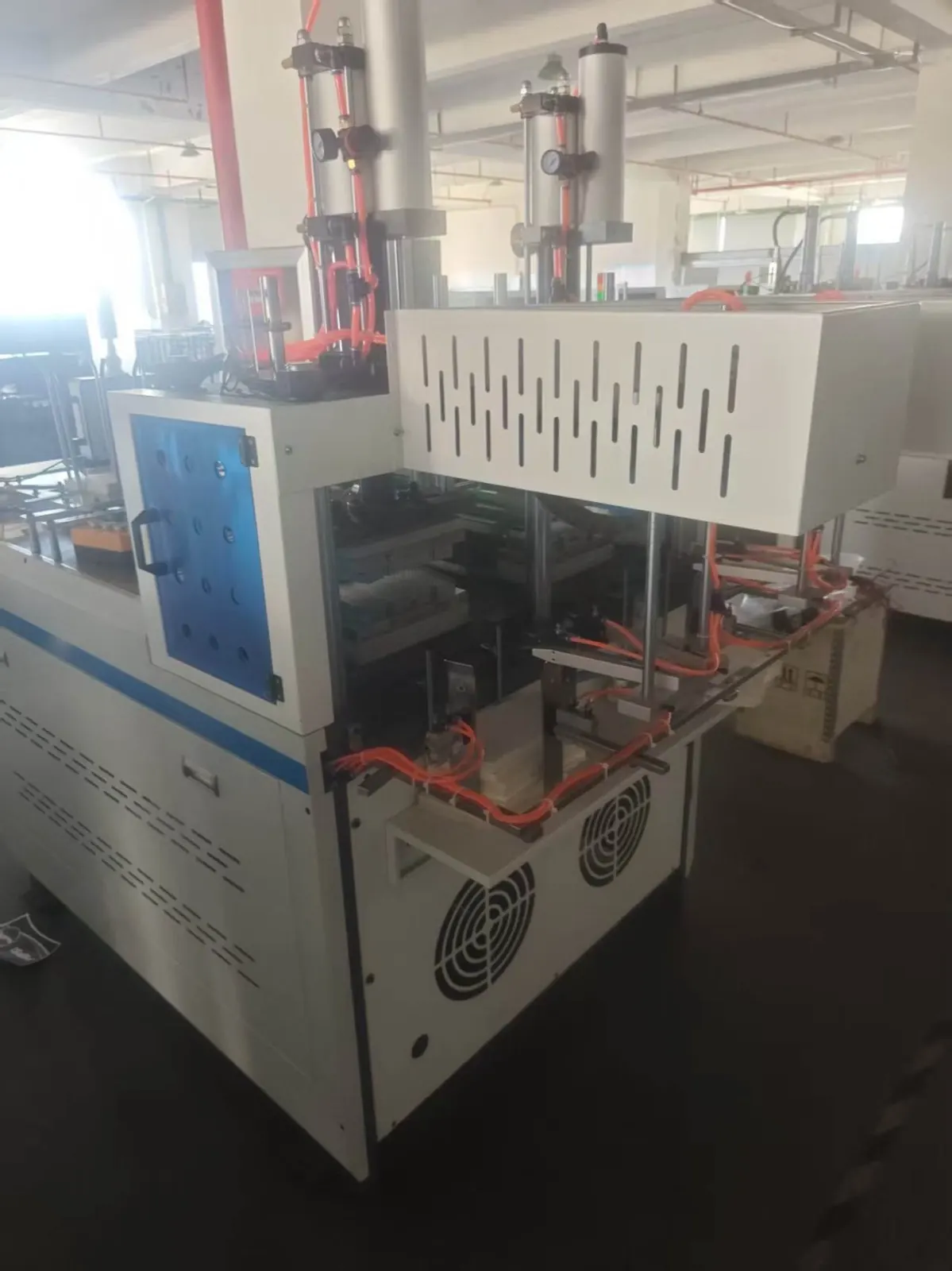
A double wall paper cup production line should be configured from the finished package and its process interfaces. The inner cup, outer sleeve, bonding method, collection and packing must work together under the agreed specification. Choosing equipment from a nominal cup capacity alone leaves important compatibility and acceptance questions unanswered. Start with drawings, actual material samples and a written division of supply scope.
Define the finished construction
Record the inner-cup drawing, sleeve drawing, materials, artwork and required appearance. Confirm whether the proposed construction and conversion route match the intended product. Do not assume that different insulated-cup designs use interchangeable sleeves, tooling or bonding arrangements.
Use the single-wall and double-wall guide to organize the product discussion. Identify the lid and any relevant downstream dispensing or packing requirements. These requirements should be agreed before a trial is described as representative of the order.
Write a process and supply-scope map
List how inner cups and sleeves will be produced or purchased, inspected, supplied to the next machine and packed. Identify manual transfers and responsibility for intermediate storage. A quoted machine description does not automatically include every upstream and downstream function.
| Interface | Information to confirm | Acceptance evidence |
|---|---|---|
| Inner cup to sleeve process | Actual geometry and material | Identified compatible samples |
| Sleeve supply | Drawing, artwork and converted condition | Approved flat and formed reference |
| Bonding | System and material requirements | Defined product-function checks |
| Collection to packing | Stack and package arrangement | Traceable handling trial |
| Complete line | Utilities, handoffs and supply responsibility | Agreed trial and documentation scope |
For the equipment discussion, review the double-wall machine page and the production-line guide. Confirm the actual offered configuration rather than assuming that a general illustration represents the complete purchased line.
Compare usable output at the interfaces
Ask each supplier to define what its output statement measures and under which material and product conditions. A machine's nominal rate does not independently establish the finished line's accepted packed output. Consider intermediate handling, rejected product and the actual packing requirement in the agreed capacity assessment.
Avoid comparing different counters or test boundaries as if they were the same measure. Record the trial interval, accepted output, samples, rejects and retained work in progress. Use the collection and counting guide when defining the handoff to packing.
Confirm utility, layout, staffing and maintenance responsibilities with the actual equipment documents. Any bonding material or application requirement needs supplier confirmation for the intended construction and use. Do not treat a successful visual trial as independent proof of regulatory compliance or thermal-performance claims.
Approve the complete package through a defined trial
Use identified inner cups, sleeves and other agreed materials. Check sleeve position, appearance and the specified bonding performance, along with cup function and stack handling. Acceptance criteria and test methods must be set before the trial; generic internet force, clearance or temperature values are not substitutes.
Include the relevant lid and packing equipment when those interfaces are in scope. Record untested conditions explicitly. A short successful sample run supports only the documented configuration and trial conditions, not every future material or product change.
Send HANNAI the inner-cup and sleeve drawings, material samples and intended package requirements. Review the equipment range with a clear process map so quotation, installation and acceptance responsibilities can be confirmed together.
Frequently asked questions
Is nominal cup capacity enough to select the line?
No. Actual inner-cup and sleeve geometry, materials, construction and downstream requirements are needed for configuration review.
Does a forming-machine rate equal packed-line output?
Not automatically. Confirm the measurement boundary, product conditions, handoffs and accepted finished output in a defined trial.
Can a visual sleeve check approve bonding performance?
No. Appearance and the required functional performance need separate agreed inspection methods.
What should accompany a quotation request?
Provide drawings, material and artwork references, intended lid and packing format, site requirements, expected output definition and a clear division of supply scope.