Paper bowl machine rim-rolling and ejection troubleshooting should separate the formation of the rim from the release of the finished container. A bowl may leave the forming station with a sound rim and become distorted during stripping, transfer or collection. It may also stick because the incoming body, tooling surface or process condition was already unstable. The defect timeline determines where to inspect.
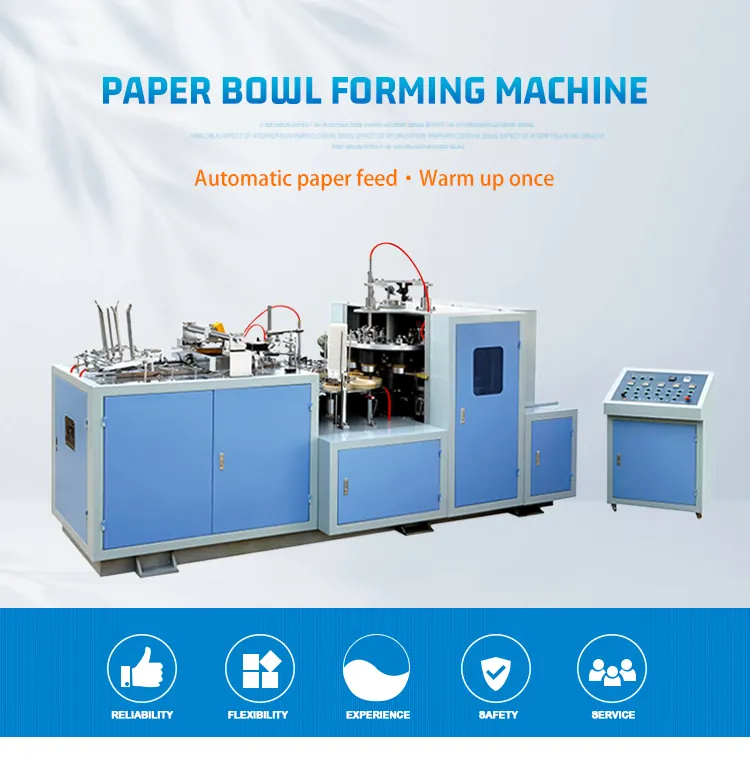
Mark the bowl before and after release
Collect bowls in cycle order and mark the side seam, defect location, machine station, material lot, bowl format and time. Inspect one sample before ejection where the approved procedure permits safe observation, then compare the released product. This reveals whether flattening, rim marking, cracking or out-of-round shape begins during formation or during removal.
The broader paper bowl forming and transfer troubleshooting guide covers the complete sequence. This guide narrows the investigation to rim-tool interaction, product retention, stripping and ejection evidence.
Classify the defect accurately
Separate incomplete rolling, uneven rim height, split edge, local flattening, surface marking, bowl sticking, double ejection, late release, product drop or a rim damaged by a guide after release. Note whether the defect stays at one angular position relative to the side seam or machine carrier.
Check the incoming bowl body for roundness, height, taper, seam thickness and top-edge continuity. A body that arrives tilted or oval can bind on tooling and receive uneven rim force. Do not treat the ejector as the only cause simply because the bowl finally stops there.
Use a rim-and-release evidence table
| Observed pattern | Evidence to inspect | Diagnostic direction |
|---|---|---|
| Rim defect follows side seam | Seam overlap, thickness, angular position and tool contact | Separate seam geometry from local tooling damage |
| Bowl is correct before ejection | Pre-release sample, ejector contact, guide path and drop condition | Focus on stripping, transfer and collection |
| Product sticks after warm-up | Material, surface condition, contamination and heat-related change | Review product release and thermal condition together |
| Damage repeats at one machine position | Carrier identity, tooling surface and contact mark | Inspect a local mechanical reference |
| Good at low speed, poor at normal speed | Cycle video, ejection completion, rebound and downstream readiness | Review sequence margin and product support |
Inspect tooling and release surfaces safely
Apply lockout, release stored air and mechanical energy and allow heated areas to reach a safe condition. Inspect rim tooling, mandrel or support surfaces, stripping elements, ejector contact points and guides for adhered paper, coating residue, burrs, scratches, looseness or uneven wear.
Preserve tooling identity and reference marks. Do not polish, grind, shim or alter a forming or release surface without supplier approval. A small geometric change can affect rim diameter, bowl shape, lid fit or product release across the entire tooling set.
Confirm bowl presentation and forming sequence
Verify that the body is fully seated and supported before rim action begins. Check the delivered references for tooling height, carrier position and sequence. From outside the guard, use an authorized slow-cycle video to compare arrival, rim movement, dwell, stripping and release.
Change only one documented variable at a time. If the first abnormal event is an incomplete seating or late transfer, correct that event before moving the rim tooling. If the rim is already damaged before release, do not adjust the collection guide to hide it.
Check ejection energy and downstream readiness
Depending on configuration, ejection may use mechanical, pneumatic, vacuum or combined action. Confirm hoses, cylinders, valves, sensors and mechanical supports included in the delivered design. A static pressure reading alone does not prove that the movement completes at the required point in the cycle.
Inspect the receiving guide, chute, conveyor or collection area. A bowl released into an occupied or misaligned path can rebound into the tooling. The pneumatic system troubleshooting guide provides a system-level method where air-driven release is involved.
Prove rim quality and release stability
After restoration, reinstall guards and use the approved restart sequence. Run identified bowls at controlled stages and record consecutive cycles. Inspect rim continuity, roundness, applicable dimensions, surface marks, stacking and intended lid interaction where relevant.
Retain samples from the start, middle and end of the confirmation run. Record the bowl drawing, tooling identity, settings and material lot so a later release problem can be compared with a known condition.
Frequently asked questions
Does a sticking bowl always mean the ejector needs more force?
No. Bowl geometry, contamination, tooling damage, heat, incomplete forming or a blocked downstream path can increase retention. Find the first cause before changing ejection energy.
Can paper cup rim settings be used for a paper bowl?
No as a general rule. Bowl geometry, material and tooling differ. Use the delivered bowl recipe, drawing and supplier-approved references.
Why is the rim good before release but flattened afterward?
The ejector, stripping contact, guide, chute or collection handoff may be loading the rim. Preserve a pre-release sample and map the first downstream contact.
What evidence should be provided for remote diagnosis?
Send the machine model, bowl drawing, material and coating, tooling identity, marked samples, pre- and post-release photos, first alarm and a safe cycle video.
Send the bowl dimensions, material, tooling reference, marked samples, alarm sequence and safe forming-and-release video through our inquiry page. HANNAI can review the evidence against the delivered bowl-machine configuration.