Paper cup machine energy metering answers a different question from checking connected electrical load. Connected load helps plan supply; measured energy over a defined run shows consumption. To compare production efficiency, link meter readings to accepted cups and disclose which supporting systems are included.
This guide defines a measurement plan, not electrical installation instructions. Qualified personnel must select and install suitable metering under the site electrical-safety program. Numerical examples are illustrative, not HANNAI energy specifications. Confirm the actual configuration and utility boundary before comparing machines.
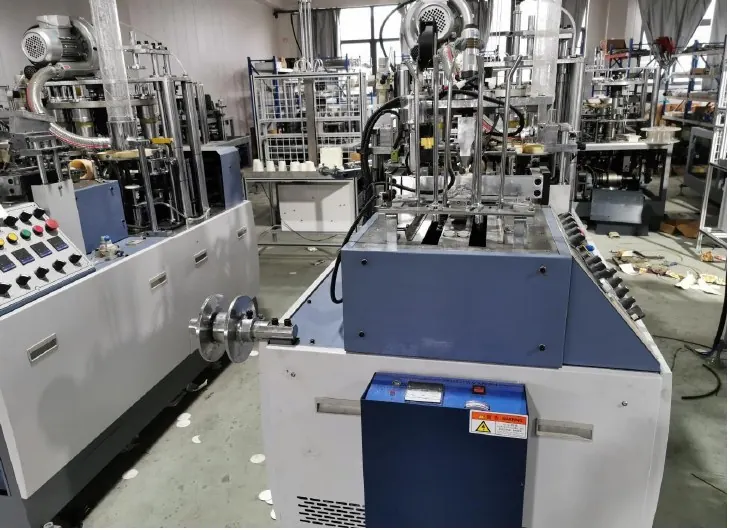
Decision worksheet
| Item | Record | Reason |
|---|---|---|
| Meter boundary | Forming alone or integrated system | Prevents scope mismatch |
| Operating state | Warm-up, running, idle and restart | Separates demand patterns |
| Output | Accepted cups in the same interval | Correct denominator |
| Shared services | Measured or allocated contribution | Avoids hidden consumption |
| Conditions | Cup, board, speed and ambient context | Makes trials comparable |
Draw the electrical and utility boundary
List every load included in the reading: forming machine, local vacuum equipment, transfer, packing and any directly metered support. Identify shared compressed air and central systems separately. A machine-panel reading cannot by itself establish full-line energy. Keep a simple diagram showing meter locations and excluded services.
Record whether the objective is steady-run comparison, whole-shift consumption or project utility planning. Each needs a different observation boundary. Whole-shift energy may include warm-up and idle periods that a supplier’s demonstration excludes. Neither result is wrong if its scope is clear; comparing them without adjustment is misleading.
Synchronize meters and accepted-product counts
Choose one start and finish time and record meter readings, accepted counts, rejected counts and work in process. Check meter units and whether a reading represents cumulative energy or instantaneous power. Confirm instrument suitability and measurement uncertainty with competent personnel before the trial.
Do not use rated motor power multiplied by time as a substitute for measured total energy. Different loads cycle and operate at changing demand. Preserve raw readings and event timestamps so a later reviewer can reproduce the result and identify whether a counter reset or meter interval caused a discrepancy.
Calculate a transparent intensity result
Specific energy for this boundary equals measured kilowatt-hours divided by accepted cups, multiplied by 1,000. In an illustrative trial, 24 kWh and 12,000 accepted cups gives 2 kWh per 1,000 accepted cups. If the same energy produced only 10,000 accepted cups, the result would be 2.4 kWh per 1,000.
This difference does not establish an electrical fault. It may reflect reduced accepted output, different operating states or a changed measurement boundary. If no accepted cups are produced during warm-up, do not report a per-cup ratio for that interval; record its energy separately and include it when calculating the complete production period.
Compare matched operating conditions
Use the same cup geometry, board construction, accepted-quality criteria and downstream scope when evaluating a change. Record startup temperature state, run duration, stops and speed. Separate a material change from a machine-setting change where practical, so their effects can be interpreted.
Repeat representative observations rather than choosing the lowest individual result. Show total energy and accepted output alongside the ratio; a lower ratio can conceal an increased total load if throughput changes. The DOE compressed-air guidance supports measuring system power and operating conditions when establishing a shared-utility baseline, rather than treating compressor nameplate data as actual demand.
Treat shared air and uncertainty explicitly
Where compressed air serves several machines, a facility total cannot be assigned accurately by dividing equally between machines unless that allocation is justified. Use suitable branch measurements or a documented allocation method and label the result estimated. Include dryer and other system contributions only within a consistent boundary.
Send HANNAI the meter diagram, trial timeline, cup details, accepted counts and utility assumptions for a configuration review. Report excluded services and uncertainty alongside the result. Do not turn this energy comparison into an environmental product claim without the additional evidence and assessment such a claim requires.
Related equipment and next checks
Review the HN-M100 automatic paper cup machine and the related guide to energy consumption planning. The Engineering Notes archive connects these checks with wider machine planning.
Technical reference
- US Department of Energy compressed-air sourcebook, third edition — general reference; confirm applicability to the installed equipment.
Frequently asked questions
Is connected load the same as measured consumption?
No. It describes an electrical planning input, not energy used during a particular run.
Can warm-up have a per-cup value?
Not when no cups are accepted; record its energy and include it in the complete-run total.
Why use accepted cups?
It keeps the denominator linked to usable output rather than production attempts.
Can shared compressor energy be omitted?
Only if explicitly excluded from the stated boundary; full-line comparisons must address it consistently.
Review the evidence with HANNAI
Send the metering boundary, operating timeline, accepted cup count, material specification and shared-utility assumptions. Keep measured data separate from allocated estimates.