Paper cup machine PLC restore verification answers a recovery question that a saved file alone cannot resolve: can this exact machine return to its approved operating state without losing critical configuration or creating unexpected motion?
Use this worksheet with the machine builder and a qualified controls technician. It is a recovery acceptance plan, not a download instruction. Controller type, safety architecture, recovery tools and permitted tests must be confirmed for the machine serial number.
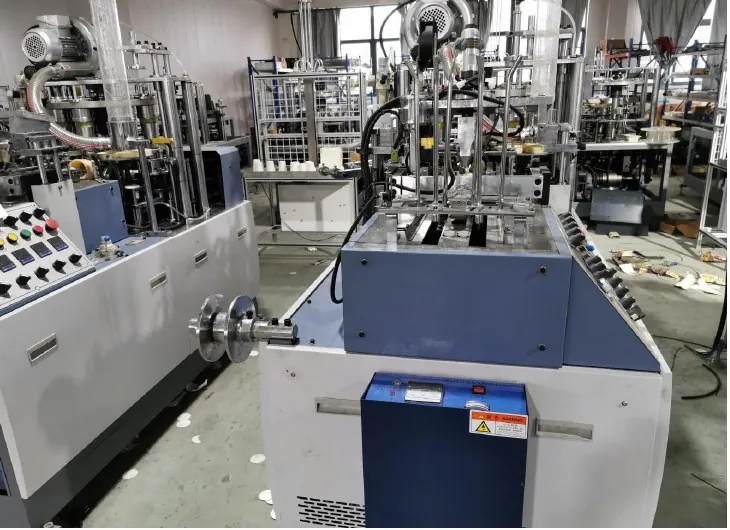
Decision worksheet
| Recovery item | Evidence to request | Acceptance decision |
|---|---|---|
| Hardware identity | CPU, modules, firmware and machine serial number | Matches the approved recovery package |
| Backup scope | Program, device configuration and retained-value inventory | Missing items have an explicit recovery route |
| Restore exercise | Approved test setup and witnessed results | Expected states are reproduced |
| Production release | Interlock checks, trial samples and authorization | Documented release after functional checks |
Define what the recovery package actually contains
List the files and data required to recover the controller, rather than treating one project archive as a complete machine backup. Separate editable engineering source, controller restore files, device configuration, retained values and any linked HMI or drive data. Ask which information is included automatically and which must be exported separately.
A recovery inventory should identify the approved software tool, version, target hardware and access holder. It should also state whether the package can be opened, edited or only restored. If protected logic is involved, document the supplier support route without recording passwords in a shared worksheet. A readable filename is not proof of usable recovery.
Match the package to the installed machine
Record controller order codes, module positions, firmware revisions and communication assignments from the approved equipment record. Compare these with the recovery package before any transfer. A replacement CPU that appears equivalent may have different firmware support, storage behavior or configuration requirements. Resolve that difference with the builder first.
Identify the tooling and product setup associated with the saved state. A controller recovered successfully for one cup format may still require validated recipe selection and mechanical setup for another. Keep program identity, recipe identity and tool identity as separate fields so a software match does not conceal a setup mismatch.
Plan a witnessed recovery exercise
Agree a permitted test environment with the supplier: an appropriate spare controller, an approved simulation environment, or a controlled machine shutdown. Define who supervises the work and what qualifies as a failed exercise. Do not test recovery by overwriting a running production controller. Preserve the current state before approved work begins.
Use a checklist of expected outcomes: project opens, target is compatible, required files are available, and relevant retained data can be recovered or re-entered through an approved method. Where a test cannot establish real machine behavior, label that limitation. Offline success does not validate physical outputs, emergency functions or production quality.
Verify functions before releasing production
After an authorized restore, follow the builder’s commissioning sequence. Qualified personnel should confirm communication, I/O correspondence, approved interlocks and documented restart behavior before a controlled product trial. Never force outputs or bypass guards merely to make the recovery checklist pass. Safety-function validation belongs to qualified personnel using the installed machine documentation.
For example, a restored program may communicate correctly while a retained format value remains at a default. The release check should compare that value with the approved setup record, then evaluate labeled trial cups using the agreed inspection method. Stop release if unexpected motion, unresolved alarms or unexplained quality differences appear.
Close the recovery record and replace obsolete copies
Record the package revision, witness, test date, test environment and remaining limitations. Retain the accepted package in controlled storage and identify its machine applicability clearly. File-integrity checks can help confirm that copies remain unchanged, but they do not establish that the files are functionally correct.
Create a new accepted baseline after authorized changes that affect recovery. Preserve prior revisions according to the site’s document policy, with clear obsolete status. The practical deliverable is a signed recovery sheet linking the installed machine to a tested package and a named recovery owner, rather than an unverified folder of files.
Related equipment and next checks
Review the HN-M100 Automatic Paper Cup Machine and the related HMI recipe backup and parameter recovery. The Engineering Notes archive connects these checks with wider machine planning.
Technical reference
- Siemens: backing up an online CPU — controller-specific example, not a HANNAI configuration claim — general reference; confirm applicability to the installed equipment.
Frequently asked questions
Is a PLC upload the same as an editable source project?
Not necessarily. Recoverable content and editability depend on the controller, tool and protection settings. Ask the builder to identify the exact package scope.
Can we use a backup from another machine?
Only after the builder confirms compatibility and machine-specific differences. Similar model names do not establish identical wiring, options or software.
Does an offline restore test prove the line is safe?
No. Physical I/O, safety functions and production release still need the approved onsite verification sequence.
What should the buyer receive?
An indexed recovery package, applicability record, tool requirements, recovery ownership and documented validation limitations.
Review the evidence with HANNAI
Send the machine serial number, controller identity and recovery-file inventory. HANNAI can help clarify the machine-specific recovery scope and the evidence needed before a production restart.