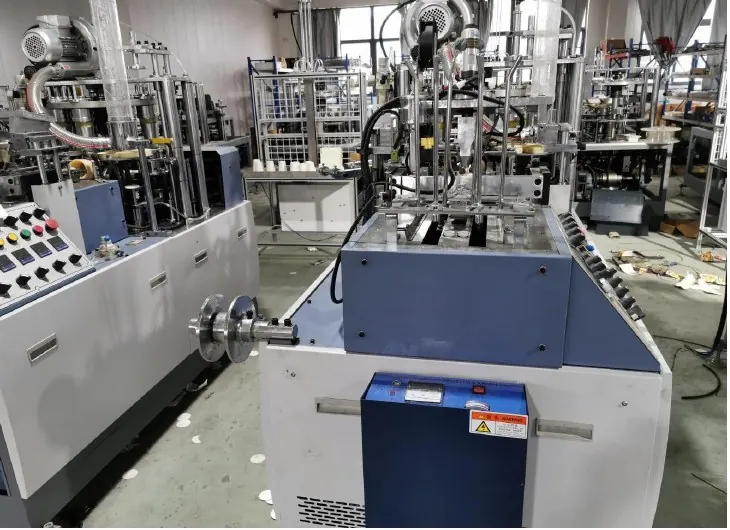
Paper cup machine trial video evidence can help a remote buyer understand operation, but a short clip rarely proves sustained accepted output. A useful review connects visible machine identity, an unbroken event timeline, counters, rejected product and retained samples. The goal is an auditable record of what happened during the agreed trial.
This guide supports remote technical review and does not replace an agreed factory acceptance test. Respect factory confidentiality and permissions when filming. Record only from safe positions, keep guards in their approved state and never request hazardous access for a better camera angle.
Decision worksheet
| Evidence element | What it establishes | What it cannot establish alone |
|---|---|---|
| Machine identity | Which unit and configuration | All unshown options |
| Continuous timing | Observed sequence and duration | Long-term reliability |
| Counter readings | Changes at a count point | Accepted quality |
| Reject record | Observed disposition | Undetected defects |
| Sample traceability | Link to a defined trial | Every future production lot |
Agree the question before requesting a recording
State whether the buyer needs to see feeding behavior, a format change, sustained running, restart recovery or integrated packing. One recording plan cannot silently stand in for all these questions. Identify the cup drawing, material lot, tooling and configuration that must be visible or referenced in accompanying records.
Agree the beginning and ending conditions, who observes the trial and which events must remain in the record. A demonstration chosen to illustrate normal operation should be labelled as such. If the purpose is acceptance, define the performance and quality criteria in the test plan before the footage is collected.
Establish identity and a synchronized timeline
Record the machine identification, relevant tooling references, material labels and trial sheet without exposing confidential information unnecessarily. Use a visible clock or consistent timestamp method and record any camera interruption. Keep different views synchronized if several cameras are needed to show input and output.
An edited overview can be useful for navigation, but retain the underlying continuous segments and an edit index. A jump between counter readings leaves the intervening events unverified. List restarts, operator interventions, replenishment and material changes so the reader can match each event to the corresponding footage and test record.
Reconcile counts at a defined output point
Capture start and end counters and explain what increments each counter. Observe the physical output boundary, then identify rejects, samples and work in process crossing the period boundary. A counter that advances once per cycle may include failed or empty cycles. Do not label its difference as accepted cups without reconciliation.
For an illustrative review, a counter increases by 6,000 in 60 minutes. If 180 cups are rejected and 20 are retained for tests, and there is no opening or closing work in process difference, dispatchable output is 5,800 cups for that interval. State whether your accepted-output definition includes retained good samples.
Connect visible operation with quality records
Request identified samples from the recorded interval using the agreed collection method. Preserve their link to material, machine settings and time. Review dimensions, seal performance, appearance and pack handling through the applicable documented tests. A video of cups standing upright does not prove leakage performance or material compliance.
Keep defect observations and disposition with the record. If footage shows an intervention whose effect is unclear, request clarification and the relevant test evidence. Do not infer that an unseen operation was completed. Distinguish directly observed facts, accompanying records and supplier explanations in the review notes.
Issue a bounded remote-review conclusion
Use conclusions such as observed for the recorded interval, supported by the attached test record, or not demonstrated. Identify missing continuous sections, unclear counters and untested formats as specific follow-up items. Avoid a generic passed label that could later be read as validation of every configuration and shift pattern.
Send HANNAI the trial objective, sample matrix, count definition and proposed recording checklist before scheduling the demonstration. Keep original files, test sheets and review notes together under revision control. If a gap affects acceptance, agree a focused repeat of that portion of the trial instead of treating polished footage as a substitute for evidence.
Related equipment and next checks
Review the HN-M100 automatic paper cup machine and the related guide to factory acceptance test checklist. The Engineering Notes archive connects these checks with wider machine planning.
Frequently asked questions
Does a high-speed clip prove sustained output?
No. Confirm actual timing, accepted counts and the complete observed interval.
Can edited footage still be useful?
Yes for explanation, provided its limits and underlying evidence are clear.
What if the counter includes rejected cups?
Reconcile rejects, samples and work in process before reporting usable output.
Can remote video replace every factory acceptance check?
No. Use the agreed acceptance plan and identify checks requiring other evidence or direct attendance.
Review the evidence with HANNAI
Send the trial objective, machine configuration, sample matrix and proposed count boundary. Agree which continuous footage and accompanying quality records are needed before the trial.