A paper cup printing artwork and registration checklist connects the approved design with the correct dieline, print position, die-cut blank and formed cup.
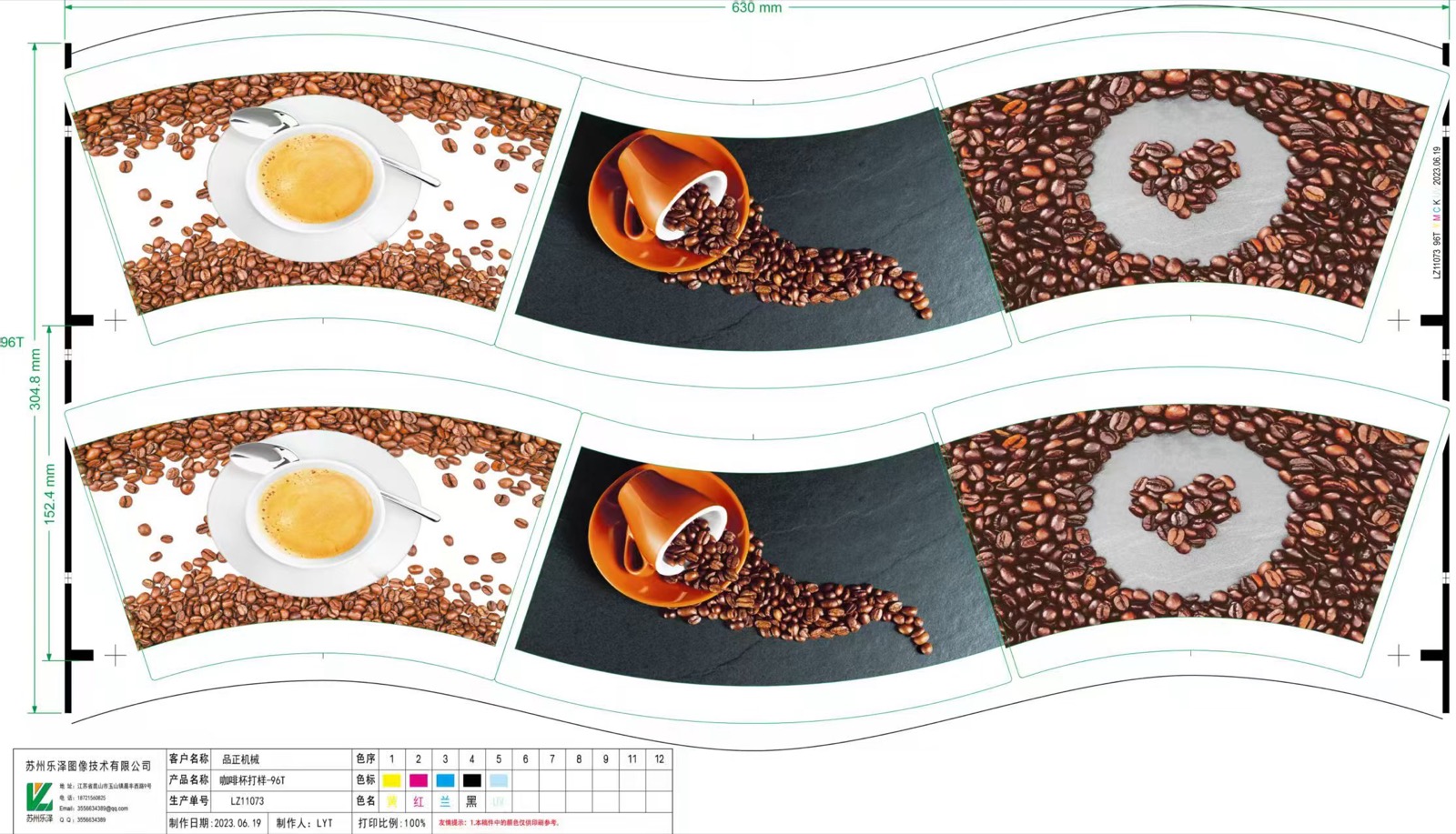
Treat artwork approval as a production control point
A design can look correct on a screen and still be unsuitable for a finished cup. It must fit the curved fan, avoid functional areas and face the intended direction after printing, die cutting and forming.
Use one order-level approval package shared by the customer, printer, die-cutting team and cup factory. Buyers preparing blanks in-house can review the printing machine checklist and blank and die cutting guide.
Build an order-level artwork handoff package
| Approval item | Evidence to keep | Release question |
|---|---|---|
| Order and SKU identity | Customer, order, cup description and artwork code | Does the file belong to this exact product? |
| Production dieline | Approved cup-fan outline with revision | Does it match the selected cup and tooling? |
| Artwork content | Text, logos, images and language | Has the owner approved every element? |
| Print placement | Seam, rim and bottom clearances plus orientation reference | Are critical elements outside functional zones? |
| File preparation | Source/output files, fonts, images and color references | Can the printer reproduce this version? |
| Proofing | Reviewed visual proof, printed trial and formed-cup sample as required | Was each approval made at the correct stage? |
| Registration result | Printed sheet or roll, die-cut fan and finished cup checks | Does position remain acceptable through the complete flow? |
| Release record | Approver, date, revision, comments and status | Is production using the released file only? |
Start with the approved production dieline
The dieline should come from confirmed cup dimensions, material and compatible forming tooling. Do not stretch old artwork onto a new outline or assume similar-capacity cups use the same fan.
Separate the cut outline, artwork and technical references. Mark non-printing instructions and confirm which face the file represents. Coordinate the blank with the selected die cutting machine and forming process.
Mark seam, rim and bottom clearance zones
The artwork review should visibly identify the side-seam overlap and the areas affected by rim curling and bottom formation. Logos, small text, codes and important borders should not be placed where joining or forming can hide, distort or interrupt them.
Clearance values depend on the cup construction, material, print process, blank shape and forming method. Obtain project values from the responsible technical teams instead of copying a universal template.
Confirm orientation on a formed cup
State which edge is top, the main viewing face and its relationship to the seam. Mark front and back panels on the fan and verify them after forming.
A flat proof cannot fully show curvature, overlap or visual balance. Include a formed-cup reference in pre-production sample approval when placement is important.
Control file content and version
Record the released filename, revision, date and artwork owner. Package fonts and linked images as agreed, or convert them by a printer-approved method while retaining an authorized editable source. Identify color references without treating an uncalibrated screen as a production standard.
Archive superseded versions outside active production folders. The order record and proof must show the same controlled revision.
Approve in stages, not from one screen image
First review spelling, language, logos, codes, dieline position and revision in the visual proof. Next, evaluate the relevant printed output for appearance and placement. Then inspect the die-cut fan for cut-to-print registration and finally form cups to review seam interaction, orientation, rim, bottom and overall presentation.
Stages depend on order risk and changes. A repeat order with unchanged inputs may differ from new artwork, material, dieline or supplier, but document the route before production.
Follow registration through print, die cut and forming
Registration is not only a printer setting. Print must align with the cut outline, and the fan must enter forming in the correct orientation. Check reference features at each handoff so shifts can be traced before packing.
Define an approved reaction when the position moves outside the order-specific boundary: identify affected material, stop release, preserve samples and obtain an authorized disposition. The quality inspection and sampling plan guide helps connect timed checks with lot containment.
Release first production and retain evidence
Before release, compare first printed, cut and formed samples with the approved package. Record material, printing and cutting batches, forming line, date and approver. Retain identified samples as defined by the factory and customer.
Link this evidence to batch records so a complaint can be investigated without guessing which artwork or blank lot was used. The batch traceability guide provides a practical record structure.
Control revisions and repeat orders
Text, logo, color, dieline, material or process changes can invalidate prior approval. Define which proofs must be repeated and the effective order or batch. Follow the production change control guide to prevent mixed revisions.
Frequently asked questions
Can a flat artwork proof approve the finished paper cup?
It can approve content and planned placement, but a formed-cup sample is needed when curvature, seam interaction, orientation or finished appearance must be confirmed.
Who should provide the paper cup dieline?
Use a production dieline confirmed by the parties responsible for the cup specification, blank preparation, forming tooling and process—not an unverified generic template.
Why can approved print still look misaligned after forming?
The cause may be cut-to-print registration, fan orientation, seam placement, material handling or forming setup. Preserve samples from each stage before assigning the cause.
Does every repeat order need a new formed-cup approval?
Not automatically. Define the approval route from order risk and confirmed changes, then document why existing evidence remains valid or which stages must be repeated.
Send your cup drawing, artwork status, material, order range and required production stages through our inquiry page. HANNAI can discuss printing, die cutting and paper cup machine configuration considerations.