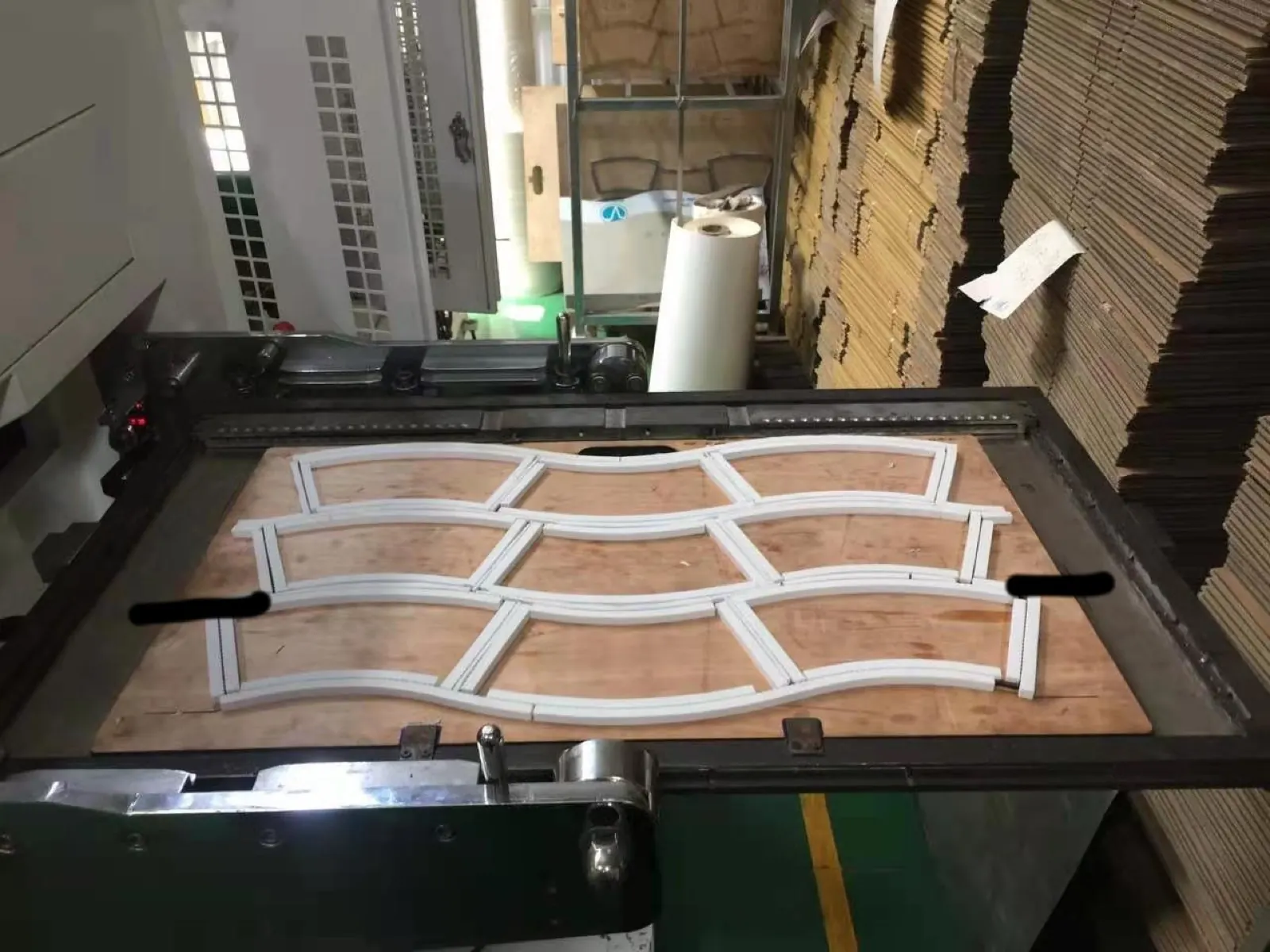
A runout check applies to a defined rotating surface and reference. It is not a general measurement of die-cutting accuracy. Roll-fed machines can contain unwind and transport rollers while using a flatbed cutting station. Before planning a dial-indicator check, identify the actual roller and explain which observed problem the measurement is intended to investigate.
Do not infer a cutting cylinder from reel feed
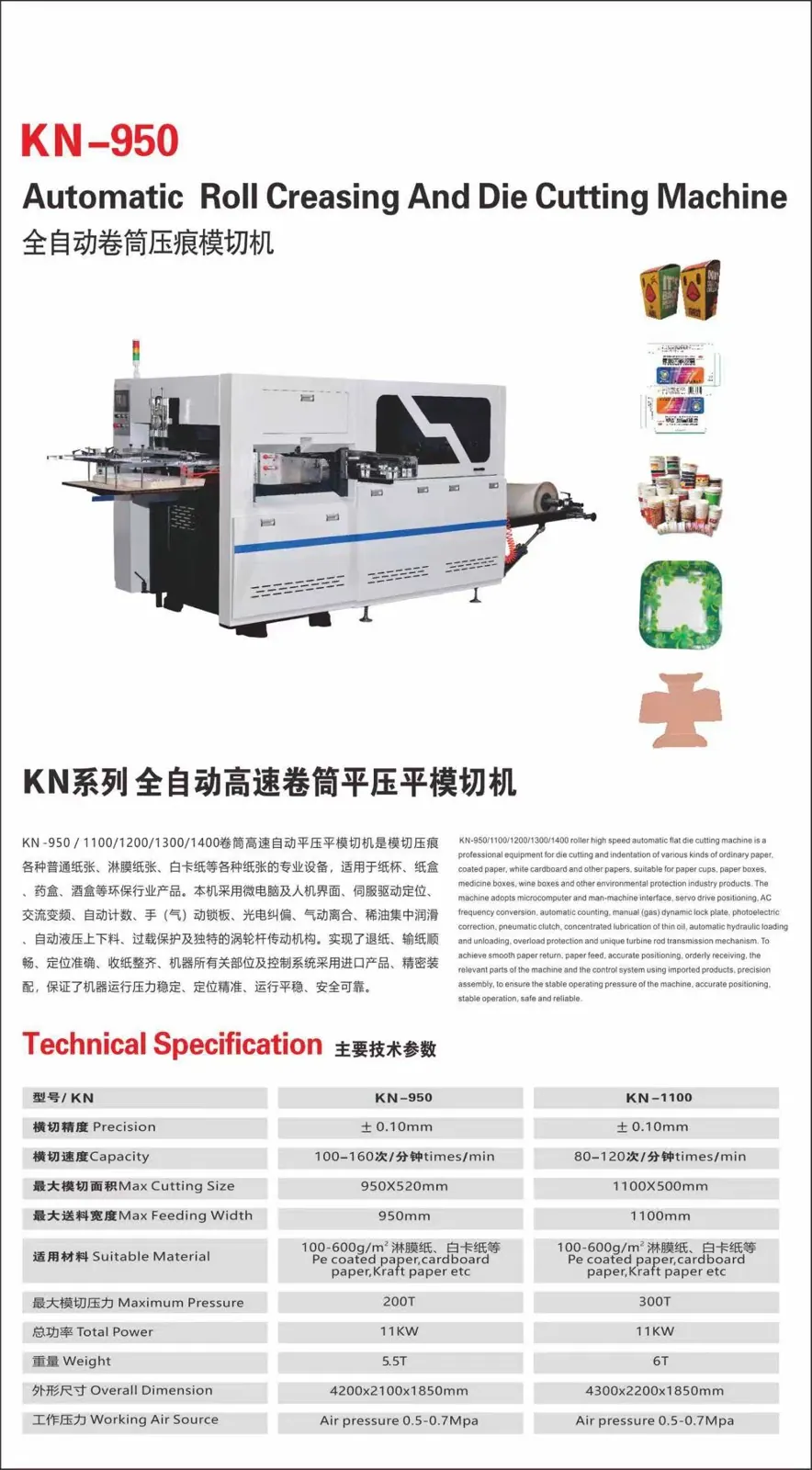
The KN-950 specification image identifies flatbed cutting. It does not establish a rotary die or magnetic cylinder. A feeding roller on such a machine and the cutting cylinder of a confirmed rotary system are different measurement subjects.
| Question | Required reference | Why it matters |
|---|---|---|
| Which surface is measured? | Roller identity and drawing | Prevents assigning results to another function |
| What does the reading include? | Support and setup condition | Separates the observed assembly from assumptions |
| What limit applies? | Actual component or machine requirement | Avoids an invented universal tolerance |
| What product issue is investigated? | Labeled blanks and error pattern | Connects the measurement to the original question |
Define the method before taking readings
Qualified personnel should establish the required isolation, support and permitted movement procedure. Rotating or accessing a roller for measurement is maintenance work, not an operator observation beside moving machinery.
Use the actual documentation to specify contact surface, instrument arrangement, reference positions and relevant assembly state. Cleanliness, indicator mounting and support condition can affect the observed result. Record the method rather than treating every varying reading as a bent roller.
This article provides no general runout limit, straightening procedure or bearing adjustment. Do not copy a method intended for a rotary cutting cylinder onto a feed roller or flat cutting plate.
Compare the result with the product evidence
Preserve identified blanks and the original error pattern. Use the register-control guide to separate print-to-cut position from blank dimensions. A runout observation can support an investigation; it does not prove that it caused the observed cut error.
If component work is authorized, retain the original result and repeat the agreed measurement after work. Restore guards and complete required function checks before production. Check trial blanks under the relevant operating conditions and document any other changes made.
Contact HANNAI with machine and roller identity, the actual drawing reference, measurement setup and labeled product samples. Review the tool-construction guide before applying any rotary tooling advice to a roll-fed flatbed machine.
Frequently asked questions
Does measured variation prove a bent roller?
No. Interpret it through the specified surface, mounting, support and method.
Is runout the same as cutting precision?
No. One is a defined rotating-surface observation; the other concerns the finished cutting result under specified conditions.
Can a flatbed machine contain rollers?
Yes. Material feeding and transport do not determine the cutting-station construction.
Which tolerance should be used?
The requirement for the actual roller or assembly and approved method, not a generic value from another machine.