A high-speed paper cup machine is useful only when orders, material supply, operators and downstream handling can support the extra output. Compare sellable production, not nominal speed alone.
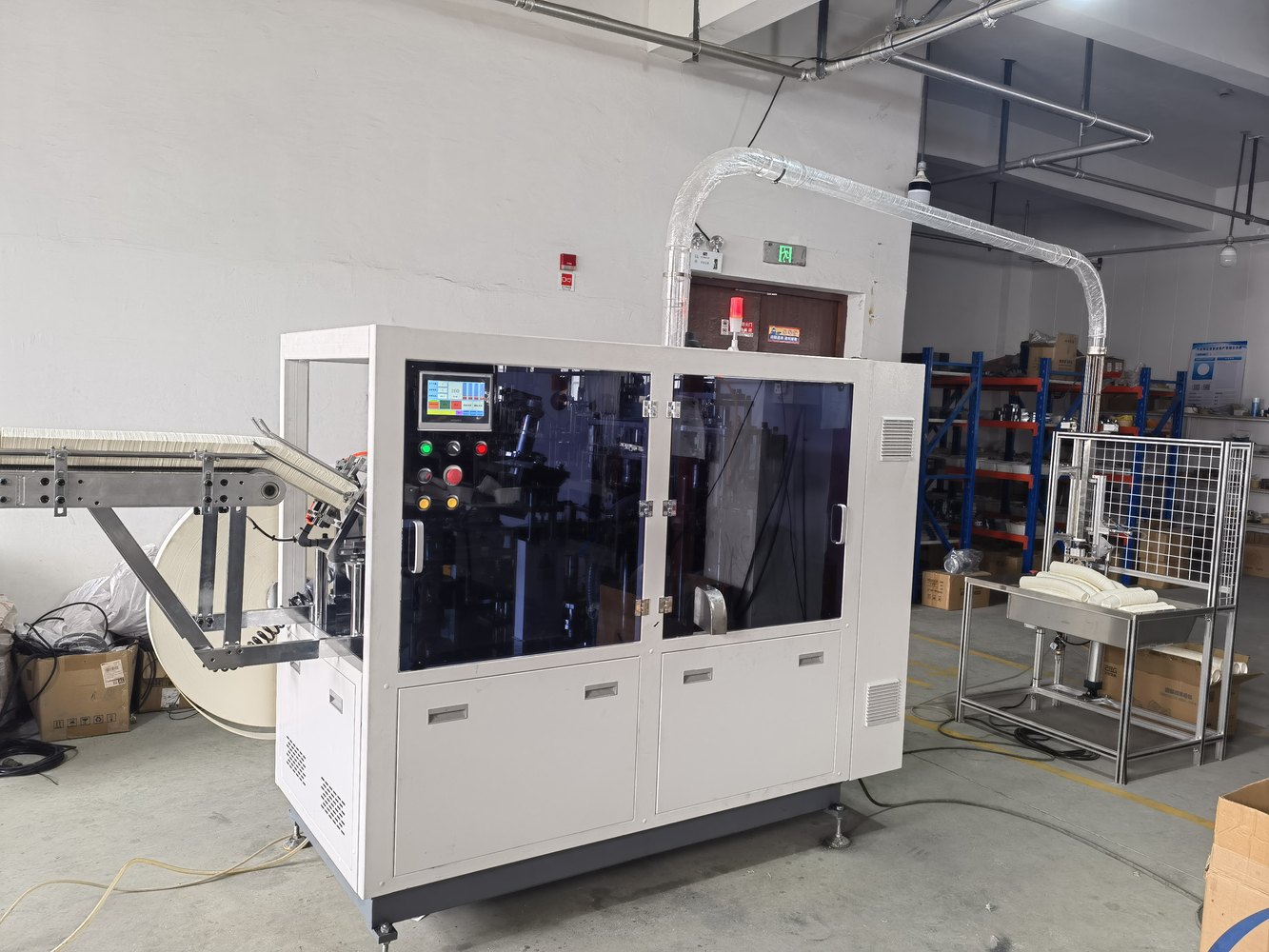
Start with the sellable output your orders require
Buyers often begin by asking for the fastest machine available. A better starting point is the quantity of acceptable cups that must be packed and ready for shipment during each shift. This number should come from confirmed demand, delivery schedules and the number of production days available.
Nominal machine speed does not include material loading, size changes, cleaning, quality checks, packing interruptions or unplanned stops. Use the paper cup machine production capacity guide to convert the sales target into realistic machine hours and required forming capacity.
Compare a complete high-speed project brief
| Decision area | Information to prepare | Why it matters |
|---|---|---|
| Cup range | Drawings or samples for the priority cups | Confirms whether the machine and mould plan fit the actual products |
| Sellable output | Daily orders, shifts, operating hours and acceptable loss | Shows whether higher forming capacity is commercially needed |
| Material supply | Paper or blank specification, delivery format and storage plan | Reduces feeding interruptions and material-related quality problems |
| Changeovers | Number of sizes, order quantity per size and change frequency | Frequent short runs can reduce the benefit of a higher nominal speed |
| Utilities | Voltage, frequency, compressed air and factory layout | Confirms whether the site can support the selected configuration |
| Downstream flow | Collection, inspection, counting and packing method | Prevents finished cups from becoming the next bottleneck |
Decide when higher speed is justified
A high-speed paper cup machine is easier to justify when the factory has stable repeat orders, a limited range of proven cups, reliable material supply and enough downstream capacity. It can also support projects where delivery windows are short or floor space makes higher output per forming position important.
Higher speed may be less useful when order volume is uncertain, designs change frequently, operators are still learning the process or printed blanks arrive in small irregular batches. In those conditions, a stable standard-speed machine with good changeover control may create more sellable output than a faster machine that stops often.
Match the machine to the cup, not only the speed class
Confirm rim diameter, bottom diameter, height, taper, paper material and coating for every priority cup. The label “high speed” does not prove that a machine fits a particular finished product or that every mould can run at the same production rate.
HANNAI’s HN-180 high-speed paper cup machine and HN-SF160 high-speed paper cup machine represent different configuration routes. Final selection should be based on the confirmed cup, material, output and factory conditions.
Check whether material supply can keep pace
Faster forming increases the need for consistent sidewall blanks, bottom paper, storage and loading discipline. Blank dimensions, paper condition, coating and print or die-cut consistency can affect feeding and sealing stability.
Define who checks incoming material, how blanks are stored, how batches are identified and how material is moved to the machine. If printing and die cutting are performed inside the factory, compare their available output with the forming requirement. A forming machine cannot maintain production when the upstream process supplies blanks too slowly.
Plan changeovers before comparing hourly output
A factory making one stable cup for long runs has a different operating pattern from a factory producing many short custom orders. List the planned cup sizes, typical quantity per order, expected change frequency and time allowed for mould setup and sample approval.
Include tooling identification, changeover instructions, first-piece checks and operator responsibility. If several small orders occupy much of the week, total sellable output may depend more on changeover control than maximum running speed.
Prepare utilities and operator coverage
Confirm local voltage and frequency, compressed-air requirements, cable protection, machine access, ventilation and material routes before shipment. Use the factory layout and utility planning guide to keep service space and finished-cup flow visible.
Operators should know how to monitor feeding, sealing, bottom forming, lubrication, alarms and finished-cup quality. Higher throughput can make a small problem create waste quickly, so inspection intervals and response responsibility should be clear.
Prevent packing from limiting the line
Count how many cups must be inspected, counted, sleeved, bagged, boxed and moved during each hour. Manual packing may be suitable for one output level but become difficult when the forming machine runs continuously.
Review the paper cup packing options guide and include collection and packing in the same capacity calculation. The best forming-machine decision is the one that produces cups the factory can inspect and ship reliably.
Use a relevant acceptance test
Before shipment, identify the cup, material, mould, test duration and quality checks that will be used. Inspect feeding, sealing, cup shape, rim and bottom condition, counting and the stability of continuous operation under the agreed test conditions.
A short video without material identity or test context cannot confirm usable output. Record the machine identity, setup, sample result and open actions so the factory has a clear starting point for installation and training.
Frequently asked questions
Does a faster paper cup machine always reduce unit cost?
No. Unit cost also depends on utilization, material waste, labor, changeovers, utilities, maintenance and whether the factory can sell and pack the additional output.
What information should I send for a high-speed machine recommendation?
Send cup drawings or samples, paper details, daily output, shift hours, cup range, change frequency, voltage, compressed-air availability and packing plan.
Can every cup run at the published machine speed?
Do not assume so. Actual stable output depends on the cup dimensions, material, mould, machine setup, operator and agreed test conditions.
Should a startup factory buy the fastest machine first?
Only when confirmed demand, material supply, staffing and working capital support the capacity. A staged plan may be safer when orders are still developing.
Send your cup sample or drawing, material, shift target, size-change plan, voltage and packing workflow through our inquiry page. HANNAI can compare the forming capacity with the complete factory requirement.