Paper cup machine sensor and interlock troubleshooting should connect the alarm, machine state, input signal, mechanical condition and safe recovery action. Replacing a sensor without confirming this chain can hide the original fault or create a new setup problem.
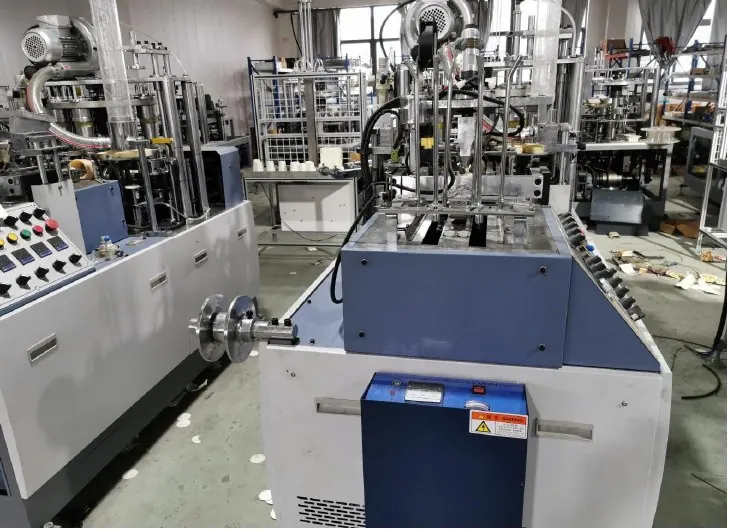
Treat every interlock as a safety or process condition
An interlock is not simply an obstacle that prevents the machine from running. It may confirm a closed guard, available air supply, correct material position, completed mechanism movement, safe drive state or another required condition. The reason for the signal must be understood before any adjustment.
Never bridge, force or permanently bypass a safety input to keep production moving. Use the machine manual, electrical drawing and authorized lockout procedure. Work inside guarded or energized areas must be limited to qualified personnel using the factory’s safety system.
Use a sensor troubleshooting evidence table
| Check point | Evidence to record | Decision question |
|---|---|---|
| Alarm identity | Exact alarm text, code, time and machine mode | Which required condition was not confirmed? |
| Input state | HMI or PLC input indication and expected sequence | Is the controller receiving the intended state? |
| Target condition | Cup, blank, bottom paper, guard or mechanism position | Is the process physically in the correct position? |
| Sensor condition | Mounting, alignment, lens, cable, connector and indicator | Can the device reliably detect the target? |
| Sequence timing | Previous and next step, speed, stop or restart event | Is the signal late, missing or logically blocked? |
| Recovery | Authorized correction, test result and approver | Was normal protection restored before release? |
Capture the fault before resetting it
Record the HMI message, tower-light state, machine mode, product position and the last completed action before pressing reset. Note whether the fault occurred at startup, normal speed, a material splice, a stop, manual jog or a changeover. A photo or short video can preserve evidence that disappears after recovery.
The remote troubleshooting evidence checklist helps organize files for supplier support. A useful report identifies the machine, configuration, alarm and sequence instead of saying only that “the sensor does not work.”
Separate process position from electrical indication
First confirm the target itself: a blank may be skewed, a cup may not have transferred, bottom paper may be absent, a guard may not be fully seated or a cylinder may not have reached its position. Then compare that physical condition with the controller input indication.
If the physical position is wrong, investigate material feed, mechanical obstruction, air movement or timing before changing the sensor. If the position is correct but the input is wrong, inspect the sensing distance, bracket stability, contamination, connector, cable route and approved power or signal checks.
Inspect mounting and contamination without changing the reference
Paper dust, oil mist, loose brackets, vibration or accidental contact can change detection. Clean only with the approved method and protect optical faces from scratching. Compare mounting to the controlled reference or a known-good station before moving a bracket.
Mark and record any authorized position change. An unrecorded adjustment may appear to solve one missed detection while creating false triggers at a different machine speed or cup format.
Check cables and connectors as part of the moving system
Inspect for loose plugs, damaged insulation, tight bend radius, pulling, heat exposure and repeated flexing near moving assemblies. Do not diagnose wiring by colour alone; use the electrical drawing and terminal identification for the supplied machine.
Intermittent signals often require observation over the real movement cycle. A static continuity result may not reveal a cable that opens only when the carriage or guard changes position.
Review sequence logic before replacing components
A sensor can be healthy while the controller correctly waits for another condition. Review the required order, timers, manual/automatic mode, emergency-stop chain, drive-ready state and upstream alarm. Compare the current sequence with the approved operating description.
For equipment such as the HN-M100 paper cup machine, the final input list and sequence depend on the delivered configuration. Supplier confirmation is appropriate before changing parameters or logic.
Prove recovery at controlled speed
After the authorized correction, restore guards and protection, clear tools, verify personnel location and follow the approved restart sequence. Begin with the permitted manual or reduced-speed checks, then observe repeated cycles before returning to normal production.
Record whether the original alarm returned, whether adjacent operations remained stable and whether cup quality changed. Link the event to the shift handover record when monitoring must continue.
Frequently asked questions
Can an interlock be bypassed temporarily to finish an order?
Not as an informal production shortcut. Safety and process interlocks must remain effective. Any controlled diagnostic method must be authorized, risk assessed and performed by qualified personnel under the machine and factory procedures.
Does an active sensor indicator prove the PLC receives the signal?
No. The device indicator, wiring, terminal, input module and program state are different checkpoints. Compare the physical target with the controller’s documented input indication.
Should every intermittent sensor fault lead to immediate replacement?
No. First preserve the event and inspect target position, contamination, bracket movement, cable flexing, connector condition, sequence and environment. Replace only through the approved maintenance decision.
When should the machine supplier be contacted?
Escalate when the fault involves safety logic, undocumented parameters, repeated unexplained inputs, drive or PLC changes, or when the factory cannot prove a safe recovery using the supplied documentation.
Send the machine model, configuration, exact alarm, HMI photo, event video, cup specification and recent changes through our inquiry page. HANNAI can review the available evidence and discuss the next safe diagnostic step.