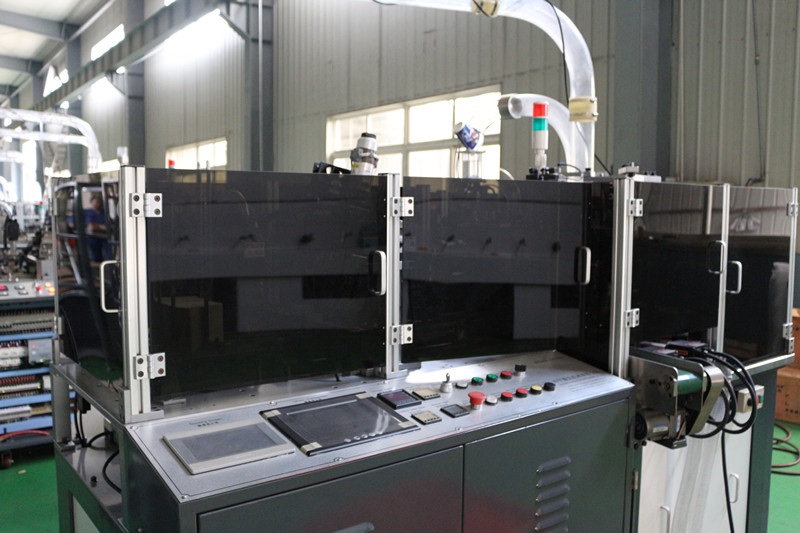
Paper cup machine temperature control should be reviewed as a documented process, not a search for one universal setting. A displayed value, a configured target and a finished-cup seal result describe different things. When quality changes, first identify the zone, material and operating condition. Then let qualified personnel compare the evidence against the approved setup before authorizing an adjustment.
Identify the heating system for the actual machine
Record the machine model, serial reference, heater-zone labels, controller documentation and approved recipe revision. Confirm which part of forming each zone supports. Use the actual machine documents; a control panel photograph from another configuration is not a suitable operating reference.
Link the setup to the cup drawing, sidewall material, bottom stock and coating arrangement. An accepted setting for one material is not approval for another. The incoming material guide helps document that identity before temperature is considered as a possible contributor.
Keep displayed values and quality observations separate
Record the configured target and the displayed reading with the zone identity and observation time. Preserve any alarm text and note the machine's production state. Do not label a displayed number as the actual sealing-interface temperature unless the approved measurement method establishes that relationship.
| Evidence | Record required | Question for review |
|---|---|---|
| Zone identity | Drawing and controller label | Are the correct parts being compared? |
| Approved setup | Recipe revision and material | Was this condition authorized? |
| Displayed behavior | Target, reading and operating state | Is the observation repeatable? |
| Product result | Identified cup and inspection method | Which quality requirement was affected? |
| Authorized change | Work record and comparison result | Did the specified checks support release? |
A value fluctuating on a display may warrant investigation, but the observation alone does not identify a failed sensor, controller or heater. Similarly, a steady display does not independently prove that every sealing condition is correct. Keep these limitations visible in the support record.
Connect the symptom with the affected product feature
For a sidewall issue, use the side seam inspection guide to record overlap, visible condition and functional results. For base leakage, use the bottom seal inspection guide. Preserve failed cups and note where leakage first appeared under the approved test.
Review recent material, tooling and maintenance changes. A problem beginning after a change gives the team a comparison to investigate; it does not prove that temperature should be increased. Avoid changing several zones and material conditions together, since that makes the result difficult to interpret.
Check the equipment only through qualified personnel and approved procedures. Access to heating components, electrical equipment or guarded mechanisms requires the specified isolation and safe-work process. This guide does not prescribe live measurements, controller tuning or a generic warm-up duration.
Approve adjustment and recovery through the manual
The responsible personnel should use the machine and component documentation to determine permitted checks and adjustments. Never disable an overtemperature protection, bridge an alarm or alter a safety function to keep production running. A protective event requires the approved diagnosis and recovery procedure.
Record any authorized change with the previous condition and its reason. Repeat the same product inspection on traceable samples and confirm required protective checks before release. If the evidence remains inconsistent, retain the affected lot and escalate through the remote troubleshooting checklist.
Send HANNAI the machine identity and heating-zone evidence when requesting support or a trial discussion. Review the machine range with actual material requirements so the proposed heating and sealing configuration can be confirmed before purchase.
Frequently asked questions
Is there one correct temperature for every coated paper?
No universal value is provided here. Obtain an approved setup for the actual machine, material, tooling and operating condition from the responsible supplier.
Does the display show the seal-interface temperature?
Do not assume that relationship. Confirm what the sensor measures and how it relates to the process through the actual documentation and approved method.
Should a leak automatically trigger a higher setting?
No. Preserve the cup and compare material, geometry, feeding and setup evidence before an authorized person decides the next step.
What proves a successful recovery?
Use the approved equipment and protective-function checks together with traceable product results. A cleared alarm or a steady display alone is insufficient.