Paper cup machine electrical control cabinet inspection should protect personnel, components, program integrity and production reliability. It is a controlled electrical-maintenance task—not routine compressed-air cleaning or live probing by an unqualified operator.
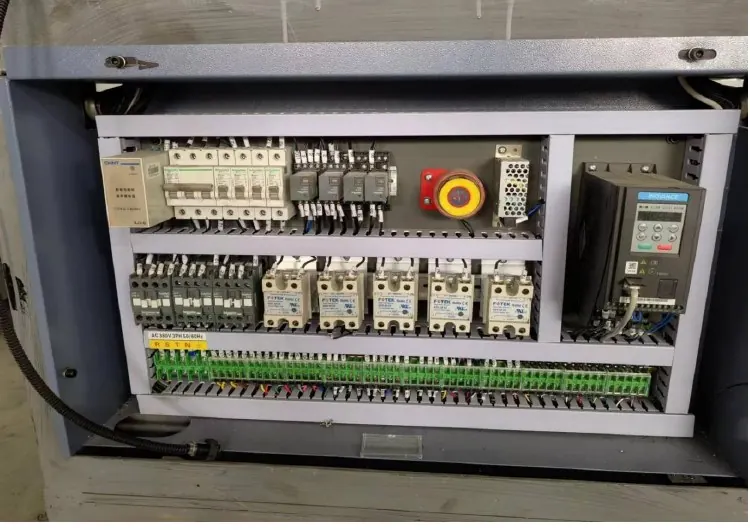
Define responsibility before opening the cabinet
Only qualified personnel should access electrical enclosures, select test equipment or perform energized work. Apply the factory’s lockout/tagout and absence-of-voltage procedure, control stored energy and follow the machine and site electrical rules.
Keep operators focused on external observations: alarms, unusual smell, heat, fan noise, display status or repeated trips. They should not defeat enclosure locks, reach past barriers or reset protection repeatedly without investigation.
Use an electrical cabinet inspection table
| Control point | Evidence to inspect | Decision question |
|---|---|---|
| Safety state | Isolation, stored energy, authorization and test method | Can the planned inspection be performed safely? |
| Environment | Dust, moisture, oil, temperature, ventilation and enclosure sealing | Is the cabinet protected from its surroundings? |
| Protection | Breaker, fuse, relay and trip identification | What condition operated the protection? |
| Connections | Terminals, connectors, earth bonding and conductor condition | Is there evidence of looseness, heat or damage? |
| Components | Power supplies, contactors, relays, drive, PLC and fans | Which device status differs from the drawing or record? |
| Data | Parameters, program backup, alarm history and change record | Can the approved configuration be restored? |
Inspect the cabinet environment first
Check door sealing, cable entries, cooling openings, filters, fans and the surrounding source of paper dust, heat, moisture, oil mist or cleaning spray. Do not direct uncontrolled compressed air into the cabinet; it can drive contamination deeper, create static or damage components.
Cleaning methods and intervals must match the enclosure and site risk. Coordinate the work with the machine cleaning and hygiene checklist so cleaning chemicals and production contamination are controlled.
Read protection events instead of repeatedly resetting
Record which breaker, fuse, overload, drive or safety device operated and when. Preserve alarm codes and load condition. A trip is evidence of a detected condition; repeated reset can increase damage and erase the sequence needed for diagnosis.
Compare the device identity and rating to the electrical drawing and machine record. Never install a larger fuse or protection setting merely to stop nuisance trips.
Look for thermal and connection evidence
Under the approved safe condition, inspect for discoloration, melted insulation, odour, loose hardware, corrosion, damaged ferrules, conductor strain and missing covers. Qualified personnel may use authorized thermal or electrical measurements under the site’s defined method.
Terminal tightening must follow the component and maintenance specification. Indiscriminate retightening can damage terminals or conductors and does not identify the cause of repeated heating.
Check cooling and component condition
Verify fans rotate as intended, filters are controlled, ventilation paths are open and heat-producing components have the required clearance. Review contactor wear evidence, relay condition, power-supply status, drive display and PLC or I/O indications.
For equipment such as the HN-M100, component selection and cabinet layout depend on the delivered configuration and destination electrical requirements.
Protect programs, parameters and backups
Before replacing a drive, HMI, PLC or controller, confirm the approved backup, software/tool requirement, version, parameter list and restoration authority. A physical replacement without the correct configuration may not return the machine to its validated sequence.
The technical documentation checklist helps buyers retain drawings, parameter records, parts references and change history.
Return power through a controlled release
After inspection, remove tools, restore covers and barriers, confirm earth bonding and cable entries, close the enclosure and clear personnel. Energize according to the approved startup sequence while monitoring alarms, fans, control power and drive-ready conditions.
Prove manual and automatic functions only through the authorized method. Record the event, changed parts, parameter verification and production sample result before normal release.
Frequently asked questions
Can operators clean the cabinet with an air gun?
Not as a default practice. Uncontrolled air can spread dust, create static and damage devices. Use the approved isolation, cleaning method and qualified maintenance responsibility.
Should a tripped breaker simply be reset?
First record its identity and operating condition and investigate the cause. Repeated resetting without evidence can increase risk or damage.
Can a replacement drive be installed with factory-default parameters?
Do not assume so. Confirm the approved machine-specific parameter backup, motor data, control method, safety implications and commissioning procedure.
How often should the cabinet be inspected?
Set intervals from the machine manual, component requirements, dust and temperature exposure, operating hours, trip history and the factory’s electrical-maintenance risk assessment.
Send the machine model, destination voltage/frequency, cabinet and nameplate photos, exact alarm or trip, electrical drawing reference and recent changes through our inquiry page. HANNAI can discuss the supplied configuration and documentation scope.