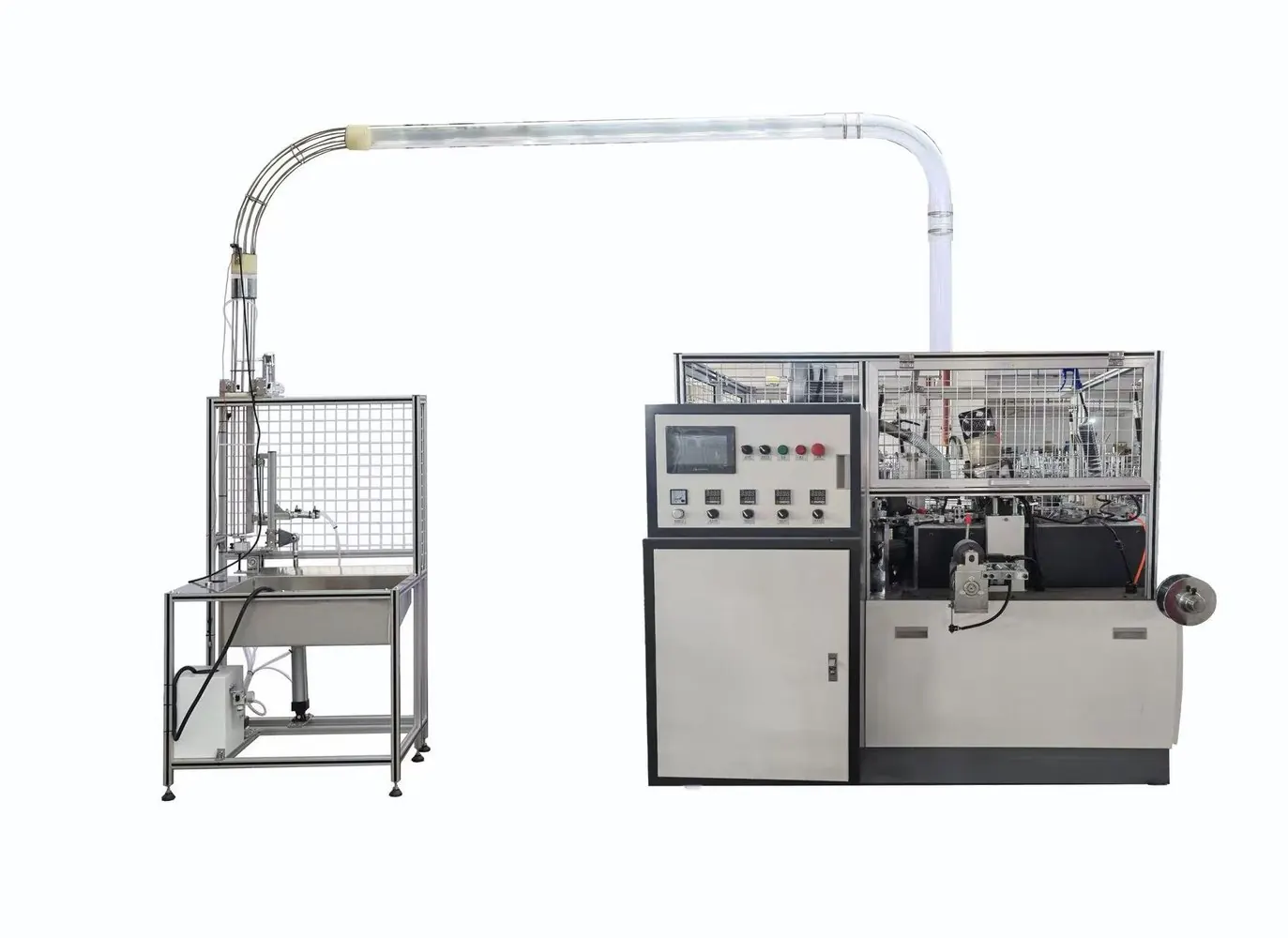
Paper cup machine ultrasonic sealing troubleshooting needs two linked records: what the sealing system reported and what happened to an identified cup seam. A generator alarm does not describe every product defect, and a weak-looking seam does not identify a failed ultrasonic component. Start with the actual fitted system, material and approved setup, then use qualified diagnosis and comparable product tests.
Confirm the fitted sealing arrangement
Record the machine, ultrasonic system and tooling references from the actual documentation. Identify the material and coating construction, fan-blank revision and authorized setup. Do not assume that another machine's settings or generator instructions apply to this configuration.
Keep the exact alarm wording and time, not a shortened interpretation such as “ultrasonic problem.” Note the operating stage and recent material, tooling or maintenance changes. The technical documentation checklist helps assemble the references required for a support discussion.
Inspect identified seams separately
Use the approved seam and functional test methods. Record overlap appearance, visible lifting or damage and the first observed leakage location where testing is specified. Preserve the cup and its corresponding material lot so physical findings can be compared with the system event.
| Evidence stream | Required record | What it cannot prove alone |
|---|---|---|
| System alarm | Exact text, time and operating state | Which physical component failed |
| Material | Approved grade, coating and lot | Suitability without the required trial |
| Seam appearance | Identified cup and defect location | Complete bonded performance |
| Functional test | Defined procedure and result | A single machine-setting cause |
| Authorized change | Work reference and comparison samples | Repeatability without a recovery check |
The sidewall seam inspection guide explains why overlap geometry and bond performance are distinct. If the blank is mispositioned or visibly damaged, retain the fan blank inspection record rather than changing sealing conditions first.
Keep intervention within the approved procedure
Inspection of tooling, electrical connections and guarded forming parts requires qualified personnel and the machine-specific safe-work process. Do not perform improvised horn adjustment, tuning or live electrical checks from a general article. Do not operate with guards or protective functions defeated to watch the contact more closely.
Use the supplier's approved requirements for component compatibility and replacement. Matching a headline frequency or a similar shape does not, by itself, approve an entire component combination. Record installed references and any authorized configuration change.
Avoid changing material, overlap position and several system settings together. A controlled comparison should keep the relevant product and test conditions identifiable. Where multiple changes are unavoidable, report the uncertainty in attributing the result.
Verify the system and finished product
Complete the required protective and equipment checks before controlled production. Repeat the same seam inspection and functional test on traceable samples. An alarm clearing after reset does not establish acceptable bonding, while one acceptable cup does not characterize an entire production lot.
Release the condition under the agreed sampling and acceptance plan, with the responsible person's decision recorded. If the event returns, preserve the sequence and use the remote troubleshooting checklist to organize escalation.
Send HANNAI the machine and system identities, exact alarm and retained seam evidence. Review the machine range with actual paper and coating requirements when planning a new project or trial.
Frequently asked questions
Does every seam defect originate in the generator?
No. Compare material, blank geometry, positioning, system events and the specified product test before assigning a cause.
Can another machine's ultrasonic setup be copied?
Only use a setup approved for the actual configuration. Similar cup capacity or component appearance does not establish compatibility.
Is a cleared alarm enough for release?
No. Complete the required equipment checks and repeat the relevant product inspections on identified trial samples.
What helps the supplier investigate?
Provide exact alarms, component and tooling references, material identity, approved setup revision and labeled seam samples with their test results.