Roll die cutting machine waste stripping and blank delivery troubleshooting should begin only after cut and crease quality are verified. Waste that will not separate, blanks that remain connected and unstable delivery stacks may originate in the die, ejection system, web tension, transport path or product geometry. The first abnormal handoff identifies which part of the process deserves attention.
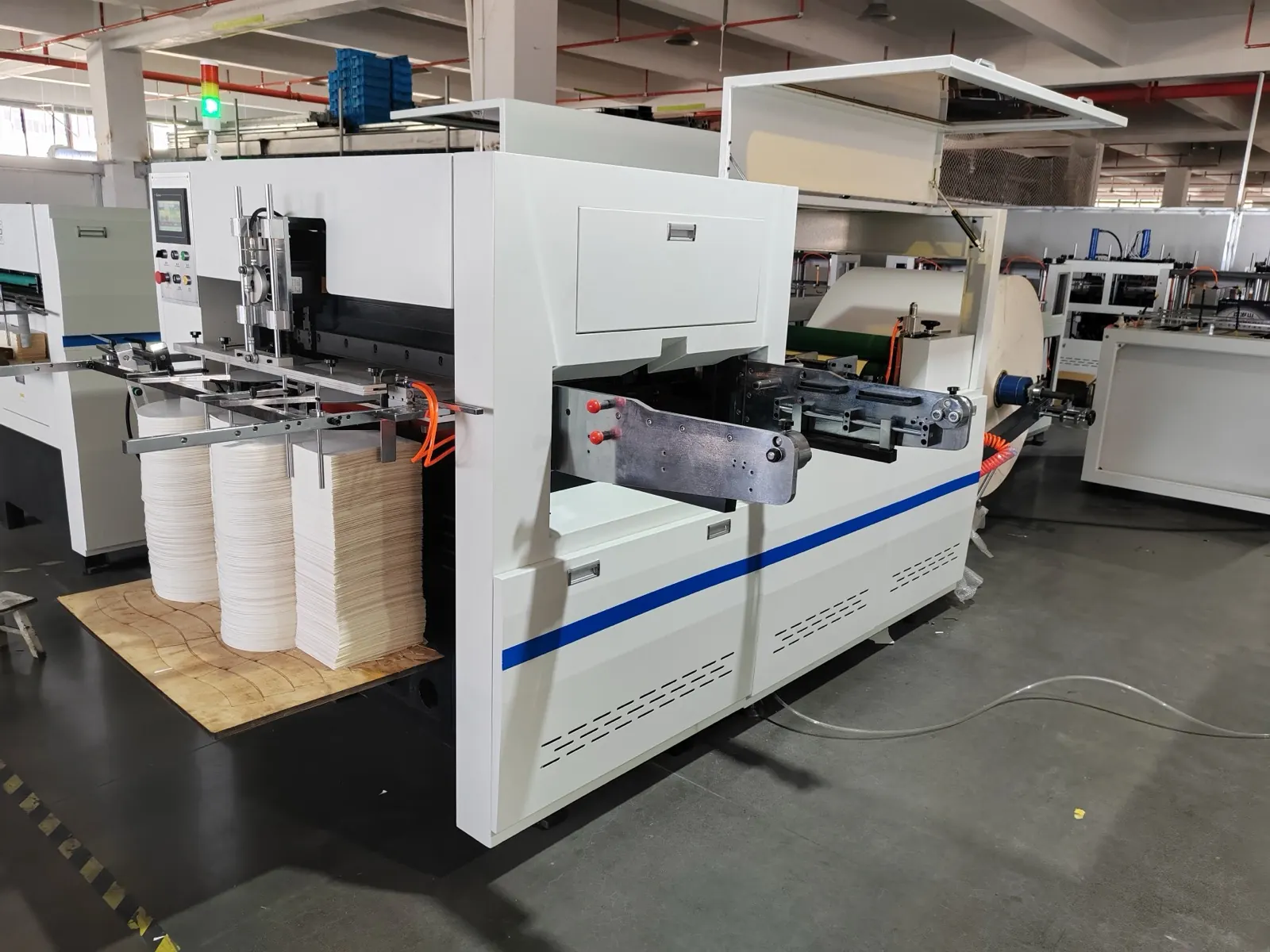
Classify the separation or delivery failure
Record whether waste remains attached by uncut bridges, tears into the blank, wraps around a roller, accumulates in the transport path or separates correctly but enters the wrong collection area. For delivery, distinguish skewed blanks, edge damage, double pieces, inconsistent spacing, unstable stacks and downstream jams.
Collect samples in sequence and mark machine direction and side. A torn blank cannot prove whether the first cause was incomplete cutting or aggressive stripping unless the unstripped cut is also examined.
Use a handoff evidence table
| Process boundary | Evidence to capture | Decision question |
|---|---|---|
| Cut exit | Unstripped cut completeness, crease and orientation | Is the blank ready to separate? |
| Waste path | Attachment point, tear direction, buildup and repeat location | Where does waste first stop following its path? |
| Blank control | Spacing, lateral position, hold-down and guide contact | Is the blank controlled after separation? |
| Transport | Belt or roller condition, contamination and synchronized movement | Is delivery changing blank orientation? |
| Collection | Stack alignment, stop position, batch condition and removal method | Can blanks accumulate without collapse? |
| Material | Board, coating, curl, static behavior and lot | Has material response changed? |
| Release | Consecutive blanks and downstream feed result | Is the delivered output usable? |
Verify complete cutting before adjusting stripping
Inspect unstripped samples from across the working width. Map any uncut or over-cut locations to the die. Stripping equipment cannot reliably compensate for incomplete cutting, and higher stripping force can tear the blank while leaving the root cause unchanged.
Use the cutting pressure and die alignment guide for the upstream diagnostic branch. If cut quality is stable, proceed to waste presentation and removal.
Trace waste from the first separation point
Observe through guarding where waste first changes direction and whether the blank remains supported. Note if the problem repeats at one die feature, one side, one roll diameter or after a certain runtime. Paper dust, coating transfer, static and curl may gradually change the path.
After approved isolation, inspect accessible waste guides, chutes, rollers and collection areas for buildup, damage, looseness and trapped scraps. Control gravitational and stored web energy before clearing. Never pull waste from a moving roll or cutting zone.
Maintain blank control after separation
A newly separated blank can rotate or buckle if spacing, support or hold-down is inconsistent. Compare its leading and trailing edge position through the delivery path. Check for polished guide marks, contamination, unequal belt contact, loose transport components or air disturbance under safe isolation.
Do not narrow guides until they squeeze the blank. Clearance should control orientation without scuffing coatings or distorting creases, and it must follow the delivered format setup.
Separate transport timing from material behavior
If blank spacing changes as machine state changes, compare cut-release timing, transport movement and web tension. If spacing is stable but blanks curl or cling, record board conditioning, coating side, static behavior and environmental state. Machine and material effects may interact.
The web tension and register control guide helps connect unwind and web motion to the cut-and-delivery sequence. Avoid changing several timing and tension variables together.
Inspect the delivery stack as a controlled process
Confirm that the stop, side guides, support surface and removal method match the blank. Record whether misalignment begins with the first few pieces or only after stack height increases. A stack that gradually leans can indicate small repeated skew, uneven impact or inadequate support rather than a single severe fault.
Define who removes, counts and transfers the blanks and how partial stacks are identified. Delivery is complete only when the next process receives undamaged, traceable material.
Use downstream feeding as the acceptance test
Inspect cut edges, creases, dimensions, surface and stack orientation after correction. Then trial representative blanks in the next forming operation. Blanks that look aligned in a stack may still double-feed, catch on a damaged bridge or enter incorrectly if separation quality is marginal.
If delivery constrains line output, use the production-line bottleneck guide to measure the verified handoff instead of increasing speed without cause control.
Restart safely and verify repeated output
After cleaning or repair, account for tools and removed waste, restore guards and follow the approved startup. Run staged cycles, observe the original location and collect consecutive blanks from across the run. Confirm that waste reaches its destination and blanks form stable stacks without manual intervention inside the hazard zone.
For a configured machine such as the 950 roll die cutting machine, the actual waste and delivery arrangement depends on the blank, material and supplied configuration. Use the delivered acceptance method.
Frequently asked questions
Why does waste stripping tear good-looking blanks?
Check hidden incomplete cuts, attachment points, material fibers or coating, waste direction and how the blank is supported. Appearance before separation is not enough.
Can stronger stripping correct an incomplete cut?
It is not a reliable correction. It may tear edges or pull creases out of shape. Restore verified cut quality first.
Why does the delivery stack lean only when it becomes tall?
Small repeated skew, uneven impact, guide clearance or insufficient support accumulates with stack height. Track the position of early and later blanks.
What is the safest way to clear wrapped waste?
Stop and apply the machine-specific isolation procedure, control stored web and mechanical energy, and use trained personnel and approved tools. Never pull it while the machine can move.
Send the machine configuration, die and blank drawing, material details, marked cut samples, safe video of the first abnormal handoff and photos taken after isolation through our inquiry page. HANNAI can help define the upstream and delivery checks.